• Fri frakt över 249 kr
  • •
  • Snabba leveranser
  • •
  • Billiga böcker
Kundservice

Du är på sajten för privatpersoner.

Företag, bibliotek eller offentlig verksamhet?

Du handlar på classic.bokus.com, där alla dina funktioner finns intakta.
Till classic.bokus.com
Bokus logotyp. Gå till startsidan.
  • Erbjudanden
  • Nyheter
  • Student
  • Topplistor
  • Barn & ungdom
  • Bokus Play
  • E-böcker
  • Pocketböcker
  • Spel & pussel

10% rabatt på allt med kod: NYSTART10 →

Sidfot

Mina sidor

    Hjälp

    • Kundservice
    • Vanliga frågor och svar
    • Frakt och leverans
    • Retur vid ångerrätt
    • Reklamera vara
    • Betalning
    • Köpvillkor
    • Allmänna villkor
    • Information om webbplatsens tillgänglighet

    Om Bokus

    • Om oss
    • Pressrum
    • För studenter
    • För företag
    • För bibliotek och offentlig verksamhet
    • För leverantörer
    • Hållbarhet

    Populärt

    • Aktuella erbjudanden
    • Presentkort
    • Studentlitteratur
    • Nya böcker
    • Topplistor
    • Signerade böcker
    • Engelska böcker

    Inspiration

    • Boktips
    • BookTok
    • Populära bokserier
    • Barnbokskaraktärer
    • Populära författare
    Logotyp för Bokus
    Följ oss på Facebook (extern länk)Följ oss på Instagram (extern länk)Följ oss på YouTube (extern länk)Följ oss på TikTok (extern länk)
    bokus @ CookiesAnpassa cookiesIntegritetspolicyKöpvillkor
    Till Citymail hemsida (extern länk)Till Budbee hemsida (extern länk)Till Postnord hemsida (extern länk)Till Schenker hemsida (extern länk)Till Early Bird hemsida (extern länk)Till Walleys hemsida (extern länk)
    1. Medicin
    2. Klinisk medicin och internmedicin
    3. Sjukdomar och rubbningar

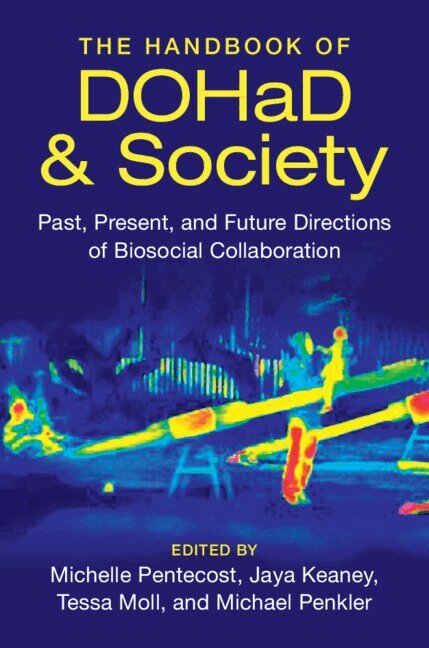
    The Handbook of DOHaD and Society

    Past, Present, and Future Directions of Biosocial Collaboration

    AvMichelle Pentecost,Jaya Keaney

    Inbunden, Engelska, 2024

    931 kr

    Beställningsvara. Skickas inom 10-15 vardagar. Fri frakt över 249 kr.

    Beskrivning

    Research in the field of Developmental Origins of Health and Disease has had a fundamental impact on our understanding of how environmental experiences and contexts influence the development of health and disease over the entire lifecourse. Covering a wide range of geographic regions, this volume includes an overview of the field, key concepts, and cutting-edge examples of interdisciplinary collaboration. The first reference text covering the interdisciplinary work of DOHaD, a broad list of contents maps the history of DOHaD, showcases examples of biosocial collaboration in action, offers a conceptual toolkit for interdisciplinary research, and maps future directions for the field. The definitive volume on biosocial collaborations in DOHaD, this will be indispensable for scholars working at the intersections of public health, lifecourse epidemiology and the social science of DOHaD. This title is also available as Open Access on Cambridge Core.

    Produktinformation

    • Utgivningsdatum:2024-06-27
    • Mått:156 x 234 x 21 mm
    • Vikt:735 g
    • Format:Inbunden
    • Språk:Engelska
    • Antal sidor:366
    • Förlag:Cambridge University Press
    • ISBN:9781009201728

    Utforska kategorier

    • Sjukdomar och rubbningar inom Medicin
    • Epidemiologi och medicinsk statistik inom Medicin
    • Pediatrik inom Medicin

    Mer om författaren

    Michelle Pentecost is a physician-anthropologist based in the Department of Global Health and Social Medicine at King's College London and in the School of Clinical Medicine at the University of the Witwatersrand. She is the author of The Politics of Potential: Global Health and Gendered Futures in South Africa (2024, Rutgers University Press). Jaya Keaney is a Lecturer in Gender Studies at the University of Melbourne. Her work in feminist science studies explores how reproduction is shaped by technoscientific practices and regimes of race, gender, sexuality and coloniality. She is the author of Making Gaybies: Queer Reproduction and Multiracial Feeling (2023, Duke University Press). Tessa Moll is a medical anthropologist in South Africa. Her work explores the possibilities of life-making and life-sustaining that arise from new technologies and new knowledges of reproduction. She is currently completing her first book, a monograph on reproductive politics, fertility care, and race in the afterlife of apartheid. Michael Penkler is a medical sociologist and science and technology studies (STS) scholar based at the University of Applied Sciences, Wiener Neustadt, Austria. His work explores the social, ethical and political aspects and implications of life science innovations, biomedical technologies, and healthcare.

    Recensioner i media

    'This magnificent collection crosses disciplines and continents in its synthesis of exciting scholarship around the past, present, and future of DOHaD. It is a singular achievement, and its readers will be multiple.' Martyn Pickersgill, Professor of the Sociology of Science and Medicine, Edinburgh Medical School

    Innehållsförteckning

    • Introduction: Michael Penkler, Tessa Moll, Jaya Keaney and Michelle Pentecost; Part I. Mapping the Field's Past: 1. Porous bodies, impressible mothers: a global and longue durée perspective Maurizio Meloni and Natasha Rooney; 2. Transformations of the maternal-fetal relationship in the twentieth century: from maternal impressions to epigenetic states Tatjana Buklijas; 3. The first 5000 days: making DOHaD, 1989–2003 Mark Hanson and Tatjana Buklijas; Part II. The Social Life of DOHaD: 4. A biosocial return to race? Racial differences in DOHaD and environmental epigenetics Maurizio Meloni, Christopher Kuzawa, Ayuba Issaka and Tessa Moll; 5. The promise and treachery of nutrition in DOHaD: science, biopolitics, and gender Vivienne Moore and Megan Warin; 6. Gender, racism and DOHaD Natali Valdez and Martine Lappé; 7. DOHaD in economics: orthodox and egalitarian approaches Jennifer Cohen; 8. The 'moral paradox' of DOHaD Luca Chiapperino, Cindy Gerber, Francesco Panese and Umberto Simeoni; 9. Intergenerational justice, law and DOHaD Isabel Karpin; Part III. Key Concepts for Biosocial Research: 10. Lifecourse Mark Tomlinson, Amelia van der Merwe, Marguerite Marlow and Sarah Skeen; 11. Syndemics Edna Bosire, Michelle Pentecost and Emily Mendenhall; 12. Embodiment Ziyanda Majombozi and Mutsawashe Mutendi; 13. Causal crypticity Sarah S. Richardson; 14. Intergenerational trauma Jaya Keaney, Henrietta Byrne, Megan Warin and Emma Kowal; 15. Bioethnography Elizabeth F. S. Roberts, Jaclyn M. Goodrich, Erica C. Jansen, Belinda L. Needham, Brisa N. Sánchez and Martha M. Téllez Rojo; Part IV. Translations in Policy and Practice: 16. Translating evidence to policy: the challenge for DOHaD advocacy Felicia Low, Peter Gluckman and Mark Hanson; 17. Framing DOHaD for policy and society Chandni Maria Jacob, Michael Penkler, Ruth Muller and Mark Hanson; 18. The impact of community based participatory DOHaD research Siobhan Tu'akoi, Mark H. Vickers, Celeste Barrett-Watson, Kura Samuel-Ioane, Teaukura Puna, Joseph Drollet and Jacqui L. Bay; 19. The first 1000 Days and clinical practice in infant mental health Anusha Lachman, Astrid Berg, Fiona C. Ross and Simone M. Peters; Part V. The Biosocial in Practice: 20. Understanding child development: a biosocial anthropological approach to early life Emily H. Emmott and Sahra Gibbon; 21. Building biosocial collaboration in the HeLTI-South Africa trial Michelle Pentecost, Catherine E Draper, Khuthala Mabetha, Larske M Soepnel and Shane A Norris; 22. Doing environments in DOHaD and epigenetics Sophia Rossmann and Georgia Samaras; 23. Narrative choreographies: DOHaD, social justice and health equity Martha Kenney and Ruth Müller; 24. Interdependence: reworking ontogeny through fishbones and dirty chickens Shivani Kaul and Emily Yates-Doerr; Part VI. Future Directions: 25. Modelling in DOHaD: challenges and opportunities in the era of big data Julie Sigurdardottir and Salma Ayis; 26. The promise of reversibility in neuroepigenetics research on traumatic memories Stephanie Lloyd, Pierre-Eric Lutz and Chani Bonventre; 27. Disability in DOHaD and epigenetics: towards inclusive practice Katie Saulnier, Lara Azevedo, Neera Bhatia, Lillian Dipnall, Evie Kendal, Garth Stephenson and Jeffrey M Craig; 28. Creating good data our way: an Indigenous lens for epidemiology and intergenerational health Sarah Bourke and Raymond Lovett; 29. DOHaD in the Anthropocene: taking responsibility for anthropogenic biologies Jörg Niewöhner.