• Fri frakt över 249 kr
  • •
  • Snabba leveranser
  • •
  • Billiga böcker
Kundservice

Du är på sajten för privatpersoner.

Företag, bibliotek eller offentlig verksamhet?

Du handlar på classic.bokus.com, där alla dina funktioner finns intakta.
Till classic.bokus.com
Bokus logotyp. Gå till startsidan.
  • Erbjudanden
  • Nyheter
  • Student
  • Topplistor
  • Barn & ungdom
  • Bokus Play
  • E-böcker
  • Pocketböcker
  • Spel & pussel

10% rabatt på allt med kod: NYSTART10 →

Sidfot

Mina sidor

    Hjälp

    • Kundservice
    • Vanliga frågor och svar
    • Frakt och leverans
    • Retur vid ångerrätt
    • Reklamera vara
    • Betalning
    • Köpvillkor
    • Allmänna villkor
    • Information om webbplatsens tillgänglighet

    Om Bokus

    • Om oss
    • Pressrum
    • För studenter
    • För företag
    • För bibliotek och offentlig verksamhet
    • För leverantörer
    • Hållbarhet

    Populärt

    • Aktuella erbjudanden
    • Presentkort
    • Studentlitteratur
    • Nya böcker
    • Topplistor
    • Signerade böcker
    • Engelska böcker

    Inspiration

    • Boktips
    • BookTok
    • Populära bokserier
    • Barnbokskaraktärer
    • Populära författare
    Logotyp för Bokus
    Följ oss på Facebook (extern länk)Följ oss på Instagram (extern länk)Följ oss på YouTube (extern länk)Följ oss på TikTok (extern länk)
    bokus @ CookiesAnpassa cookiesIntegritetspolicyKöpvillkor
    Till Citymail hemsida (extern länk)Till Budbee hemsida (extern länk)Till Postnord hemsida (extern länk)Till Schenker hemsida (extern länk)Till Early Bird hemsida (extern länk)Till Walleys hemsida (extern länk)
    1. Samhälle och politik
    2. Samhälle och kultur
    3. Kultur och medier
    4. Kulturvetenskap

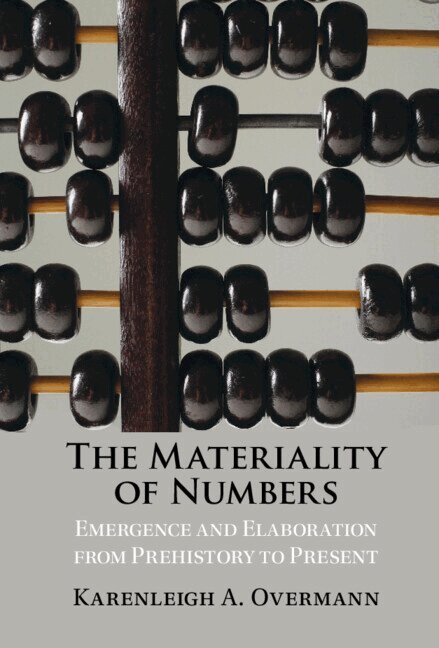
    The Materiality of Numbers

    Emergence and Elaboration from Prehistory to Present

    AvKarenleigh A. Overmann

    Inbunden, Engelska, 2023

    1 458 kr

    Beställningsvara. Skickas inom 10-15 vardagar. Fri frakt över 249 kr.

    Beskrivning

    This is a book about numbers - what they are as concepts and how and why they originate - as viewed through the material devices used to represent and manipulate them. Fingers, tallies, tokens, and written notations, invented in both ancestral and contemporary societies, explain what numbers are, why they are the way they are, and how we get them. Overmann is the first to explore how material devices contribute to numerical thinking, initially by helping us to visualize and manipulate the perceptual experience of quantity that we share with other species. She explores how and why numbers are conceptualized and then elaborated, as well as the central role that material objects play in both processes. Overmann's volume thus offers a view of numerical cognition that is based on an alternative set of assumptions about numbers, their material component, and the nature of the human mind and thinking.

    Produktinformation

    • Utgivningsdatum:2023-05-25
    • Mått:158 x 235 x 29 mm
    • Vikt:760 g
    • Format:Inbunden
    • Språk:Engelska
    • Antal sidor:444
    • Förlag:Cambridge University Press
    • Medarbetare:Tom Wynn
    • ISBN:9781009361248

    Utforska kategorier

    • Kulturvetenskap inom Samhälle och politik
    • Arkeologiska perioder och områden inom Historia och arkeologi
    • Matematikens filosofi inom Naturvetenskap och teknik

    Mer om författaren

    Karenleigh A. Overmann earned her doctorate in archaeology from the University of Oxford as a Clarendon scholar after retiring from twenty-five years of active service in the US Navy. She currently directs the Center for Cognitive Archaeology at the University of Colorado, Colorado Springs.

    Innehållsförteckning

    • 1. Numbers in a nutshell; 2. Converging perspectives on numbers; 3. The brain in numbers; 4. Bodies and behaviors; 5. Language in numbers; 6. Global and regional patterns; 7. Materiality in numbers; 8. Materiality in cognition; 9. Making quantity tangible and manipulable; 10. Tallies and other devices that accumulate; 11. Interpreting prehistoric artifacts; 12. Devices that accumulate and group; 13. Handwritten notations; 14. The materiality of numbers.