• Fri frakt över 249 kr
  • •
  • Snabba leveranser
  • •
  • Billiga böcker
Kundservice

Du är på sajten för privatpersoner.

Företag, bibliotek eller offentlig verksamhet?

Du handlar på classic.bokus.com, där alla dina funktioner finns intakta.
Till classic.bokus.com
Bokus logotyp. Gå till startsidan.
  • Erbjudanden
  • Nyheter
  • Student
  • Topplistor
  • Barn & ungdom
  • Bokus Play
  • E-böcker
  • Pocketböcker
  • Spel & pussel

10% rabatt på allt med kod: NYSTART10 →

Sidfot

Mina sidor

    Hjälp

    • Kundservice
    • Vanliga frågor och svar
    • Frakt och leverans
    • Retur vid ångerrätt
    • Reklamera vara
    • Betalning
    • Köpvillkor
    • Allmänna villkor
    • Information om webbplatsens tillgänglighet

    Om Bokus

    • Om oss
    • Pressrum
    • För studenter
    • För företag
    • För bibliotek och offentlig verksamhet
    • För leverantörer
    • Hållbarhet

    Populärt

    • Aktuella erbjudanden
    • Presentkort
    • Studentlitteratur
    • Nya böcker
    • Topplistor
    • Signerade böcker
    • Engelska böcker

    Inspiration

    • Boktips
    • BookTok
    • Populära bokserier
    • Barnbokskaraktärer
    • Populära författare
    Logotyp för Bokus
    Följ oss på Facebook (extern länk)Följ oss på Instagram (extern länk)Följ oss på YouTube (extern länk)Följ oss på TikTok (extern länk)
    bokus @ CookiesAnpassa cookiesIntegritetspolicyKöpvillkor
    Till Citymail hemsida (extern länk)Till Budbee hemsida (extern länk)Till Postnord hemsida (extern länk)Till Schenker hemsida (extern länk)Till Early Bird hemsida (extern länk)Till Walleys hemsida (extern länk)
    1. Historia och arkeologi
    2. Historia
    3. Amerikas historia

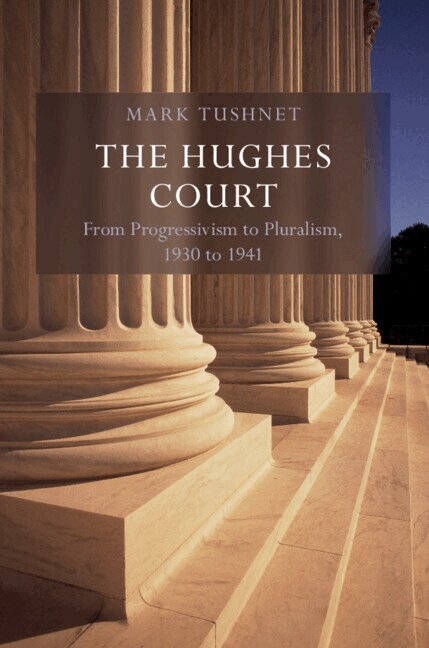
    The Hughes Court: Volume 11

    From Progressivism to Pluralism, 1930 to 1941

    AvMark V. Tushnet

    Häftad, Engelska, 2025

    Del i serien Oliver Wendell Holmes Devise History of the Supreme Court of the United States

    667 kr

    Beställningsvara. Skickas inom 10-15 vardagar. Fri frakt över 249 kr.

    Fler format och utgåvor

    Inbunden

    2 915 kr

    Beskrivning

    The Hughes Court: From Progressivism to Pluralism, 1930 to 1941 describes the closing of one era in constitutional jurisprudence and the opening of another. This comprehensive study of the Supreme Court from 1930 to 1941 - when Charles Evans Hughes was Chief Justice - shows how nearly all justices, even the most conservative, accepted the broad premises of a Progressive theory of government and the Constitution. The Progressive view gradually increased its hold throughout the decade, but at its end, interest group pluralism began to influence the law. By 1941, constitutional and public law was discernibly different from what it had been in 1930, but there was no sharp or instantaneous Constitutional Revolution in 1937 despite claims to the contrary. This study supports its conclusions by examining the Court's work in constitutional law, administrative law, the law of justiciability, civil rights and civil liberties, and statutory interpretation.

    Produktinformation

    • Utgivningsdatum:2025-05-15
    • Mått:155 x 233 x 58 mm
    • Vikt:2 040 g
    • Format:Häftad
    • Språk:Engelska
    • Serie:Oliver Wendell Holmes Devise History of the Supreme Court of the United States
    • Antal sidor:1 272
    • Förlag:Cambridge University Press
    • ISBN:9781009566735

    Utforska kategorier

    • Amerikas historia inom Historia och arkeologi
    • Rättshistoria inom Juridik

    Mer om författaren

    Mark Tushnet is the William Nelson Cromwell Professor of Law emeritus at Harvard Law School. After graduating from Harvard College and Yale Law School, he served as law clerk to Supreme Court Justice Thurgood Marshall. He has written widely on constitutional theory, comparative constitutional law, and US legal and constitutional history. His book The NAACP's Legal Strategy Against Segregated Education (1987) won the Littleton Griswold Prize awarded by the American Historical Association.

    Recensioner i media

    'No one understands the politics of law better or takes the law more seriously than Mark Tushnet. With a complete mastery of the decisions of the Hughes Court, Tushnet shows us the justices as they saw themselves, professionals of disparate backgrounds, temperaments, and talents, dispatching, with the tools at hand, the disputes that ceaselessly came to them. Familiar constitutional landmarks are here, as is the high drama of Franklin D. Roosevelt's 'Court-packing' plan, but so are more gradual changes in the law of the presidency, the administrative state, the federal courts, civil liberties, and civil rights that ended with the nation on the verge of a new constitutional order. Despite economic calamity and social strife, the Supreme Court thrived, not by being above politics, but by proving its worth by doing its job.' Daniel R. Ernst, Carmack Waterhouse Professor of Legal History, Georgetown University Law Center

    Innehållsförteckning

    • Acknowledgments; Introduction; Preface; Part I. The Opening Years: Section A. Setting the Stage; 1. Personnel and Organizing Ideas; 2. Formulas and Conceptions of Basic Needs: An Overview; 3. The Complex World of Simple Formulas; 4. Formulas and Considerations of Basic Needs in Business Regulation Cases; Section B. The False Dawn; 5. Blaisdell; 6. Nebbia; 7. The Gold Clause Cases; Section C. Crisis; 8. Black Monday 1935; 9. Winter 1935–36; 10. Spring 1936; 11. The Court-Packing Plan; 12. Resolution; 13. Was There a 'Switch in Time'?; Section D. The New Constitutional Regime; 14. After the Storm: Personnel and Organization; 15. Consolidating the Scope of National Power; 16. Consolidating State Regulation of Business; 17. Consolidating Labor Law and Intergovernmental Immunity; 18. Toward a Theory of Pluralism; Part II. Continuities: Section A. Administrative Law; 19. Administrative Law Introduction; 20. Administrative Law Constitutional Limits; 21. Administrative Law Presidential Power; 22. Administrative Law Courts' Role; Section B. Civil Liberties and Civil Rights; 23. The Uncertainty of Theory; 24. Progressivism, Prohibition, and Organized Crime; 25. Race, Criminal Justice, and 'Labor Defense'; 26. Race and Strategic Litigation; 27. Radical Political Dissent; 28. Radical Religious Dissent; Section C. Justiciability; 29. Basic Concepts of Justiciability; 30. Sovereign Immunity and Political Questions; 31. Regulating Access to the National Courts; 32. Erie; 33. Erie's Legacy; 34. Form and Style in Statutory Interpretation; Part III: New Approaches Begin to Emerge: Section A. Economics; 35. New Deal Economics; 36. Regulating Strikes; 37. Regulating the NLRB; 38. The Labor Antitrust Interface; Section B. Civil Liberties After 1937; 39. The Justices and the Theories; 40. Demonstrations, Picketing, and First Amendment Theories; 41. The Jehovah's Witnesses and First Amendment Theories; 42. Conclusion; Historiographical Essay; Index.