• Fri frakt över 249 kr
  • •
  • Snabba leveranser
  • •
  • Billiga böcker
Kundservice

Du är på sajten för privatpersoner.

Företag, bibliotek eller offentlig verksamhet?

Du handlar på classic.bokus.com, där alla dina funktioner finns intakta.
Till classic.bokus.com
Bokus logotyp. Gå till startsidan.
  • Erbjudanden
  • Nyheter
  • Student
  • Topplistor
  • Barn & ungdom
  • Bokus Play
  • E-böcker
  • Pocketböcker
  • Spel & pussel

10% rabatt på allt med kod: NYSTART10 →

Sidfot

Mina sidor

    Hjälp

    • Kundservice
    • Vanliga frågor och svar
    • Frakt och leverans
    • Retur vid ångerrätt
    • Reklamera vara
    • Betalning
    • Köpvillkor
    • Allmänna villkor
    • Information om webbplatsens tillgänglighet

    Om Bokus

    • Om oss
    • Pressrum
    • För studenter
    • För företag
    • För bibliotek och offentlig verksamhet
    • För leverantörer
    • Hållbarhet

    Populärt

    • Aktuella erbjudanden
    • Presentkort
    • Studentlitteratur
    • Nya böcker
    • Topplistor
    • Signerade böcker
    • Engelska böcker

    Inspiration

    • Boktips
    • BookTok
    • Populära bokserier
    • Barnbokskaraktärer
    • Populära författare
    Logotyp för Bokus
    Följ oss på Facebook (extern länk)Följ oss på Instagram (extern länk)Följ oss på YouTube (extern länk)Följ oss på TikTok (extern länk)
    bokus @ CookiesAnpassa cookiesIntegritetspolicyKöpvillkor
    Till Citymail hemsida (extern länk)Till Budbee hemsida (extern länk)Till Postnord hemsida (extern länk)Till Schenker hemsida (extern länk)Till Early Bird hemsida (extern länk)Till Walleys hemsida (extern länk)
    1. Samhälle och politik
    2. Politik och statsskick
    3. Centralt styre och förvaltning

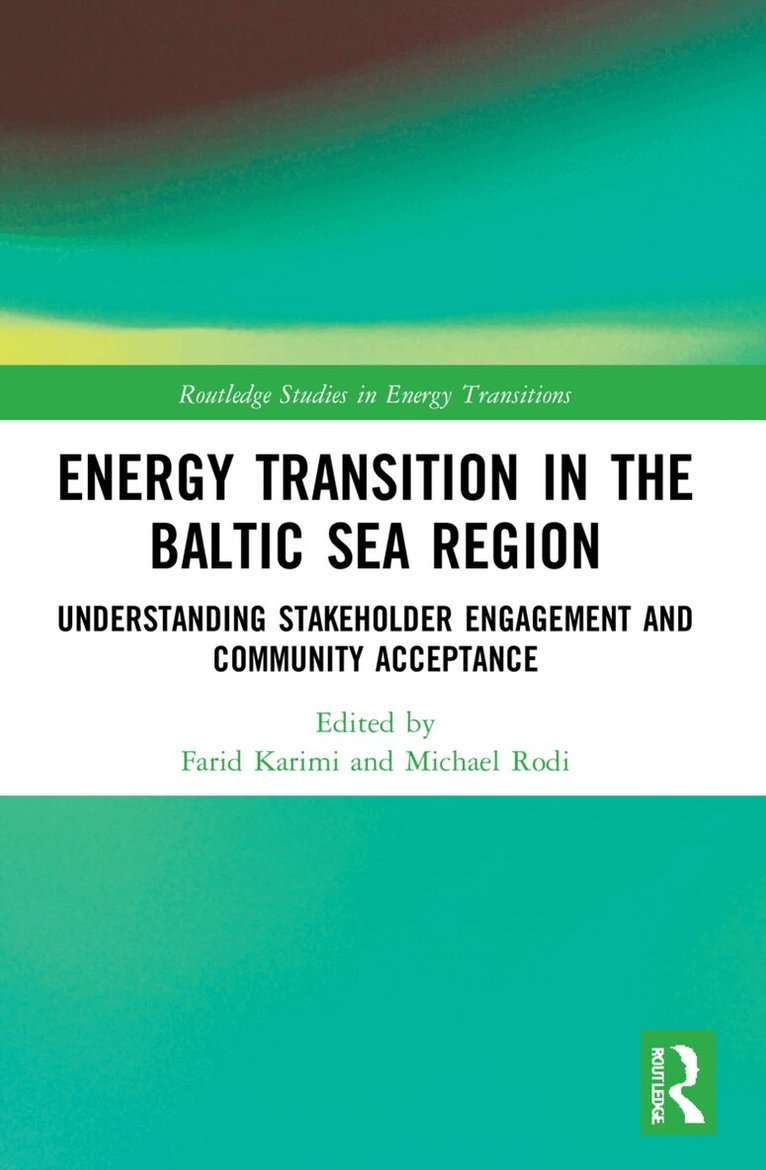
    Energy Transition in the Baltic Sea Region

    Understanding Stakeholder Engagement and Community Acceptance

    AvFarid Karimi,Michael Rodi

    Häftad, Engelska, 2023

    Del i serien Routledge Studies in Energy Transitions

    667 kr

    Beställningsvara. Skickas inom 10-15 vardagar. Fri frakt över 249 kr.

    Beskrivning

    This book analyses the potential for active stakeholder engagement in the energy transition in the Baltic Sea Region (BSR) in order to foster clean energy deployment. Public acceptability and bottom-up activities can be critical for enduring outcomes to an energy transition. As a result, it is vital to understand how to unlock the potential for public, community and prosumer participation to facilitate renewable energy deployment and a clean energy transition – and, consequently, to examine the factors influencing social acceptability. Focussing on the diverse BSR, this book draws on expert contributions to consider a range of different topics, including the challenges of social acceptance and its policy implications; strategies to address challenges of acceptability among stakeholders; and community engagement in clean energy production. Overall, the authors examine the practical implications of current policy measures and provide recommendations on how lessons learnt from this ‘energy lab region’ may be applied to other regions. Reflecting an interdisciplinary approach in the social sciences, this book is an essential resource for scholars, students and policymakers researching and working in the areas of renewable energy, energy policy and citizen engagement, and interested in understanding the potential for bottom-up, grassroots activities and social acceptability to expedite the energy transition and reanimate democracies. The Open Access version of this book, available at www.taylorfrancis.com, has been made available under a Creative Commons Attribution-Non Commercial-No Derivatives 4.0 license.

    Produktinformation

    • Utgivningsdatum:2023-09-25
    • Mått:156 x 234 x 17 mm
    • Vikt:453 g
    • Format:Häftad
    • Språk:Engelska
    • Serie:Routledge Studies in Energy Transitions
    • Antal sidor:284
    • Förlag:Taylor & Francis Ltd
    • ISBN:9781032003115

    Utforska kategorier

    • Centralt styre och förvaltning inom Samhälle och politik
    • Miljövetenskap och miljöpolitik inom Naturvetenskap och teknik
    • Energiindustri inom Ekonomi och Ledarskap

    Mer om författaren

    Farid Karimi is a senior researcher and lecturer at the Faculty of Bioeconomy, Novia University of Applied Sciences, Finland. His main research interests are in the social sciences, with a particular focus on the energy transition and energy politics. His articles and interviews have been published in major journals and outlets.Michael Rodi is a professor at the Faculty of Law and Economics, University of Greifswald, Germany. He is also the Director of the Institute for Climate Protection, Energy and Mobility (IKEM). His research focuses include climate law and policy, sustainable energy and transport, and finance and tax law. He is the author of Economic Analysis of Public Law, among other publications.

    Recensioner i media

    "The climate urgency requires us to transition to an efficient, renewables based economy as soon as possible. This book is a welcome and timely contribution to the energy transition policy discourse in the Baltic Sea region. I am sure the experiences and best practices from across cities, regions and states will inspire action far beyond the region."Krista Mikkonen, Minister of the Environment and Climate Change of Finland"We already know that decarbonizing our economies at the pace and scale called for by climate science will face unprecedented obstacles. Increasingly, however, we are discovering that the greatest obstacle may not be a dearth of technological solutions or finance, but one of public opinion: whether expressed in the form of localised resistance against renewable energy projects or rejection of national climate action by a wavering electorate, lacking social acceptance threatens to undermine progress towards the necessary energy transition. Drawing on a region that offers pioneering insights, the diverse group of authors represented in this book offers a unique perspective and valuable lessons on perhaps the most intractable climate policy challenge yet."Michael Mehling, Deputy Director, MIT Center for Energy and Environmental Policy Research, Cambridge, Massachusetts, USA"The energy transition is not about business or official state strategies. First of all, it is about society – how individuals and communities change their habits of energy consumption and how they evolve to energy prosumers. This book helps to understand the social transformations and practical implications of policy measures targeted at transition to clean energy. The most needed analysis to understand the depth of processes we all are facing." Tomas Janeliūnas, Director of Energy Research Institute, Vilnius University, Lithuania"This is a topical book with hands-on policy recommendations for those in and outside of academia who want to learn about the crucial role of bottom-up activities in an energy transition: a comprehensive collection reflecting on various aspects of an energy transition using diverse approaches and examples from countries in the Baltic Sea Region."Christian von Hirschhausen, Technical University Berlin, Germany"One of the most important contemporary questions connected to climate change mitigation and energy transition is how to translate the scientific and political consensus about the need to limit the human impact on our environment into societal consensus and support. This edited volume examines these issues from a regional perspective and provides important insight into the complexity of energy transition and the role of various societal actors in it. A must-read for anybody interested in the Baltic Sea Region, energy transition, or climate change."Matúš Mišík, Department of Political Science, Comenius University in Bratislava, Slovakia

    Innehållsförteckning

    • 1. Energy transition in the Baltic Sea Region: Bottom-up activities, stakeholder engagement and social acceptability PART I: Stakeholder engagement and acceptance: A legal framework 2. Active participation in the energy transition: The challenges of European regulation 3. Acceptance issues in the transition to renewable energy: How law supposedly can manage local opposition PART II: Energy policy for engaging people for an energy transition in the Baltic Sea Region 4. Citizen preferences for co-investing in renewable energy: An empirical exploration of the “community-as-investor” acceptance of renewables’ innovation 5. Better off alone? The development of citizen involvement and community energy in the Swedish energy transition PART III: Flexibility options for demand-side, social acceptance and community engagement: Case studies 6. From acceptability and acceptance to active behavioural support: Engaging the general public in the transition of the electric energy system in Finland 7. Engaging the public for citizen energy production in Norway: Energy narratives, opportunities and barriers for an inclusive energy transition 8. Revitalization: Living Lab as a format for accelerating energy transition in Polish rural areas: The case studies of metropolitan outskirts of Gdańsk-Orunia and Lubań 9. Energy clusters in Poland: Towards diffused green energy communities PART IV: Insights from other sectors and regions 10. Actor roles and practices in energy transitions: Perspectives from Finnish housing cooperatives 11. A mixed methods engaged study of divergent imaginaries in Bergen’s mobility transition 12. Co-creating policies on societal transformations as a factor of resilience of modern society Conclusion 13. The power of the grassroots: The Baltic Sea Region, an energy transition laboratory