• Fri frakt över 249 kr
  • •
  • Snabba leveranser
  • •
  • Billiga böcker
Kundservice

Du är på sajten för privatpersoner.

Företag, bibliotek eller offentlig verksamhet?

Du handlar på classic.bokus.com, där alla dina funktioner finns intakta.
Till classic.bokus.com
Bokus logotyp. Gå till startsidan.
  • Erbjudanden
  • Nyheter
  • Student
  • Topplistor
  • Barn & ungdom
  • Bokus Play
  • E-böcker
  • Pocketböcker
  • Spel & pussel

10% rabatt på allt med kod: NYSTART10 →

Sidfot

Mina sidor

    Hjälp

    • Kundservice
    • Vanliga frågor och svar
    • Frakt och leverans
    • Retur vid ångerrätt
    • Reklamera vara
    • Betalning
    • Köpvillkor
    • Allmänna villkor
    • Information om webbplatsens tillgänglighet

    Om Bokus

    • Om oss
    • Pressrum
    • För studenter
    • För företag
    • För bibliotek och offentlig verksamhet
    • För leverantörer
    • Hållbarhet

    Populärt

    • Aktuella erbjudanden
    • Presentkort
    • Studentlitteratur
    • Nya böcker
    • Topplistor
    • Signerade böcker
    • Engelska böcker

    Inspiration

    • Boktips
    • BookTok
    • Populära bokserier
    • Barnbokskaraktärer
    • Populära författare
    Logotyp för Bokus
    Följ oss på Facebook (extern länk)Följ oss på Instagram (extern länk)Följ oss på YouTube (extern länk)Följ oss på TikTok (extern länk)
    bokus @ CookiesAnpassa cookiesIntegritetspolicyKöpvillkor
    Till Citymail hemsida (extern länk)Till Budbee hemsida (extern länk)Till Postnord hemsida (extern länk)Till Schenker hemsida (extern länk)Till Early Bird hemsida (extern länk)Till Walleys hemsida (extern länk)
    1. Historia och arkeologi
    2. Historia
    3. Europas historia

    Arabesque from Kant to Comics

    AvCordula Grewe

    Häftad, Engelska, 2024

    Del i serien Routledge Advances in Art and Visual Studies

    625 kr

    Beställningsvara. Skickas inom 10-15 vardagar. Fri frakt över 249 kr.

    Fler format och utgåvor

    Inbunden

    2 423 kr

    E-bok

    810 kr

    E-bok

    808 kr

    Beskrivning

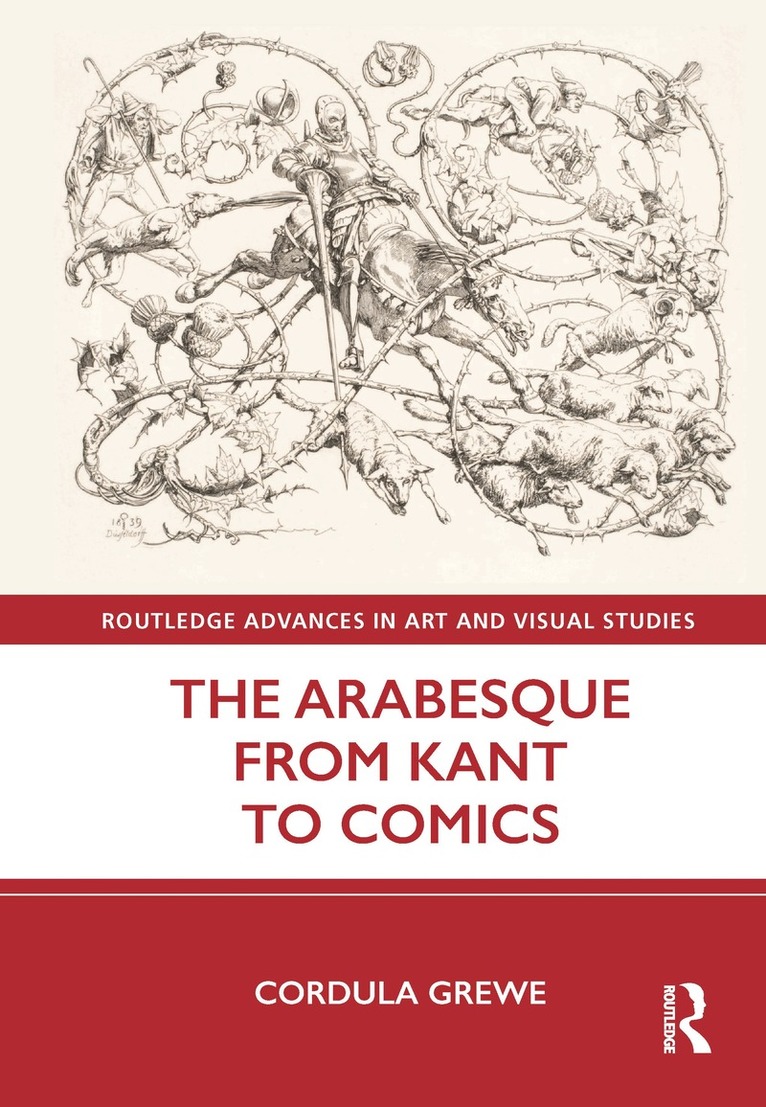
    The Arabesque from Kant to Comics tracks the life and afterlife of the arabesque in its surprising transformation from an iconoclastic literary theory of early German Romanticism to aesthetic experimentation in both avant-garde art and popular culture.Its explosive growth in popularity was followed by an inevitable taming as arabesques became staples in book illustration, poetry publications, and even the decoration of printed scores. The subversive potential of the arabesque was preserved in one of its most surprising offspring, the comic strip: born at the moment when the cholera pandemic first swept through Europe, the comic translated the arabesque’s rank growth into unnerving lawlessness and sequences of contagious visual slapstick. Focusing roughly on the period between 1780 and 1880, this book illuminates the intersecting histories of avant-garde theories of writing, visual culture, and even the disciplinary origins of art history. In the process, it explores media history and intermediality, social networks and cultural transfer, as well as the rise of new and nontraditional art forms.This book will be of particular interest to scholars of art history, intellectual history, European art, aesthetics, book illustration, material culture, reproduction, comics, and German history.

    Produktinformation

    • Utgivningsdatum:2024-08-26
    • Mått:174 x 246 x undefined mm
    • Vikt:760 g
    • Format:Häftad
    • Språk:Engelska
    • Serie:Routledge Advances in Art and Visual Studies
    • Antal sidor:300
    • Förlag:Taylor & Francis Ltd
    • ISBN:9781032043708

    Utforska kategorier

    • Europas historia inom Historia och arkeologi
    • Konsthistoria inom Kultur
    • Allmän historia och världshistoria inom Historia och arkeologi

    Mer om författaren

    Cordula Grewe is Professor of Art History at Indiana University Bloomington, USA.

    Innehållsförteckning

    • Part I: Three Beginnings 1. Prologue 2. Forays into a Form Grown Wild: Setting the Stage 3. An Outline (of Things to Come) Part II: The Arabesque Revolution: Image, Script, and the Crisis of Representation 4. Metaphysics and Media Crisis 5. The Ornament of the Gaze: On Albrecht Dürer 6. The Divine (as) Parergon 7. Ornament, Allegory, Autonomy: Winckelmann, Lessing, Goethe, Karl Philipp Moritz 8. The Disappearance of a Goddess: On Immanuel Kant’s Parergonality Part III: The Writing on the Wall 9. Art History Painted: Peter Cornelius’s Murals for Munich’s First Picture Gallery, 1827–1840 10. History as Nationalist Vision: Wilhelm Kaulbach’s Murals for Berlin’s Neue Museum, 1847–1865 Part IV: Turning the Page 11. Philipp Otto Runge’s Flypaper: On Intimacy 12. The Poet’s Pencil: On Clemens Brentano and Achim von Arnim 13. Turning the Page: On Eugen Napoleon Neureuther Part V: Taming the Arabesque 14. The Artist as Arabesque: Wilhelm Schadow as The Modern Vasari 15. The Humorous Arabesque: From Wilhelm Schadow to Karl Leberecht Immermann and back, via Johann Baptist Sonderland 16. The Arabesque’s Kingdom: Adolph Schroedter and Theodor Mintrop 17. Illustration as Intervention and Parody: On Julius Hübner Part VI: A Symphonic Intermezzo 18. Beethoven, or the Call for Freedom in Composition: On Moritz von Schwind 19. The Laws of Form: On Seriality and Pictures’ Stories Part VII: A Satirical Finale 20. Contagious Laughter: On Pandemics, the Comics’ Birth, and Rodolphe Töpffer 21. "Ach! Poor Venus is perdue": On Wilhelm Busch 22. The Last Act’s Final Flourish