• Fri frakt över 249 kr
  • •
  • Snabba leveranser
  • •
  • Billiga böcker
Kundservice

Du är på sajten för privatpersoner.

Företag, bibliotek eller offentlig verksamhet?

Du handlar på classic.bokus.com, där alla dina funktioner finns intakta.
Till classic.bokus.com
Bokus logotyp. Gå till startsidan.
  • Erbjudanden
  • Nyheter
  • Student
  • Topplistor
  • Barn & ungdom
  • Bokus Play
  • E-böcker
  • Pocketböcker
  • Spel & pussel

10% rabatt på allt med kod: NYSTART10 →

Sidfot

Mina sidor

    Hjälp

    • Kundservice
    • Vanliga frågor och svar
    • Frakt och leverans
    • Retur vid ångerrätt
    • Reklamera vara
    • Betalning
    • Köpvillkor
    • Allmänna villkor
    • Information om webbplatsens tillgänglighet

    Om Bokus

    • Om oss
    • Pressrum
    • För studenter
    • För företag
    • För bibliotek och offentlig verksamhet
    • För leverantörer
    • Hållbarhet

    Populärt

    • Aktuella erbjudanden
    • Presentkort
    • Studentlitteratur
    • Nya böcker
    • Topplistor
    • Signerade böcker
    • Engelska böcker

    Inspiration

    • Boktips
    • BookTok
    • Populära bokserier
    • Barnbokskaraktärer
    • Populära författare
    Logotyp för Bokus
    Följ oss på Facebook (extern länk)Följ oss på Instagram (extern länk)Följ oss på YouTube (extern länk)Följ oss på TikTok (extern länk)
    bokus @ CookiesAnpassa cookiesIntegritetspolicyKöpvillkor
    Till Citymail hemsida (extern länk)Till Budbee hemsida (extern länk)Till Postnord hemsida (extern länk)Till Schenker hemsida (extern länk)Till Early Bird hemsida (extern länk)Till Walleys hemsida (extern länk)
    1. Historia och arkeologi
    2. Historia
    3. Asiens historia

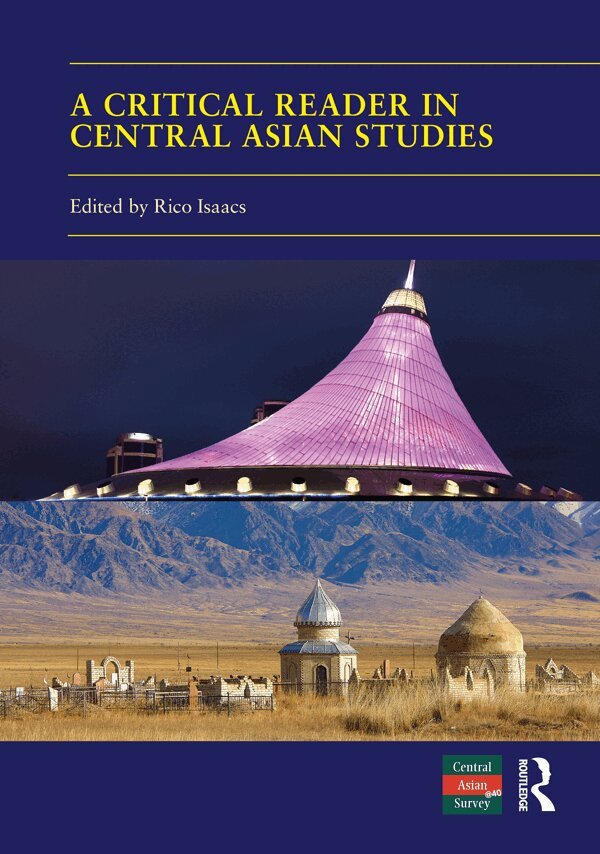
    Critical Reader in Central Asian Studies

    40 Years of Central Asian Survey

    AvRico Isaacs

    Häftad, Engelska, 2024

    Del i serien Central Asian Studies

    687 kr

    Beställningsvara. Skickas inom 10-15 vardagar. Fri frakt över 249 kr.

    Beskrivning

    Central Asian Survey has remained as the premier world-leading peer-reviewed journal for Central Asian studies for four decades. To mark the 40th anniversary of the journal, this volume is intended to be a reader of selected essays from the journal over the last four decades. This book is not just a mere collection, but also a critical reflection on the field over that time. Each of the nine sections in the book feature a critical appraisal of the selected excerpts by young scholars who analyse the reproduced excerpts and the contribution they make to advancing our understanding of the field. The nine sections encapsulate prominent themes in Central Asian studies: history, identity and nationalism, Islam, governing and the state, informal institutions, contentious politics, gender, everyday life, and regional and global perspectives. The book is not just intended to reflect on the role of Central Asian Survey in the development of Central Asian studies, but also the aim is for the volume to be used as a teaching resource where the different sections in the collection could correlate to specific teaching weeks in courses on the region. The different contributions cover many case studies from across a range of countries that have featured in the journal over the years, and thus is not just restricted to the Central Asian republics but also includes Mongolia, Azerbaijan, and Xinjiang. This book will serve as a great resource for researchers and students of Central Asian history, politics, culture, society, and international relations.

    Produktinformation

    • Utgivningsdatum:2024-01-29
    • Mått:174 x 246 x 17 mm
    • Vikt:453 g
    • Format:Häftad
    • Språk:Engelska
    • Serie:Central Asian Studies
    • Antal sidor:210
    • Förlag:Taylor & Francis Ltd
    • ISBN:9781032060217

    Utforska kategorier

    • Asiens historia inom Historia och arkeologi
    • Referensverk och tvärvetenskap inom Samhälle och politik
    • Politik och statsskick inom Samhälle och politik

    Mer om författaren

    Rico Isaacs is an associate professor of politics at the University of Lincoln where he teaches courses in politics, nationalism, and Central Asia. His research interest concentrates on the political sociology of authoritarianism with an emphasis on the post-Soviet space focusing on Central Asia. Isaacs is the author and/or editor of five books and has published in world-leading peer-reviewed academic journals, including Europe-Asia Studies, Third World Quarterly, Contemporary Politics, Problems of Post-Communism, Nationalities Papers, and Electoral Studies, among many others. Isaacs has extensive fieldwork experience in the Central Asian region and has received funding from the European Union, the British Academy, the Leverhulme Trust, and the British Council. He has provided consultancy for international research projects and political risk companies and has provided commentary on political developments in the region to various international media outlets. He has been serving as the editor of Central Asian Survey since 2019.

    Innehållsförteckning

    • Introduction: 40 Years of Central Asian SurveyRico IsaacsSection One: HistoryIntroductionMikhail AkulovExcerptsThe Russian conquest of Central Asia (1982), Mehmet SarayThe role of the pristavstvo institution in the context of Russian imperial policies in the Kazakh Steppe in the nineteenth century (2014), Gulmira SultangalievaThe creation of Soviet Central Asia: The 1924 national delimitation (1995), Steven SabolHumans as territory: forced resettlement and the making of Soviet Tajikistan, 1920–1938 (2011), Botakoz KassymbekovaMarriage, modernity, and the ‘friendship of nations’: interethnic intimacy in post-war Central Asia in comparative perspective (2007), Adrienne Lynn EdgarSection Two: Identity and NationalismIntroductionKristoffer ReesExcerptsThe politics of identity change in Soviet Central Asia (1984), S. Enders Wimbush Creating national identity in socialist Mongolia (1998), Christopher KaplonskiImagined communities: Kazak nationalism and Kazakification in the 1990s (1999), Azamat Sarsembayev Nationalism as a geopolitical phenomenon: The Central Asian case (2001), Farkhod TolipovGlobal Astana: nation branding as a legitimization tool for authoritarian regimes (2015), Adrien FauveSection Three: IslamIntroductionGalym ZhussipbekExcerptsIslam in Soviet central Asia, 1917–1930: Soviet policy and the struggle for control (1992), Shoshana KellerSoviet Islam since the invasion of Afghanistan (1982), Alexandre BennigsenIslamic revival in the central Asian Republics (1994), Mehrdad HaghayeghiThe logic of Islamic practice: a religious conflict in Central Asia (2006), Sergei Abashin Islamic discourses in Azerbaijan: the securitization of ‘non-traditional religious movements (2018), Galib BashirovSection Four: Governing and the StateIntroductionAssel TutumluExcerptsSharaf Rashidov and the dilemmas of national leadership (1986), Gregory GleasonAuthoritarian political development in Central Asia: The case of Turkmenistan (1995), John AndersonTajikistan amidst globalization: state failure or state transformation? (2011), John HeathershawDisorder over the border: spinning the spectre of instability through time and space in Central Asia (2018), Natalie KochSection Five: Informal InstitutionsIntroductionDina SharipovaExcerpts‘Tribalism’ and identity in contemporary circumstances: The case of Kazakstan (1998), Saulesh EsenovaNeopatrimonialism, interest groups and patronage networks: the impasses of the governance system in Uzbekistan (2007), Alisher IlkhamovTheories on Central Asian factionalism: the debate in political science and its wider implications (2007), David GullettePolitical and social networks in Tajikistan and Uzbekistan: ‘clan’, region and beyond (2009), İdil Tunçer-KılavuzSection Six: Contentious PoliticsIntroductionAsel DoolotkeldievaExcerptsCentral Asian riots and disturbances, 1989–1990: Causes and context (1991), Yaacov Ro'iNetworks, localism and mobilization in Aksy, Kyrgyzstan (2005), Scott RadnitzPoetry of witness: Uzbek identity and the response to Andijon (2007), Sarah KendziorThe dynamics of regime change: domestic and international factors in the ‘Tulip Revolution’ (2008), David LewisPost-violence regime survival and expansion in Kazakhstan and Tajikistan (2016), Erica MaratSection Seven: GenderIntroductionNodira KholmatovaExcerptsThe politics of gender and the Soviet paradox: neither colonized, nor modern? (2007), Deniz KandiyotiMaking the ‘empowered woman’: exploring contradictions in gender and development programming in Kyrgyzstan (2018), Elena Kim, Asel Myrzabekova, Elena Molchanova & Olha YarovaWomen of protest, men of applause: political activism, gender and tradition in Kyrgyzstan (2019), Judith Beyer & Aijarkyn KojobekovaWhat's in a name? The personal and political meanings of ‘LGBT’ for non-heterosexual and transgender youth in Kyrgyzstan (2010), Cai Wilkinson & Anna KireySection Eight: Everyday LifeIntroductionRano TuraevaExcerptsHousehold networks and the security of mutual indebtedness in rural Kazakstan (1998), Cynthia WernerStaying put? Towards a relational politics of mobility at a time of migration (2011), Madeleine ReevesWedding rituals and the struggle over national identities (2011), Sophie Roche & Sophie Hohmann‘How can I be post-Soviet if I was never Soviet?’ Rethinking categories of time and social change – a perspective from Kulob, southern Tajikistan (2015), Diana Ibañez-TiradoSection Nine: Regional and Global PerspectivesIntroductionZhanibek ArynovExcerptsVirtual regionalism, regional structures, and regime security in Central Asia (2008), Roy AllisonRegime security, base politics, and rent-seeking: the local and global political economies of the American air base in Kyrgyzstan, 2001–2010 (2015), Kemel ToktomushevBlurring the line between licit and illicit: transnational corruption networks in Central Asia and beyond (2015), Alexander Cooley & J.C. Sharman'Thoroughly reforming them towards a healthy heart attitude’: China’s political re-education campaign in Xinjiang (2019), Adrian Zenz