• Fri frakt över 249 kr
  • •
  • Snabba leveranser
  • •
  • Billiga böcker
Kundservice

Du är på sajten för privatpersoner.

Företag, bibliotek eller offentlig verksamhet?

Du handlar på classic.bokus.com, där alla dina funktioner finns intakta.
Till classic.bokus.com
Bokus logotyp. Gå till startsidan.
  • Erbjudanden
  • Nyheter
  • Student
  • Topplistor
  • Barn & ungdom
  • Bokus Play
  • E-böcker
  • Pocketböcker
  • Spel & pussel

10% studentrabatt med kod TERM26

Sidfot

Mina sidor

    Hjälp

    • Kundservice
    • Vanliga frågor och svar
    • Frakt och leverans
    • Retur vid ångerrätt
    • Reklamera vara
    • Betalning
    • Köpvillkor
    • Allmänna villkor
    • Information om webbplatsens tillgänglighet

    Om Bokus

    • Om oss
    • Pressrum
    • För studenter
    • För företag
    • För bibliotek och offentlig verksamhet
    • För leverantörer
    • Hållbarhet

    Populärt

    • Aktuella erbjudanden
    • Presentkort
    • Studentlitteratur
    • Nya böcker
    • Topplistor
    • Signerade böcker
    • Engelska böcker

    Inspiration

    • Boktips
    • BookTok
    • Populära bokserier
    • Barnbokskaraktärer
    • Populära författare
    Logotyp för Bokus
    Följ oss på Facebook (extern länk)Följ oss på Instagram (extern länk)Följ oss på YouTube (extern länk)Följ oss på TikTok (extern länk)
    bokus @ CookiesAnpassa cookiesIntegritetspolicyKöpvillkor
    Till Citymail hemsida (extern länk)Till Budbee hemsida (extern länk)Till Postnord hemsida (extern länk)Till Schenker hemsida (extern länk)Till Early Bird hemsida (extern länk)Till Walleys hemsida (extern länk)
    1. Filosofi och religion
    2. Filosofi
    3. Filosofiska discipliner

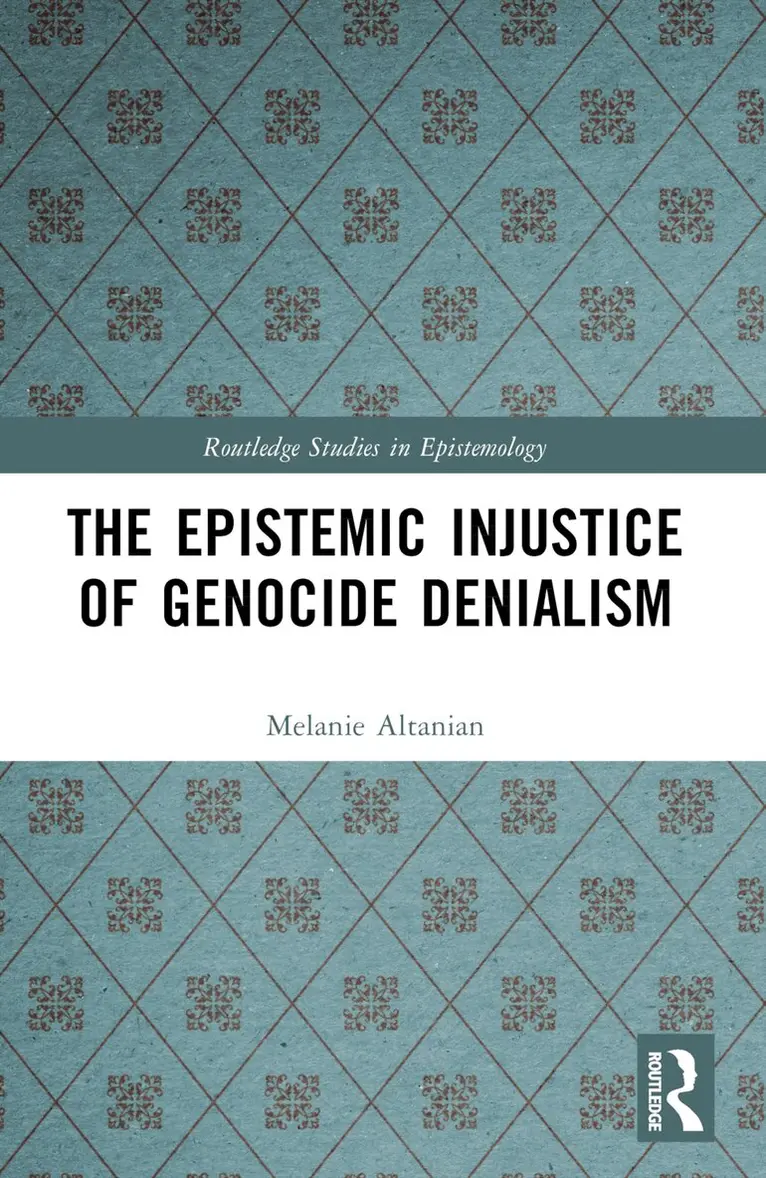
    Epistemic Injustice of Genocide Denialism

    AvMelanie Altanian

    Häftad, Engelska, 2025

    Del i serien Routledge Studies in Epistemology

    684 kr

    Beställningsvara. Skickas inom 10-15 vardagar. Fri frakt över 249 kr.

    Fler format och utgåvor

    Inbunden

    2 434 kr

    Beskrivning

    The injustice of genocide denial is commonly understood as a violation of the dignity of victims, survivors, and their descendants, and further described as an assault on truth and memory. This book rethinks the normative relationship between dignity, truth, and memory in relation to genocide denial by adopting the framework of epistemic injustice.This framework performs two functions. First, it introduces constructive normative vocabulary into genocide scholarship through which we can gain a better understanding of the normative impacts of genocide denial when it is institutionalized and systematic. Second, it develops and enriches current scholarship on epistemic injustice with a further, underexplored case study. Genocide denialism is relevant for political and social epistemology, as it presents a substantive epistemic practice that distorts normativity and social reality in ways that maintain domination. This generates pervasive ignorance that makes denial rather than recognition of genocide appear as the morally and epistemically right thing to do. By focusing on the prominent case of Turkey’s denialism of the Armenian genocide, the book shows the serious consequences of this kind of epistemic injustice for the victim group and society as a whole.The Epistemic Injustice of Genocide Denialism will appeal to students and scholars working in social, political, and applied epistemology, social and political philosophy, genocide studies, Armenian studies, and memory studies.The Open Access version of this book, available at www.taylorfrancis.com, has been made available under a Creative Commons Attribution-Non Commercial-No Derivatives (CC-BY-NC-ND) 4.0 license. Any third party material in this book is not included in the OA Creative Commons license, unless indicated otherwise in a credit line to the material. Please direct any permissions enquiries to the original rightsholder.Funded by: Swiss National Science Foundation

    Produktinformation

    • Utgivningsdatum:2025-09-28
    • Mått:152 x 229 x 11 mm
    • Vikt:292 g
    • Format:Häftad
    • Språk:Engelska
    • Serie:Routledge Studies in Epistemology
    • Antal sidor:182
    • Förlag:Taylor & Francis Ltd
    • ISBN:9781032064062

    Utforska kategorier

    • Filosofiska discipliner inom Filosofi och religion
    • Politiskt förtryck inom Samhälle och politik
    • Folkmord och etnisk rensning inom Historia och arkeologi

    Mer om författaren

    Melanie Altanian is Assistant Professor at the University of Freiburg, Chair of Epistemology and Theory of Science. Previously, she was a guest lecturer and research assistant at University College Dublin, School of Philosophy. She recently published (together with Maria Baghramian) the edited volume, Testimonial Injustice and Trust (2024) for Routledge.

    Recensioner i media

    "The wrong of genocidal violence extends for generations after the attacks have stopped, particularly when the harm is compounded by deniers and state-sponsored denialism. Drawing on the experience of generations of Armenians, Altanian reflects on what it is to remember, to bear witness, and to know, showing how denial attacks survivors’ and descendants’ moral value, their social existence, and their epistemological standing as those who know." Anne O’Byrne, Stony Brook University, USA"The Epistemic Injustice of Genocide Denialism provides a timely analysis of the harms and wrongs of genocide denial, not only with respect to those who actively engage such denials, but also with respect to those who maintain the structural conditions that make such denials possible."Gaile Pohlhaus, Jr., Miami University (Ohio), USA"Altanian’s interdisciplinary philosophical study is a must-read for anyone interested in understanding the specific harms of genocide denialism."Imge Oranlı, Arizona State University, USA

    Innehållsförteckning

    • Introduction Part 1: Genocide and Genocide Denialism 1. On Genocide Denial 2. An Epistemology of Genocide Denialism Part 2: The Epistemic Injustice of Genocide Denialism 3. The Wrong of Discriminatory Epistemic Injustice 4. Genocide Denialism, Misremembrance and Hermeneutical Oppression 5. Conversational Genocide Denial and Testimonial Oppression Concluding Remarks