• Fri frakt över 249 kr
  • •
  • Snabba leveranser
  • •
  • Billiga böcker
Kundservice

Du är på sajten för privatpersoner.

Företag, bibliotek eller offentlig verksamhet?

Du handlar på classic.bokus.com, där alla dina funktioner finns intakta.
Till classic.bokus.com
Bokus logotyp. Gå till startsidan.
  • Erbjudanden
  • Nyheter
  • Student
  • Topplistor
  • Barn & ungdom
  • Bokus Play
  • E-böcker
  • Pocketböcker
  • Spel & pussel

10% studentrabatt med kod TERM26

Sidfot

Mina sidor

    Hjälp

    • Kundservice
    • Vanliga frågor och svar
    • Frakt och leverans
    • Retur vid ångerrätt
    • Reklamera vara
    • Betalning
    • Köpvillkor
    • Allmänna villkor
    • Information om webbplatsens tillgänglighet

    Om Bokus

    • Om oss
    • Pressrum
    • För studenter
    • För företag
    • För bibliotek och offentlig verksamhet
    • För leverantörer
    • Hållbarhet

    Populärt

    • Aktuella erbjudanden
    • Presentkort
    • Studentlitteratur
    • Nya böcker
    • Topplistor
    • Signerade böcker
    • Engelska böcker

    Inspiration

    • Boktips
    • BookTok
    • Populära bokserier
    • Barnbokskaraktärer
    • Populära författare
    Logotyp för Bokus
    Följ oss på Facebook (extern länk)Följ oss på Instagram (extern länk)Följ oss på YouTube (extern länk)Följ oss på TikTok (extern länk)
    bokus @ CookiesAnpassa cookiesIntegritetspolicyKöpvillkor
    Till Citymail hemsida (extern länk)Till Budbee hemsida (extern länk)Till Postnord hemsida (extern länk)Till Schenker hemsida (extern länk)Till Early Bird hemsida (extern länk)Till Walleys hemsida (extern länk)
    1. Data och IT
    2. Systemvetenskap och AI
    3. Artificiell intelligens

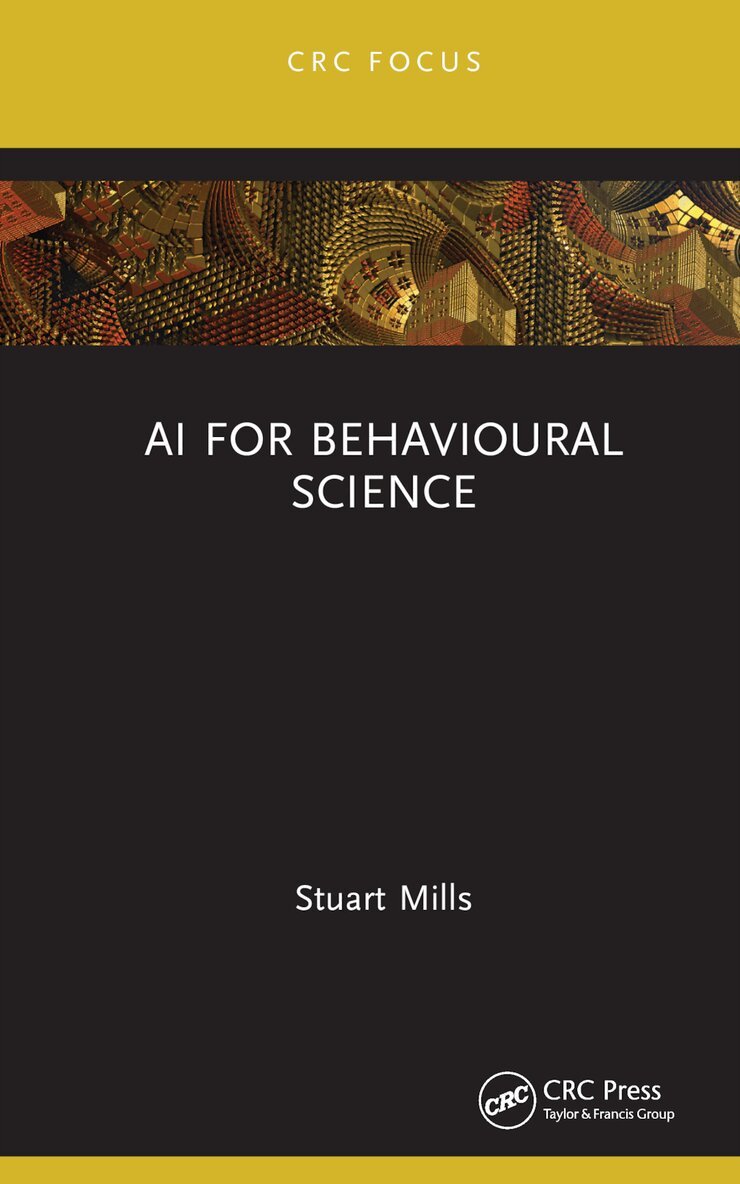
    AI for Behavioural Science

    AvStuart Mills

    Inbunden, Engelska, 2022

    720 kr

    Beställningsvara. Skickas inom 10-15 vardagar. Fri frakt över 249 kr.

    Fler format och utgåvor

    E-bok

    342 kr

    E-bok

    342 kr

    Häftad

    303 kr

    Beskrivning

    This book is a concise introduction to emerging concepts and ideas found at the intersection of contemporary behavioural science and artificial intelligence. The book explores how these disciplines interact, change, and adapt to one another and what the implications of such an interaction are for practice and society.AI for Behavioural Science book begins by exploring the field of machine behaviour, which advocates using behavioural science to investigate artificial intelligence. This perspective is built upon to develop a framework of terminology that treats humans and machines as comparable entities possessing their own motive power. From here, the notion of artificial intelligence systems becoming choice architects is explored through a series of reconceptualisations. The architecting of choices is reconceptualised as a process of selection from a set of choice architectural designs, while human behaviour is reconceptualised in terms of probabilistic outcomes. The material difference between the so-called "manual nudging" and "automatic nudging" (or hypernudging) is then explored. The book concludes with a discussion of who is responsible for autonomous choice architects.

    Produktinformation

    • Utgivningsdatum:2022-12-08
    • Mått:138 x 216 x 13 mm
    • Vikt:254 g
    • Format:Inbunden
    • Språk:Engelska
    • Antal sidor:124
    • Förlag:Taylor & Francis Ltd
    • ISBN:9781032066691

    Utforska kategorier

    • Artificiell intelligens inom Data och IT
    • Kognitiv psykologi inom Psykologi och pedagogik
    • Mikroekonomi inom Ekonomi och Ledarskap

    Mer om författaren

    Stuart Mills is a behavioural economist with a background in economics and political economy. His research focuses on nudge theory, personalisation, and digital economy. He is interested in the intersection of technology, data, and behavioural science within public policy and finance, as well as the wider political economy implications.

    Innehållsförteckning

    • 1. Human Behaviour and Machine Behaviour. 2. Definitions. 3. The Autonomous Choice Architect. 4. AI Knows Best. 5. Some Concluding Discussions