• Fri frakt över 249 kr
  • •
  • Snabba leveranser
  • •
  • Billiga böcker
Kundservice

Du är på sajten för privatpersoner.

Företag, bibliotek eller offentlig verksamhet?

Du handlar på classic.bokus.com, där alla dina funktioner finns intakta.
Till classic.bokus.com
Bokus logotyp. Gå till startsidan.
  • Erbjudanden
  • Nyheter
  • Student
  • Topplistor
  • Barn & ungdom
  • Bokus Play
  • E-böcker
  • Pocketböcker
  • Spel & pussel

10% studentrabatt med kod TERM26

Sidfot

Mina sidor

    Hjälp

    • Kundservice
    • Vanliga frågor och svar
    • Frakt och leverans
    • Retur vid ångerrätt
    • Reklamera vara
    • Betalning
    • Köpvillkor
    • Allmänna villkor
    • Information om webbplatsens tillgänglighet

    Om Bokus

    • Om oss
    • Pressrum
    • För studenter
    • För företag
    • För bibliotek och offentlig verksamhet
    • För leverantörer
    • Hållbarhet

    Populärt

    • Aktuella erbjudanden
    • Presentkort
    • Studentlitteratur
    • Nya böcker
    • Topplistor
    • Signerade böcker
    • Engelska böcker

    Inspiration

    • Boktips
    • BookTok
    • Populära bokserier
    • Barnbokskaraktärer
    • Populära författare
    Logotyp för Bokus
    Följ oss på Facebook (extern länk)Följ oss på Instagram (extern länk)Följ oss på YouTube (extern länk)Följ oss på TikTok (extern länk)
    bokus @ CookiesAnpassa cookiesIntegritetspolicyKöpvillkor
    Till Citymail hemsida (extern länk)Till Budbee hemsida (extern länk)Till Postnord hemsida (extern länk)Till Schenker hemsida (extern länk)Till Early Bird hemsida (extern länk)Till Walleys hemsida (extern länk)
    1. Medicin
    2. Medicin: allmänt
    3. Samhällsmedicin och preventiv medicin

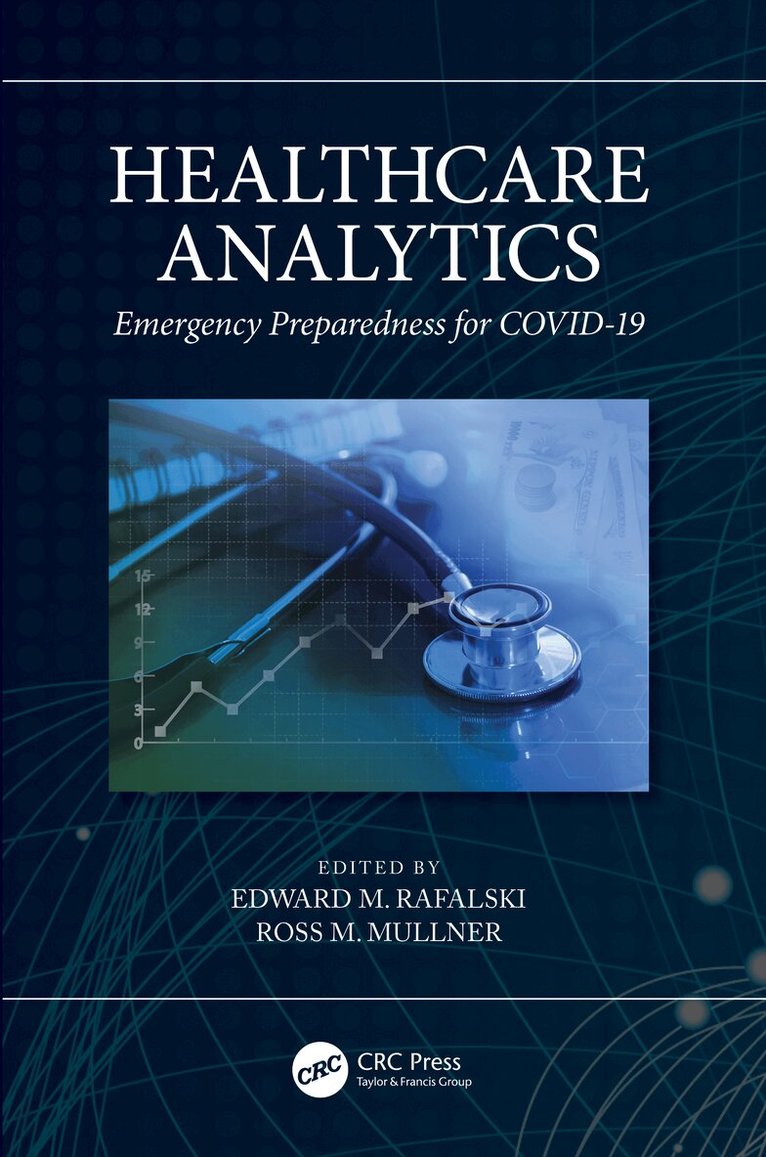
    Healthcare Analytics

    Emergency Preparedness for COVID-19

    AvEdward M. Rafalski,Ross M. Mullner

    Häftad, Engelska, 2024

    734 kr

    Beställningsvara. Skickas inom 10-15 vardagar. Fri frakt över 249 kr.

    Beskrivning

    The first COVID-19 case in the US was reported on January 20, 2020. As the first cases were being reported in the US, Washington State became a reliable source not just for hospital bed demand based on incidence and community spread but also for modeling the impact of skilled nursing facilities and assisted living facilities on hospital bed demand. Various hospital bed demand modeling efforts began in earnest across the United States in university settings, private consulting and health systems. Nationally, the University of Washington Institute of Health Metrics and Evaluation seemed to gain a footing and was adopted as a source for many states for its ability to predict the epidemiological curve by state, including the peak.This book therefore addresses a compelling need for documenting what has been learned by the academic and professional healthcare communities in healthcare analytics and disaster preparedness to this point in the pandemic. What is clear, at least from the US perspective, is that the healthcare system was unprepared and uncoordinated from an analytics perspective. Learning from this experience will only better prepare all healthcare systems and leaders for future crisis.Both prospectively, from a modeling perspective and retrospectively from a root cause analysis perspective, analytics provide clarity and help explain causation and data relationships. A more structured approach to teaching healthcare analytics to students, using the pandemic and the rich dataset that has been developed, provides a ready-made case study from which to learn and inform disaster planning and preparedness. The pandemic has strained the healthcare and public health systems. Researchers and practitioners must learn from this crisis to better prepare our processes for future pandemics, at minimum. Finally, government officials and policy makers can use this data to decide how best to assist the healthcare and public health systems in crisis.

    Produktinformation

    • Utgivningsdatum:2024-10-07
    • Mått:156 x 234 x 17 mm
    • Vikt:480 g
    • Format:Häftad
    • Språk:Engelska
    • Antal sidor:264
    • Förlag:Taylor & Francis Ltd
    • ISBN:9781032068466

    Utforska kategorier

    • Samhällsmedicin och preventiv medicin inom Medicin
    • Referensverk och tvärvetenskap inom Samhälle och politik
    • Medicinsk utrustning och medicinska tekniker inom Medicin

    Mer om författaren

    Edward M. Rafalski is Adjunct Assistant Professor at University of Illinois School of Public Health, and an Affiliate Associate Professor at the University of South Florida, College of Public Health. He holds qualifications from the University of Chicago and Yale University School of Public Health.

    Recensioner i media

    The epilogue was written just as the Pfizer and Moderna Covid-19 vaccines received approval—a remarkable moment in US health care history. Interactions among local, state, and federal governments and information sharing within the health care industrial complex are the overall focus of analysis. From case studies of wellness among Alabama health care workers to analysis of Colorado hospitals' financial decisions and race-based health inequities in Chicago, this is an ideal textbook for courses on government impacts on health care, health care policy, and/or the COVID-19 response. Part lessons learned, part social commentary, part technological interoperability analysis, this is a well-referenced gem cast in straightforward language.- K. O'Grady, University of San Diego

    Innehållsförteckning

    • Introduction – Edward M. RafalskiI. Section 1 – Epidemiology and analytics1. What is a pandemic, an epidemic? – Jonathan A. McCullers2. A brief history of pandemics – Jonathan A. McCullers3. Health care continuum – Edward M. Rafalski4. The fog of war and data – Edward M. Rafalski5. Sources of data/modeling – Edward M. Rafalski and Robert Marksthaler6. Quantifying and responding to COVID's financial and operational impact – Mark Grube and Rob FrombergII. Section 2 - State case studies7. Measuring and addressing healthcare employee well-being in an Alabama health system during COVID-19 – Katherine A. Meese et al.8. Colorado state case study - Adom Netsanet et al.9. Case study: A Florida COVID-19 dashboard – Zachary Pruitt et al.10. State case study: Illinois – Helen Margellos-Anast et al.11. Tennessee case study – Cori Cohen Grant et al.12. Regional modeling – Madeleine McDowell et al.III. Section 3 - Topics13. Healthcare analytics: The effects of the pandemic on behavioral health – Kasey Knopp and Naakesh (Nick) Dewan14. Digital transformation in healthcare: How COVID-19 was an agent for rapid change – Bala Hota and Omar Lateef15. Telehealth – Richard Fine16. The COVID-19 pandemic and development of drugs and vaccinations – Pradeep S. B. Podila16. Value of health information exchanges to support public health reporting – Pradeep S. B. PodilaConclusion – Edward M. Rafalski and Ross M. MullnerEpilogue – Edward M. Rafalski