• Fri frakt över 249 kr
  • •
  • Snabba leveranser
  • •
  • Billiga böcker
Kundservice

Du är på sajten för privatpersoner.

Företag, bibliotek eller offentlig verksamhet?

Du handlar på classic.bokus.com, där alla dina funktioner finns intakta.
Till classic.bokus.com
Bokus logotyp. Gå till startsidan.
  • Erbjudanden
  • Nyheter
  • Student
  • Topplistor
  • Barn & ungdom
  • Bokus Play
  • E-böcker
  • Pocketböcker
  • Spel & pussel

10% rabatt på allt med kod: NYSTART10 →

Sidfot

Mina sidor

    Hjälp

    • Kundservice
    • Vanliga frågor och svar
    • Frakt och leverans
    • Retur vid ångerrätt
    • Reklamera vara
    • Betalning
    • Köpvillkor
    • Allmänna villkor
    • Information om webbplatsens tillgänglighet

    Om Bokus

    • Om oss
    • Pressrum
    • För studenter
    • För företag
    • För bibliotek och offentlig verksamhet
    • För leverantörer
    • Hållbarhet

    Populärt

    • Aktuella erbjudanden
    • Presentkort
    • Studentlitteratur
    • Nya böcker
    • Topplistor
    • Signerade böcker
    • Engelska böcker

    Inspiration

    • Boktips
    • BookTok
    • Populära bokserier
    • Barnbokskaraktärer
    • Populära författare
    Logotyp för Bokus
    Följ oss på Facebook (extern länk)Följ oss på Instagram (extern länk)Följ oss på YouTube (extern länk)Följ oss på TikTok (extern länk)
    bokus @ CookiesAnpassa cookiesIntegritetspolicyKöpvillkor
    Till Citymail hemsida (extern länk)Till Budbee hemsida (extern länk)Till Postnord hemsida (extern länk)Till Schenker hemsida (extern länk)Till Early Bird hemsida (extern länk)Till Walleys hemsida (extern länk)
    1. Historia och arkeologi
    2. Historia
    3. Historia: särskilda händelser och ämnen
    4. Socialhistoria och kulturhistoria

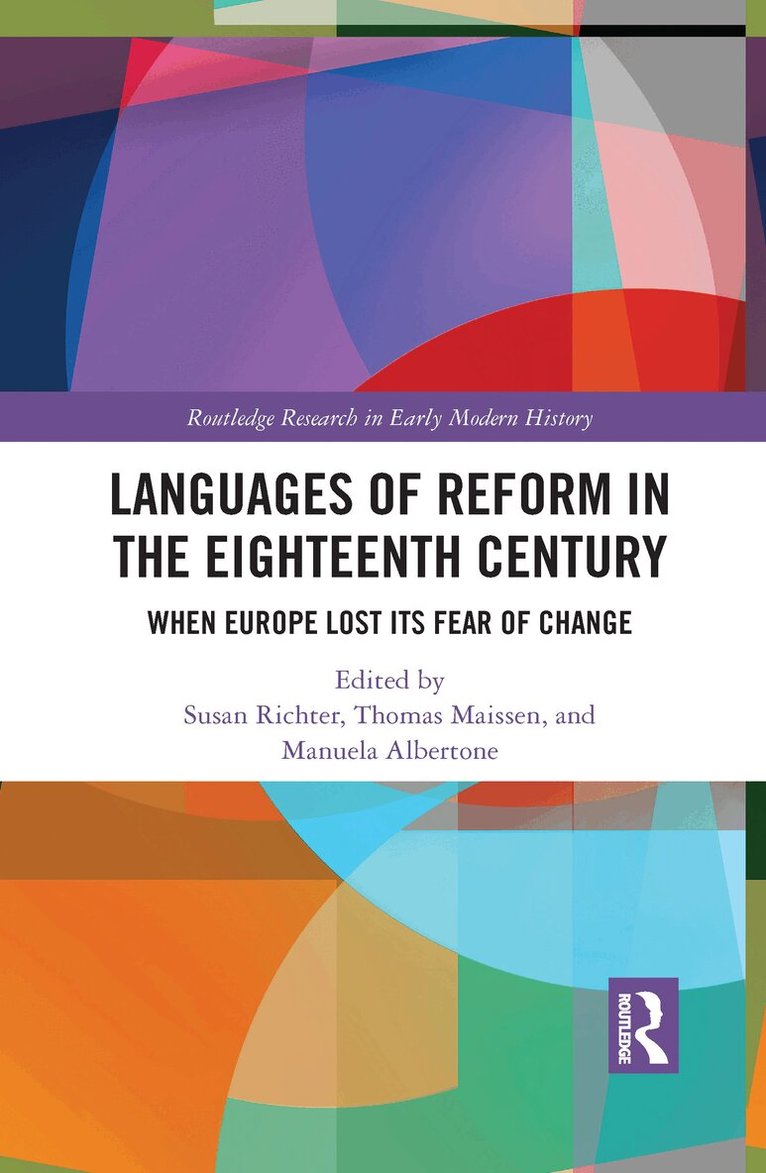
    Languages of Reform in the Eighteenth Century

    When Europe Lost Its Fear of Change

    AvSusan Richter,Thomas Maissen

    Häftad, Engelska, 2021

    Del i serien Routledge Research in Early Modern History

    701 kr

    Beställningsvara. Skickas inom 10-15 vardagar. Fri frakt över 249 kr.

    Beskrivning

    Societies perceive "Reform" or "Reforms" as substantial changes and significant breaks which must be well-justified. The Enlightenment brought forth the idea that the future was uncertain and could be shaped by human beings. This gave the concept of reform a new character and new fields of application. Those who sought support for their plans and actions needed to reflect, develop new arguments, and offer new reasons to address an anonymous public. This book aims to compile these changes under the heuristic term of "languages of reform." It analyzes the structures of communication regarding reforms in the 18th century through a wide variety of topics.

    Produktinformation

    • Utgivningsdatum:2021-06-30
    • Mått:152 x 229 x 24 mm
    • Vikt:625 g
    • Format:Häftad
    • Språk:Engelska
    • Serie:Routledge Research in Early Modern History
    • Antal sidor:452
    • Förlag:Taylor & Francis Ltd
    • ISBN:9781032087597

    Utforska kategorier

    • Socialhistoria och kulturhistoria inom Historia och arkeologi
    • Europas historia inom Historia och arkeologi

    Mer om författaren

    Susan Richter is Full Professor of Early Modern History at Christian-Albrechts-University Kiel.Thomas Maissen is Professor of Early Modern History at Heidelberg University.Manuela Albertone is Professor of Early Modern History at the University of Turin.

    Innehållsförteckning

    • Introduction: Languages of Reform and the European Enlightenment Section I: Semantics of Languages of Reform 1. The Concept of Reform in Polyglot European Enlightenment 2. The Dawning of the Age of Reform: Epistemic and Semantic Shifts in Georgian Britain 3. The Making of "Federalism" in Eighteenth-Century France: Between Reform and Revolution 4. Ambiguity in Translation: Communicating Economic Reform in the Multilingual Republic of Berne Section II: Strategies and Rhetoric of Reform 5. Change and Improvement to Save the State: Administrative Reforms in Maria Theresian Austria 6. Reform as Verbesserung: Argumentative Patterns and the Role of Models in German Cameralism 7. Luxury as an Eighteenth-Century Language of Reform of Society Between France and Italy: Jean-François Melon, Antonio Genovesi and Georges-Marie Butel-Dumont 8. A Useful Public Institution?: Languages of University Reform in the German Territories, 1750–1800 Section III: Thematic Vocabularies in Specific Contexts 9. A Kind of Sovereignty?: Legitimising Freedom of Contract in the 18th Century 10. From Economic Reform to Political Revolution: The Language of Dutch Patriotism 11. Mending the Boat While Sailing: Languages of Linguistic Reform in the German Territories, c. 1750–1815 12. From a Reform-Language of Speculation to a Speculative Language of Reform: Liberalising Trade in Mid-18th-Century France 13. From the Civic Improvement of the Jews to the Separation of State and Church: Languages of Political Reform in Brandenburg-Prussia, 1781-1799 Section IV: Adaption and Translation of Reform Languages 14. The Difficult Reform of Military Discipline in the Latter Half of Eighteenth-Century France 15. Writing on "The New Order": Ottoman Approaches to Late Eighteenth-Century Reforms Section V: Reflecting on Reform 16. Reform, Revolution, and the Republican Tradition: The Case of the Batavian Republic 17. Words and Things: The Language of Reform in Wilhelm Traugott Krug and Karl Ludwig von Haller. Conclusion: Bringing a Despotic Agenda into the Public Sphere — Concluding Remarks on Languages of Reform