• Fri frakt över 249 kr
  • •
  • Snabba leveranser
  • •
  • Billiga böcker
Kundservice

Du är på sajten för privatpersoner.

Företag, bibliotek eller offentlig verksamhet?

Du handlar på classic.bokus.com, där alla dina funktioner finns intakta.
Till classic.bokus.com
Bokus logotyp. Gå till startsidan.
  • Erbjudanden
  • Nyheter
  • Student
  • Topplistor
  • Barn & ungdom
  • Bokus Play
  • E-böcker
  • Pocketböcker
  • Spel & pussel

10% rabatt på allt med kod: NYSTART10 →

Sidfot

Mina sidor

    Hjälp

    • Kundservice
    • Vanliga frågor och svar
    • Frakt och leverans
    • Retur vid ångerrätt
    • Reklamera vara
    • Betalning
    • Köpvillkor
    • Allmänna villkor
    • Information om webbplatsens tillgänglighet

    Om Bokus

    • Om oss
    • Pressrum
    • För studenter
    • För företag
    • För bibliotek och offentlig verksamhet
    • För leverantörer
    • Hållbarhet

    Populärt

    • Aktuella erbjudanden
    • Presentkort
    • Studentlitteratur
    • Nya böcker
    • Topplistor
    • Signerade böcker
    • Engelska böcker

    Inspiration

    • Boktips
    • BookTok
    • Populära bokserier
    • Barnbokskaraktärer
    • Populära författare
    Logotyp för Bokus
    Följ oss på Facebook (extern länk)Följ oss på Instagram (extern länk)Följ oss på YouTube (extern länk)Följ oss på TikTok (extern länk)
    bokus @ CookiesAnpassa cookiesIntegritetspolicyKöpvillkor
    Till Citymail hemsida (extern länk)Till Budbee hemsida (extern länk)Till Postnord hemsida (extern länk)Till Schenker hemsida (extern länk)Till Early Bird hemsida (extern länk)Till Walleys hemsida (extern länk)
    1. Samhälle och politik
    2. Samhälle och kultur
    3. Kultur och medier
    4. Referensverk och tvärvetenskap

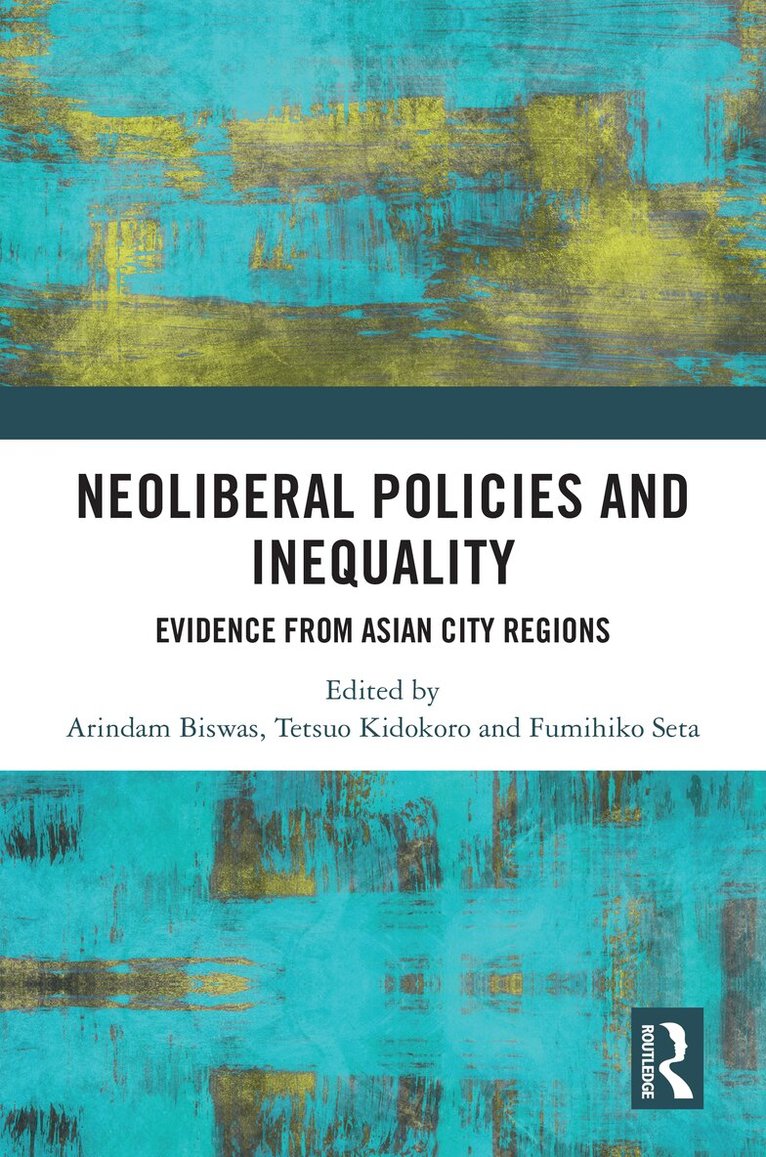
    Neoliberal Policies and Inequality

    Evidence from Asian City Regions

    AvArindam Biswas,Tetsuo Kidokoro

    Inbunden, Engelska, 2024

    2 421 kr

    Beställningsvara. Skickas inom 10-15 vardagar. Fri frakt över 249 kr.

    Beskrivning

    This book explores the discourse on urban and regional inequality within the framework of neoliberalism. It analyzes the widespread application of neoliberal policies in Asian city regions and identifies their influence on rising inequality. The book captures inequality through spatial and non-spatial policy narratives with empirical evidence from India, Japan, South Korea, Taiwan, and Thailand. The book uses analytics, narratives and simulation to unfold the opportunities and threats to urban regions that bear the impacts of globalization and neoliberal policies.Lucid and topical, this book will be an essential read for scholars and researchers of urban economics, urban and regional planning, urban studies, urban sociology, political economy, public policy, governance, development studies and Asian economy.

    Produktinformation

    • Utgivningsdatum:2024-08-21
    • Mått:156 x 234 x 18 mm
    • Vikt:530 g
    • Format:Inbunden
    • Språk:Engelska
    • Antal sidor:176
    • Förlag:Taylor & Francis Ltd
    • ISBN:9781032113296

    Utforska kategorier

    • Referensverk och tvärvetenskap inom Samhälle och politik
    • Regional planering inom Naturvetenskap och teknik
    • Sociala grupper och identitet inom Samhälle och politik

    Mer om författaren

    Arindam Biswas is an Associate Professor at the Department of Architecture and Planning, Indian Institute of Technology (IIT) Roorkee, India.Tetsuo Kidokoro is a Professor at the University of Tokyo, Japan. Fumihiko Seta is currently an associate professor at the Department of Urban Engineering (DUE), School of Engineering, the University of Tokyo, Japan.

    Innehållsförteckning

    • 1.Introduction Part I: Urbanization and inequality in the neoliberal era 2. Expressions of neoliberalism on urbanization pattern in developing countries 3. Polarization to mega-city regions and the urban divide: A comparative study between Tokyo and Mumbai 4. Regional disparities and five-year national development plans in emerging Asian economies: Acceptance of centralization of industrial locations to existing agglomerations Part II: Data visualization and modeling urban and regional inequality 5. Capturing regional inequality due to the agglomeration of knowledge and innovation industry 6. Mapping migration as the metaphor of urban and regional inequality 7. Understanding inequality through spatial analytics 8. Conclusion