• Fri frakt över 249 kr
  • •
  • Snabba leveranser
  • •
  • Billiga böcker
Kundservice

Du är på sajten för privatpersoner.

Företag, bibliotek eller offentlig verksamhet?

Du handlar på classic.bokus.com, där alla dina funktioner finns intakta.
Till classic.bokus.com
Bokus logotyp. Gå till startsidan.
  • Erbjudanden
  • Nyheter
  • Student
  • Topplistor
  • Barn & ungdom
  • Bokus Play
  • E-böcker
  • Pocketböcker
  • Spel & pussel

10% rabatt på allt med kod: NYSTART10 →

Sidfot

Mina sidor

    Hjälp

    • Kundservice
    • Vanliga frågor och svar
    • Frakt och leverans
    • Retur vid ångerrätt
    • Reklamera vara
    • Betalning
    • Köpvillkor
    • Allmänna villkor
    • Information om webbplatsens tillgänglighet

    Om Bokus

    • Om oss
    • Pressrum
    • För studenter
    • För företag
    • För bibliotek och offentlig verksamhet
    • För leverantörer
    • Hållbarhet

    Populärt

    • Aktuella erbjudanden
    • Presentkort
    • Studentlitteratur
    • Nya böcker
    • Topplistor
    • Signerade böcker
    • Engelska böcker

    Inspiration

    • Boktips
    • BookTok
    • Populära bokserier
    • Barnbokskaraktärer
    • Populära författare
    Logotyp för Bokus
    Följ oss på Facebook (extern länk)Följ oss på Instagram (extern länk)Följ oss på YouTube (extern länk)Följ oss på TikTok (extern länk)
    bokus @ CookiesAnpassa cookiesIntegritetspolicyKöpvillkor
    Till Citymail hemsida (extern länk)Till Budbee hemsida (extern länk)Till Postnord hemsida (extern länk)Till Schenker hemsida (extern länk)Till Early Bird hemsida (extern länk)Till Walleys hemsida (extern länk)
    1. Ekonomi och Ledarskap
    2. Industrier och branscher
    3. Lantbruk, fiske och skogsbruk

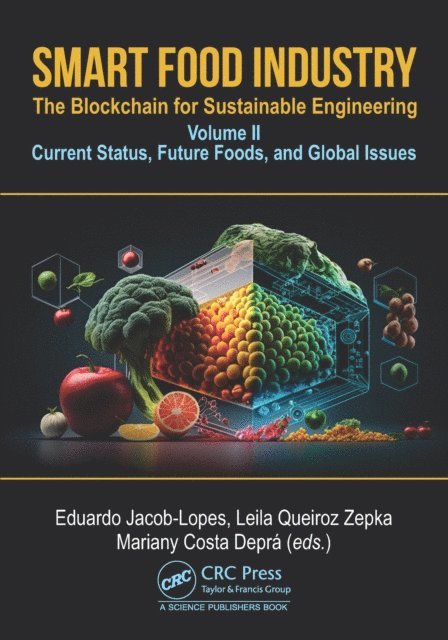
    Smart Food Industry: The Blockchain for Sustainable Engineering

    Volume II - Current Status, Future Foods, and Global Issues

    AvEduardo Jacob Lopes,Leila Queiroz Zepka

    Inbunden, Engelska, 2024

    2 645 kr

    Beställningsvara. Skickas inom 10-15 vardagar. Fri frakt över 249 kr.

    Beskrivning

    Smart Food Industry: The Blockchain for Sustainable Engineering, Volume II - Current Status, Future Foods, and Global Issues reviews the literature and scientific frameworks to present a kind of sustainability compass. Disruptive approaches around potential sustainable foods are also widely investigated in order to be an alternative route for the industrial future. Thus, this book proposes new concepts and strategies to face future sustainability challenges that are on the horizon and can impact the next generation of foods.Divided into three parts, this book discusses the (i) status of sustainable food industry, (ii) next generation and future technology for sustainable foods, and (iii) policy, social, economic, and environmental aspects in food industries.Given the book's breadth, it provides readers with an invaluable reference resource for students, researchers, graduates, and professionals, in general, who wish to gain knowledge about the engineering and food processing area so as to achieve sustainable food production.

    Produktinformation

    • Utgivningsdatum:2024-02-13
    • Mått:178 x 254 x 26 mm
    • Vikt:453 g
    • Format:Inbunden
    • Språk:Engelska
    • Antal sidor:398
    • Förlag:Taylor & Francis Ltd
    • ISBN:9781032138657

    Utforska kategorier

    • Lantbruk, fiske och skogsbruk inom Ekonomi och Ledarskap
    • Databaser inom Data och IT
    • Tillverkningsteknik inom Naturvetenskap och teknik

    Mer om författaren

    Eduardo Jacob-Lopes is currently an associate professor at the Department of Food Technology and Science, Federal University of Santa Maria, Brazil. He has more than 20 years of teaching and research experience. He is a technical and scientific consultant for several companies, agencies, and scientific journals. He has more than 700 publications/communications and has registered 15 patents. His research interest includes biotechnology and bioengineering with an emphasis on environmental biotechnology.Leila Queiroz Zepka is currently an associate professor at the Department of Food Technology and Science, Federal University of Santa Maria, Brazil. She has more than 20 years of teaching and research experience. She is a technical and scientific consultant for several companies, agencies, and scientific journals. She has 600 publications/communications and has registered 11 patents. Her research interest includes microalgal biotechnology with an emphasis on biomolecules and novel products for the food industry.Mariany Costa Deprá is currently a researcher at the Department of Food Science and Technology, Federal University of Santa Maria, Brazil. She is a technical and scientific consultant for companies and scientific journals. With more than 100 publications/communications, her research interest includes process engineering with an emphasis on sustainability metrics and indicators.

    Innehållsförteckning

    • STATUS OF SUSTAINABLE FOOD INDUSTRY. The Food System with Optimum Nutrition Vision. Food Sustainability Index. Green and Sustainable Foodomics. NEXT GENERATION AND FUTURE TECHNOLOGY FOR SUSTAINABLE FOODS. Pseudocereals as Superfoods Complementarity with No Competition for Food and Nutrition Security. Plant-Based Foods. Veggie Meat Alternatives: A Virtue-Ethical View. 'Lab-grown' Meat and Considerations for its Production at Scale. Insect as Food: A Sustainable Foodways. Mealworm-bas ed Foods. Microalgae as Food Source. 3D Food Printing: Fundamental Concepts, Crucial Factors, and A Critical Discussion about Acceptance and Sustainable Contribution. POLICY, SOCIAL, ECONOMIC, AND ENVIRONMENTAL ASPECTS IN FOOD INDUSTRIES. Smart Food Policy as a Response to a New Sustainable Food System Agenda. Food Safety in the Sustainable Food Industry. Consumers' Acceptance (or lack thereof) of Sustainable Food Innovations: Setting Foundations for Convergence Innovation. Food Process Simulation and Techno-Economic Assessment in Sustainable Food Manufacturing. Bioeconomy of Sustainable Food Industries. Smart Logistics for Sustainable Food Industries. Water Footprint of Food Systems. Carbon Footprint of the Food Supply Chain. Environmental Sustainability Assessment of Food Waste Valorization Options.