• Fri frakt över 249 kr
  • •
  • Snabba leveranser
  • •
  • Billiga böcker
Kundservice

Du är på sajten för privatpersoner.

Företag, bibliotek eller offentlig verksamhet?

Du handlar på classic.bokus.com, där alla dina funktioner finns intakta.
Till classic.bokus.com
Bokus logotyp. Gå till startsidan.
  • Erbjudanden
  • Nyheter
  • Student
  • Topplistor
  • Barn & ungdom
  • Bokus Play
  • E-böcker
  • Pocketböcker
  • Spel & pussel

Må bättre, för mindre! Upp till 50% rabatt på hälsoböcker

Sidfot

Mina sidor

    Hjälp

    • Kundservice
    • Vanliga frågor och svar
    • Frakt och leverans
    • Retur vid ångerrätt
    • Reklamera vara
    • Betalning
    • Köpvillkor
    • Allmänna villkor
    • Information om webbplatsens tillgänglighet

    Om Bokus

    • Om oss
    • Pressrum
    • För studenter
    • För företag
    • För bibliotek och offentlig verksamhet
    • För leverantörer
    • Hållbarhet

    Populärt

    • Aktuella erbjudanden
    • Presentkort
    • Studentlitteratur
    • Nya böcker
    • Topplistor
    • Signerade böcker
    • Engelska böcker

    Inspiration

    • Boktips
    • BookTok
    • Populära bokserier
    • Barnbokskaraktärer
    • Populära författare
    Logotyp för Bokus
    Följ oss på Facebook (extern länk)Följ oss på Instagram (extern länk)Följ oss på YouTube (extern länk)Följ oss på TikTok (extern länk)
    bokus @ CookiesAnpassa cookiesIntegritetspolicyKöpvillkor
    Till Citymail hemsida (extern länk)Till Budbee hemsida (extern länk)Till Postnord hemsida (extern länk)Till Schenker hemsida (extern länk)Till Early Bird hemsida (extern länk)Till Walleys hemsida (extern länk)
    1. Juridik
    2. Särskilda rättsområden
    3. Författningsrätt och förvaltningsrätt
    4. Offentlig förvaltning

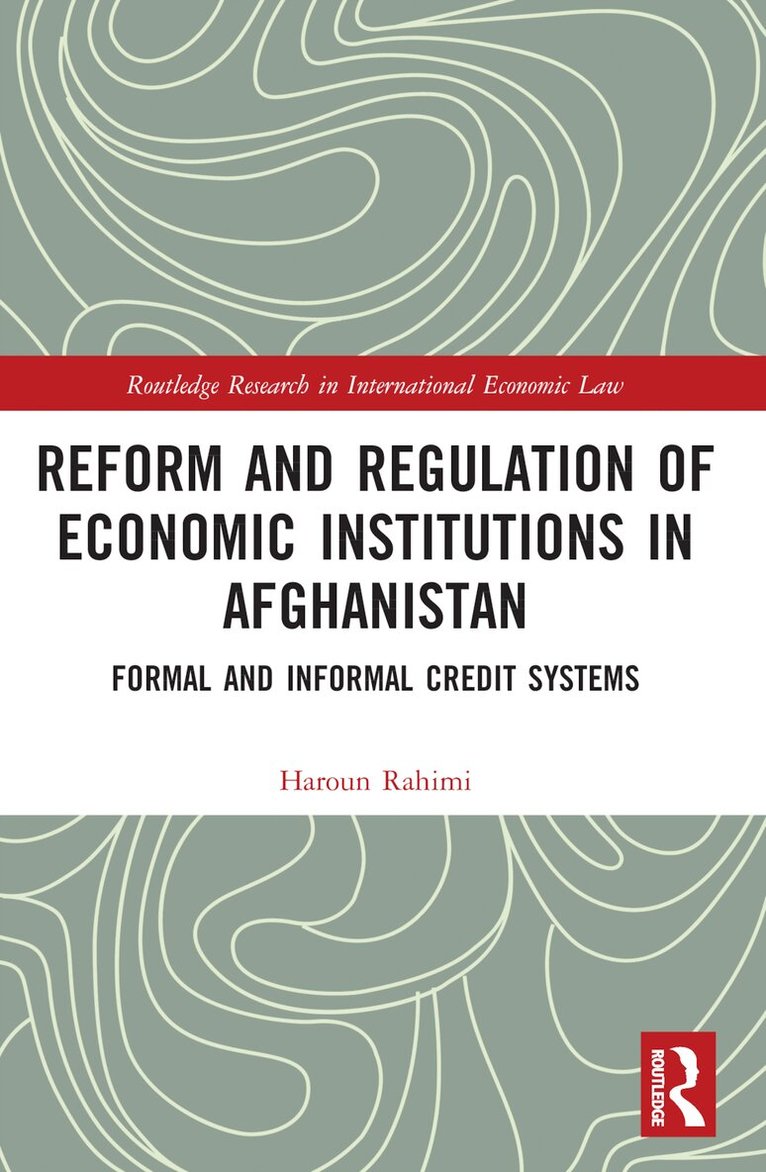
    Reform and Regulation of Economic Institutions in Afghanistan

    Formal and Informal Credit Systems

    AvHaroun Rahimi

    Häftad, Engelska, 2024

    Del i serien Routledge Research in International Economic Law

    578 kr

    Beställningsvara. Skickas inom 10-15 vardagar. Fri frakt över 249 kr.

    Fler format och utgåvor

    E-bok

    679 kr

    E-bok

    679 kr

    Inbunden

    1 902 kr

    Beskrivning

    Taliban's return to power in August of 2021 caused everyone to ask why the two decades of institution building in Afghanistan failed. This book investigates the root causes of failed reforms in an important area of reform: trade and credit institutions. It explains why the efforts to reform and regulate the economic institutions in Afghanistan failed and what we can learn from their failure. It draws on more than eighty interviews with Afghan merchants, business leaders, money dealers, and government officials in five major provinces of Afghanistan to identify the barriers to access to credit and to understand the performance of formal institutions (banks) and their informal counterparts. This book finds that Afghan merchants were often unable to benefit from the offerings of formal institutions for three reasons: a highly volatile business climate, uncertain contract enforcement, and an unsupportive property rights system. Several informal institutions have emerged that alleviate some of the credit constraints on Afghan merchants. These informal institutions include risk-sharing trade credit operations, money dealers’ short-term working capital loans, Gerawee, and Sar qufli. Although these informal institutions have helped Afghan merchants survive, they are unable to support economic growth. This book argues that countries like Afghanistan should solve their institutional dilemma by adopting an approach which the author calls "Grounded Institutional Reform." Using this approach, a country would formalize existing informal institutions, a development that would vastly increase their effectiveness. While this book focuses on credit and trade in Afghanistan, the analysis of "formalizing the informal" can easily be extended to solve other types of economic problems in similarly situated countries. This book should be of great interest to scholars, policymakers, and development workers in the field of law, finance, and development.

    Produktinformation

    • Utgivningsdatum:2024-05-27
    • Mått:156 x 234 x 16 mm
    • Vikt:460 g
    • Format:Häftad
    • Språk:Engelska
    • Serie:Routledge Research in International Economic Law
    • Antal sidor:276
    • Förlag:Taylor & Francis Ltd
    • ISBN:9781032157375

    Utforska kategorier

    • Offentlig förvaltning inom Juridik

    Mer om författaren

    Haroun Rahimi has obtained his B.A. in Law from Herat University, his LLM in Global Business Law from the University of Washington School of Law, and his Ph.D. from the University of Washington. Rahimi is Assistant Professor of Law at the American University of Afghanistan. Rahimi's research focuses on economic laws, institutional reform, Islamic finance, and divergent conceptions of rule of law in the Muslim and modern thoughts. Rahimi's research has appeared in reputable local and international journals. Rahimi has also collaborated as an independent consultant with a number of research firms and policy think tanks conducting policy research on institutional development and good governance in the South Asia context. At the Oxford Centre for Islamic Studies, Rahimi has worked on Islamic finance as a poverty alleviation strategy, legal history of Afghanistan and the ways that legal transplantation is legitimized in Muslim countries. More recently, Rahimi was a visiting scholar at the International Institute for the Unification of Private Law (UNIDROIT) in Rome. Currently, Rahimi is a Visiting Professor at the Bocconi University School of Law in Milan, Italy.

    Innehållsförteckning

    • Acknowledgement PrefaceIntroductionBroader theoretical landscape and the case of AfghanistanOverview of the book’s organization and summary of its argumentMethodology and DefinitionsGrounded TheorySampling and Data CollectionDefinitions1. Background on the Economy and the Problems of Credit Transacting in AfghanistanA General Picture of Afghanistan’s Economy under the Islamic RepublicMain Types of Actors in Afghanistan’s Credit EconomyAn Analysis of Businesses in AfghanistanBusiness Registry Data on Business Registry and Initial Capital Investment in Five Major ProvincesThe Business Survey Data on Business Establishments in AfghanistanAn Overview of the Social Context of Afghanistan’s EconomyA Brief Overview of Institutional Context of Afghanistan’s EconomyFundamental Problems of Credit Transactions in AfghanistanAfghanistan Has a Volatile Business ClimateFormal Property Rights in AfghanistanFormal Commercial Dispute Resolution in Afghanistan2. Informal Financial and Dispute Resolution Institutions in AfghanistanSupply Chains and Trade CreditMarket Competition and Provision of Trade CreditWeekly Payment System (Ugraee)How Businesses Come to Trust Credit Sales in AfghanistanTrade Credit versus Bank LoansSources of Initial Capital to Start a BusinessPrevailing Institutions in Afghanistan Disincentivize Destructive Innovation and Creative DestructionAgency Costs Limit Business ExpansionFamily Businesses in AfghanistanTrade Credit from Suppliers Located Outside AfghanistanIs the Solution Curbing Credit Sales?Sarrafs and Sarrafi MarketsDeposit-keepingDomestic Money Transfer (Hawala)International Money Transfer (Hawala)Currency ExchangeSpeculative Trade in Currencies (Sita) and Public Auctions (Booli)Sarraf’s ChecksShort-Term Working Capital LoansMedium and Long-Term Sarrafi LoansEquity FinancingThe Case of Balkh’s Sarrafi MarketReligious Prohibition of Interest and Access to FinanceRegional Variations within Sarrafi MarketsGeraweeSize of Gerawee MarketGerawee and its variationsImportant Characteristics of the Gerawee MarketBay’ al-Wafa: Sale with a Right of RepurchaseGerawee in Fatwas issued by the Afghan MuftisStatus of Gerawee under Afghan Civil Code of 1977Gerawee cases before Afghan CourtsSar qufliWhat is Sar qufli?Recognition of Sar qufli by Commercial CourtsThe Contrast between Judicial Treatment of Sar qufli and GeraweeInformal Dispute Resolution Institutions in Afghanistan: Who Uses Them and Why?Afghan Merchants Prefer Informal Dispute Resolution InstitutionsWho Uses Formal and Informal Dispute Resolution Institutions in AfghanistanWhy Merchants Use Informal Dispute ResolutionVariation in the Effectiveness of Informal Dispute Resolution InstitutionsInformal Dispute Resolution and Pashtun CultureThe Use of Force to Resolve a Commercial Dispute3. Afghanistan’s Formal Financial InstitutionsFormal Financial Intermediaries in Afghanistan: Are Sarrafs Included?Formal Regulations of SarrafsWhat Is Wrong with the Sarrafi Regulation?Banks in AfghanistanTrust in BanksBanks’ Total AssetsBanks’ Total DepositsBanks’ LoansGovernment Strategic Policies Aimed to Improve Access to Credit during the Islamic RepublicAfghanistan National Peace and Development Framework (2017-2021)Ministry of Economics’ Afghan Government Economic Plan (National Economic Plan) (2013)Ministry of Commerce and Industries Strategic Plan (Commerce Strategy) (2016-2020)Afghanistan Central Bank Strategic Plan (Banking Strategy) (2017-2021)Ministry of Justice Strategic Plan (Justice Strategic Plan) (2014-2018)Analysis of Afghan Government Strategic Policies4. A Critique of the Approach to Institutional Reform in Afghanistan, and a Proposal for a New Approach: Grounded Institutional ReformGrounded Institutional Reform: A Revised Approach for the Countries with Poor Infrastructure, Limited Market Expansion Opportunities, and a Willing GovernmentRationales for Anti-Informal Institutions Positions: The Problems of Formalizing Informal Institutions in AfghanistanTheoretical Underpinning of Anti-Informal Institutions in AfghanistanPractical Problems of Absorbing Informal Institutions in AfghanistanWhat Would Reforms Based on Grounded Institutional Reform Look Like in Afghanistan?Conclusions and RecommendationsBibliographyAppendix IAppendix II