• Fri frakt över 249 kr
  • •
  • Snabba leveranser
  • •
  • Billiga böcker
Kundservice

Du är på sajten för privatpersoner.

Företag, bibliotek eller offentlig verksamhet?

Du handlar på classic.bokus.com, där alla dina funktioner finns intakta.
Till classic.bokus.com
Bokus logotyp. Gå till startsidan.
  • Erbjudanden
  • Nyheter
  • Student
  • Topplistor
  • Barn & ungdom
  • Bokus Play
  • E-böcker
  • Pocketböcker
  • Spel & pussel

10% rabatt på allt med kod: NYSTART10 →

Sidfot

Mina sidor

    Hjälp

    • Kundservice
    • Vanliga frågor och svar
    • Frakt och leverans
    • Retur vid ångerrätt
    • Reklamera vara
    • Betalning
    • Köpvillkor
    • Allmänna villkor
    • Information om webbplatsens tillgänglighet

    Om Bokus

    • Om oss
    • Pressrum
    • För studenter
    • För företag
    • För bibliotek och offentlig verksamhet
    • För leverantörer
    • Hållbarhet

    Populärt

    • Aktuella erbjudanden
    • Presentkort
    • Studentlitteratur
    • Nya böcker
    • Topplistor
    • Signerade böcker
    • Engelska böcker

    Inspiration

    • Boktips
    • BookTok
    • Populära bokserier
    • Barnbokskaraktärer
    • Populära författare
    Logotyp för Bokus
    Följ oss på Facebook (extern länk)Följ oss på Instagram (extern länk)Följ oss på YouTube (extern länk)Följ oss på TikTok (extern länk)
    bokus @ CookiesAnpassa cookiesIntegritetspolicyKöpvillkor
    Till Citymail hemsida (extern länk)Till Budbee hemsida (extern länk)Till Postnord hemsida (extern länk)Till Schenker hemsida (extern länk)Till Early Bird hemsida (extern länk)Till Walleys hemsida (extern länk)
    1. Samhälle och politik
    2. Politik och statsskick
    3. Statsvetenskap och politisk teori

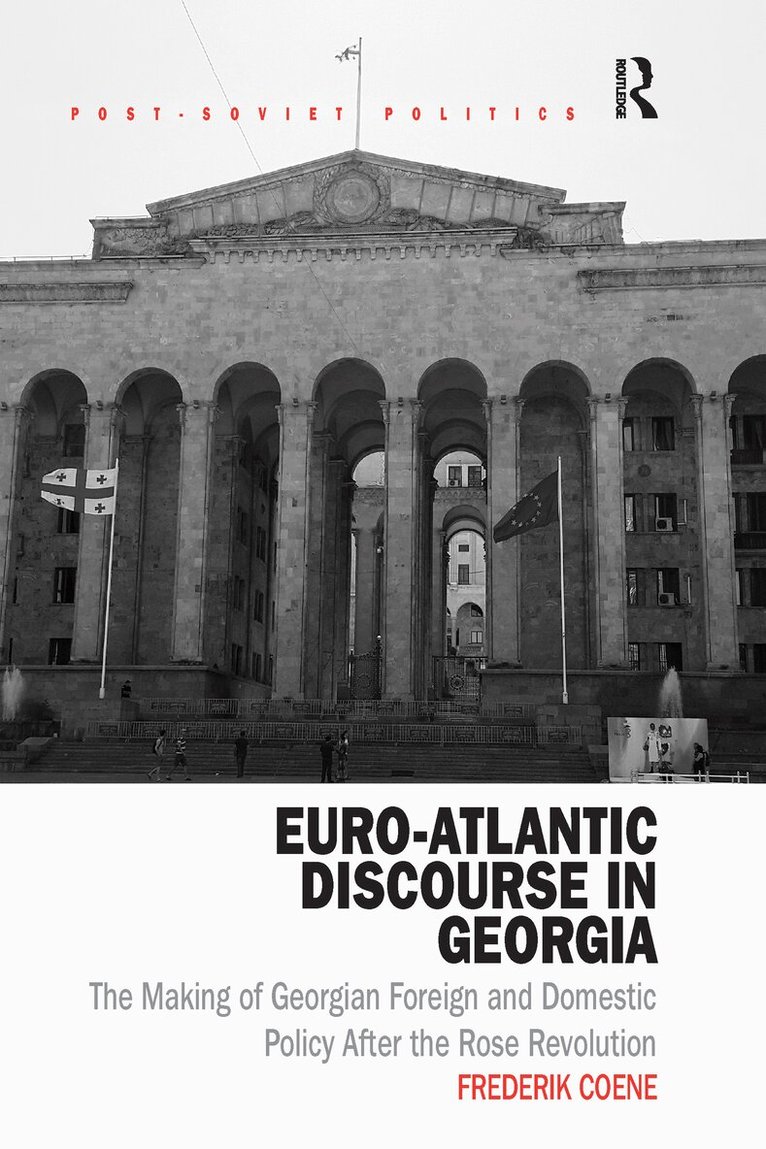
    Euro-Atlantic Discourse in Georgia

    The Making of Georgian Foreign and Domestic Policy After the Rose Revolution

    AvFrederik Coene

    Häftad, Engelska, 2021

    Del i serien Post-Soviet Politics

    667 kr

    Beställningsvara. Skickas inom 10-15 vardagar. Fri frakt över 249 kr.

    Fler format och utgåvor

    E-bok

    788 kr

    E-bok

    788 kr

    Inbunden

    2 421 kr

    Beskrivning

    How have discourses of Euro-Atlanticism been used in domestic and international affairs by the political elite in Georgia? After the 2003 Rose Revolution, as relations with Russia soured, a Euro-Atlantic orientation portrayed as a single and coherent strategy became the cornerstone of Georgian foreign policy as well as a model for domestic reforms. This promise of a prosperous future offered new hope to the Georgian population. Scepticism or critical thinking towards President Saakashvili and his government were equated to pro-Russian treason and pro-western orientation and impressive reforms, promoted as being modelled along ’European standards’, emerged simultaneously with an outspoken rhetoric and active symbolism. References to Europe and the Euro-Atlantic structures became ubiquitous as European flags were brandished throughout the country. Addressing a gap in the existing literature the author examines a large volume of data extracted from news items from 20 different Georgian and International media channels over a ten-year period. Through this he identifies patterns in the discourse to explain the intentions of the Georgian elite and examines the effectiveness of the rhetoric.

    Produktinformation

    • Utgivningsdatum:2021-09-30
    • Mått:156 x 234 x 11 mm
    • Vikt:303 g
    • Format:Häftad
    • Språk:Engelska
    • Serie:Post-Soviet Politics
    • Antal sidor:204
    • Förlag:Taylor & Francis Ltd
    • ISBN:9781032179520

    Utforska kategorier

    • Statsvetenskap och politisk teori inom Samhälle och politik
    • Politik och statsskick inom Samhälle och politik
    • Internationella relationer inom Samhälle och politik

    Mer om författaren

    Frederik Coene is currently Head of Operations Section in the Delegation of the European Union to Belarus. He has previously worked in Chechnya, Abkhazia, Tajikistan, Georgia and Belgium for different non-governmental organisations and EU institutions. He holds an MA in Commercial Sciences and in Caucasian and Central Asian Studies, as well as a PhD in Political Sciences. He is also the author of several articles and books on the Caucasus.

    Recensioner i media

    ’A highly timely, scholarly contribution on the 'Europeanness' of Georgia, and as such of the utmost importance for both Georgia and the European Union itself. As Georgia begins to implement its very bureaucratic new Association Agreement with the EU, it is vital to comprehend by contrast the political, philosophical, and emotional meaning of 'Europeanness' in public discourse and perceptions of the people. The book is a model of its kind, and the author might like to do the same next for Ukraine too.’ Michael Emerson, Centre for European Policy Studies (CEPS), Belgium ’This book provides an excellent insight on the, so far under-explored, dynamics behind the Euro-Atlantic discourse - its impact on Georgian identity and on the ever evolving geopolitical challenges of the region. Taking advantage of more than a decade working in and on the region, with first-hand experience of both the North and South Caucasus, Frederik Coene offers a unique account that the academic community, think tanks, and decision makers should consider a must read for future reference.’ Abel Polese, Tallinn University, Estonia ’The product of over a decade of painstaking research, Dr Coene provides a rigorous, intimate, and long-overdue analysis of Georgia's multifaceted relationship with the European Union. This illuminating and insightful work is essential reading for those who seek a nuanced understanding of Georgia’s quest for a new partner and patron to offset the attentions of its larger neighbour Russia.’ Donnacha Ó Beacháin, Dublin City University, Ireland

    Innehållsförteckning

    • Chapter 1 Theoretical and Conceptual Framework; Chapter 2 Georgia and its Euro-Atlantic Orientation; Chapter 3 The Georgian Europeanness; Chapter 4 Euro-Atlantic Discourse as a Legitimacy Management Strategy; Chapter 5 The Euro-Atlantic Community as a New Patron; conclusion Conclusion and Outlook;