• Fri frakt över 249 kr
  • •
  • Snabba leveranser
  • •
  • Billiga böcker
Kundservice

Du är på sajten för privatpersoner.

Företag, bibliotek eller offentlig verksamhet?

Du handlar på classic.bokus.com, där alla dina funktioner finns intakta.
Till classic.bokus.com
Bokus logotyp. Gå till startsidan.
  • Erbjudanden
  • Nyheter
  • Student
  • Topplistor
  • Barn & ungdom
  • Bokus Play
  • E-böcker
  • Pocketböcker
  • Spel & pussel

10% rabatt på allt med kod: NYSTART10 →

Sidfot

Mina sidor

    Hjälp

    • Kundservice
    • Vanliga frågor och svar
    • Frakt och leverans
    • Retur vid ångerrätt
    • Reklamera vara
    • Betalning
    • Köpvillkor
    • Allmänna villkor
    • Information om webbplatsens tillgänglighet

    Om Bokus

    • Om oss
    • Pressrum
    • För studenter
    • För företag
    • För bibliotek och offentlig verksamhet
    • För leverantörer
    • Hållbarhet

    Populärt

    • Aktuella erbjudanden
    • Presentkort
    • Studentlitteratur
    • Nya böcker
    • Topplistor
    • Signerade böcker
    • Engelska böcker

    Inspiration

    • Boktips
    • BookTok
    • Populära bokserier
    • Barnbokskaraktärer
    • Populära författare
    Logotyp för Bokus
    Följ oss på Facebook (extern länk)Följ oss på Instagram (extern länk)Följ oss på YouTube (extern länk)Följ oss på TikTok (extern länk)
    bokus @ CookiesAnpassa cookiesIntegritetspolicyKöpvillkor
    Till Citymail hemsida (extern länk)Till Budbee hemsida (extern länk)Till Postnord hemsida (extern länk)Till Schenker hemsida (extern länk)Till Early Bird hemsida (extern länk)Till Walleys hemsida (extern länk)
    1. Filosofi och religion
    2. Religion och tro
    3. Religion: allmänt

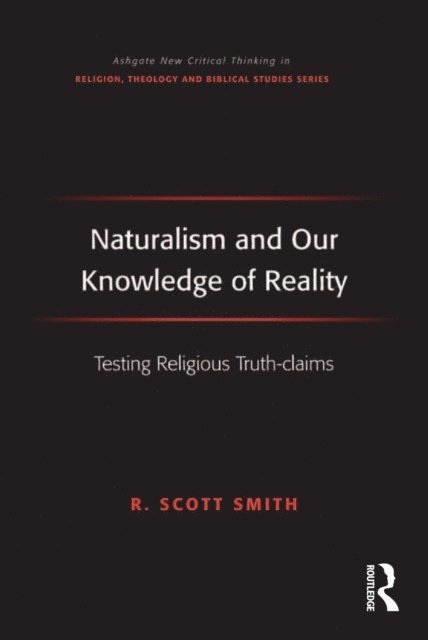
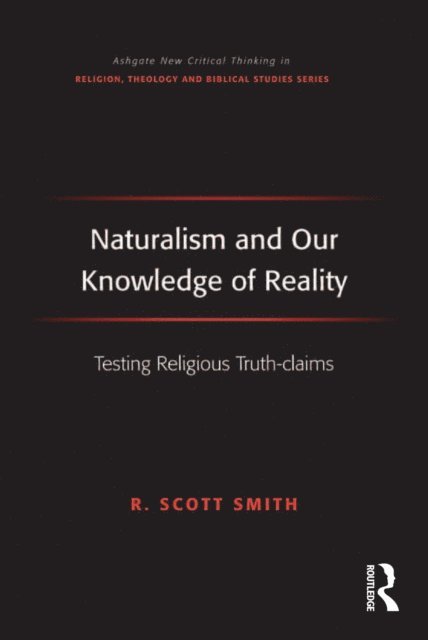
    Naturalism and Our Knowledge of Reality

    Testing Religious Truth-claims

    AvR. Scott Smith

    Häftad, Engelska, 2021

    Del i serien Routledge New Critical Thinking in Religion, Theology and Biblical Studies

    681 kr

    Beställningsvara. Skickas inom 10-15 vardagar. Fri frakt över 249 kr.

    Fler format och utgåvor

    E-bok

    805 kr

    E-bok

    805 kr

    Inbunden

    2 421 kr

    Beskrivning

    Philosophical naturalism is taken to be the preferred and reigning epistemology and metaphysics that underwrites many ideas and knowledge claims. But what if we cannot know reality on that basis? What if the institution of science is threatened by its reliance on naturalism? R. Scott Smith argues in a fresh way that we cannot know reality on the basis of naturalism. Moreover, the "fact-value" split has failed to serve our interests of wanting to know reality. The author provocatively argues that since we can know reality, it must be due to a non-naturalistic ontology, best explained by the fact that human knowers are made and designed by God. The book offers fresh implications for the testing of religious truth-claims, science, ethics, education, and public policy. Consequently, naturalism and the fact-value split are shown to be false, and Christian theism is shown to be true.

    Produktinformation

    • Utgivningsdatum:2021-12-13
    • Mått:156 x 234 x 14 mm
    • Vikt:470 g
    • Format:Häftad
    • Språk:Engelska
    • Serie:Routledge New Critical Thinking in Religion, Theology and Biblical Studies
    • Antal sidor:254
    • Förlag:Taylor & Francis Ltd
    • ISBN:9781032243078

    Utforska kategorier

    • Religion: allmänt inom Filosofi och religion
    • Filosofiska discipliner inom Filosofi och religion
    • Kristendom inom Filosofi och religion

    Mer om författaren

    R.Scott Smith has written many articles and a monograph on Virtue Ethics. He specialises in ethics, phenomenology, philosophy of religion, and constructivism (especially in postmodernism, naturalism, and philosophical theology, including the emerging church as a practical extension). He teaches on these themes, including a graduate philosophy of religion class on naturalism, postmodernism, and constructivism.

    Recensioner i media

    'Whether or not one agrees with all of the far-reaching conclusions of this interesting and enjoyable book, it cannot be denied that it raises deep and probing questions concerning the ability of any purely naturalistic system of ontology to account adequately for the intentionality of mental states and the very possibility of our knowledge of the natural world. All self-proclaimed naturalists, as well as their opponents, would do well to reflect on its arguments.' E. J. Lowe, Durham University, UK 'Scott Smith brings out the fact that knowledge of reality, including knowledge of knowledge, cannot be accounted for within an ontology that only admits entities from the physical world. This means that such an ontology - call it "Naturalism" - itself is not knowable. Yet it fights desperately to be the only authority on knowledge and to have the right to dictate social and governmental policy. Smith relentlessly and cogently argues that Naturalism does not have the conceptual resources to defend its position: that, indeed, it undercuts itself. The issues here are not only of abstract philosophical interest, but are also vitally related to the direction of human life. This book should be widely read for the light it casts on many current cultural quandaries.' Dallas Willard, University of Southern California, USA '... Smith’s book ought to provoke a considerable re-assessment of the authority invested in naturalism throughout public life. I strongly recommend this powerful and incisive book.' Evangelical Philosophical Society '... Smith’s Naturalism and Our Knowledge of Reality devastatingly critiques philosophical naturalism, given knowledge of reality. Philosophers need to familiarize themselves with this important work.' Themelios 'S.'s text is a provocative response to a prevailing contemporary philosophical position. Those interested in the merits and faults of philosophical naturalism will find much with which to engage.' Theologische Literaturzeitung â

    Innehållsförteckning

    • Introduction; Part I Direct Realism; Chapter 1 An Introduction to Direct Realism; Chapter 2 The Representationalism of Dretske, Tye, and Lycan; Chapter 3 Searle’s Naturalism and the Prospects for Knowledge; Part II Philosophy as Science; Chapter 4 Cognitive Science, Philosophy, and Our Knowledge of Reality, Part One; Chapter 5 Cognitive Science, Philosophy, and Our Knowledge of Reality, Part Two; Chapter 6 Can the Churchlands’ Neurocomputational Theory of Cognition Ground a Viable Epistemology?, Errin D.Clark; Part III Other Alternatives, and Naturalism’s Future; Chapter 7 Other Proposals, PeggyBurke; Chapter 8 The Future Directions of Naturalism; Chapter 9 A Positive Case for Our Knowledge of Reality; Chapter 10 Methodological Naturalism and the Scientific Method, and Other Implications;