• Fri frakt över 249 kr
  • •
  • Snabba leveranser
  • •
  • Billiga böcker
Kundservice

Du är på sajten för privatpersoner.

Företag, bibliotek eller offentlig verksamhet?

Du handlar på classic.bokus.com, där alla dina funktioner finns intakta.
Till classic.bokus.com
Bokus logotyp. Gå till startsidan.
  • Erbjudanden
  • Nyheter
  • Student
  • Topplistor
  • Barn & ungdom
  • Bokus Play
  • E-böcker
  • Pocketböcker
  • Spel & pussel

10% rabatt på allt med kod: NYSTART10 →

Sidfot

Mina sidor

    Hjälp

    • Kundservice
    • Vanliga frågor och svar
    • Frakt och leverans
    • Retur vid ångerrätt
    • Reklamera vara
    • Betalning
    • Köpvillkor
    • Allmänna villkor
    • Information om webbplatsens tillgänglighet

    Om Bokus

    • Om oss
    • Pressrum
    • För studenter
    • För företag
    • För bibliotek och offentlig verksamhet
    • För leverantörer
    • Hållbarhet

    Populärt

    • Aktuella erbjudanden
    • Presentkort
    • Studentlitteratur
    • Nya böcker
    • Topplistor
    • Signerade böcker
    • Engelska böcker

    Inspiration

    • Boktips
    • BookTok
    • Populära bokserier
    • Barnbokskaraktärer
    • Populära författare
    Logotyp för Bokus
    Följ oss på Facebook (extern länk)Följ oss på Instagram (extern länk)Följ oss på YouTube (extern länk)Följ oss på TikTok (extern länk)
    bokus @ CookiesAnpassa cookiesIntegritetspolicyKöpvillkor
    Till Citymail hemsida (extern länk)Till Budbee hemsida (extern länk)Till Postnord hemsida (extern länk)Till Schenker hemsida (extern länk)Till Early Bird hemsida (extern länk)Till Walleys hemsida (extern länk)
    1. Ekonomi och Ledarskap
    2. Industrier och branscher
    3. Lantbruk, fiske och skogsbruk

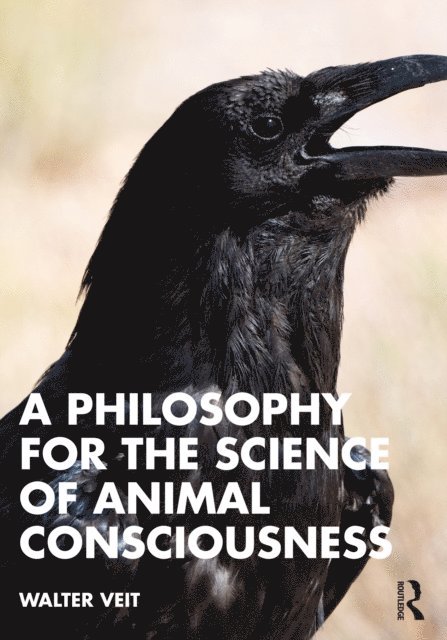
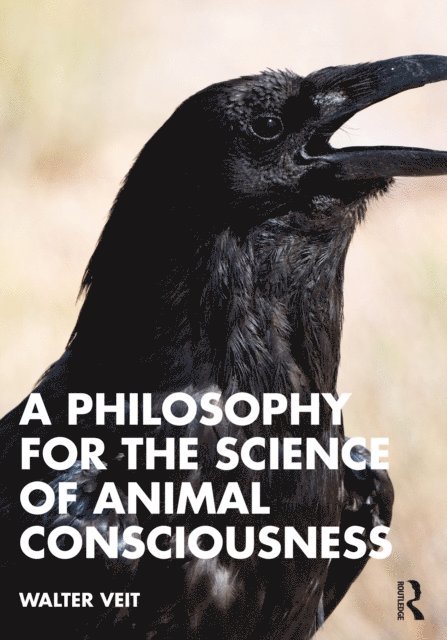
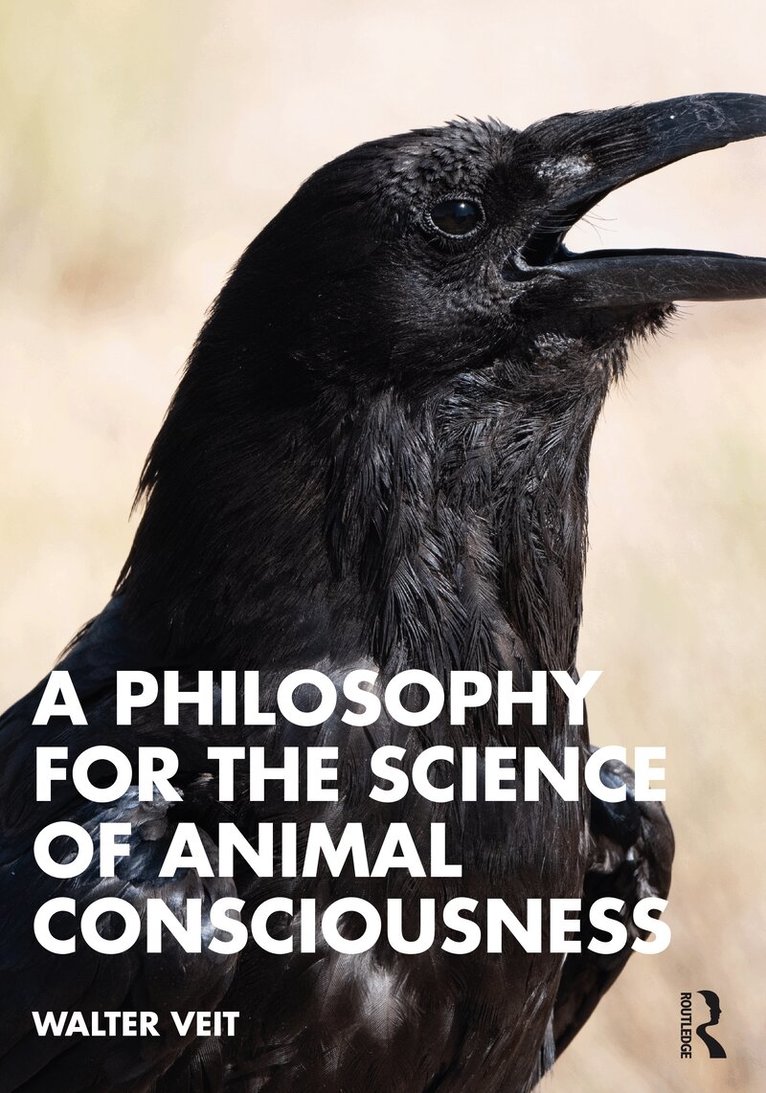
    Philosophy for the Science of Animal Consciousness

    AvWalter Veit

    Inbunden, Engelska, 2023

    2 421 kr

    Beställningsvara. Skickas inom 10-15 vardagar. Fri frakt över 249 kr.

    Fler format och utgåvor

    E-bok

    738 kr

    E-bok

    740 kr

    Häftad

    624 kr

    Beskrivning

    This book attempts to advance Donald Griffin's vision of the "final, crowning chapter of the Darwinian revolution" by developing a philosophy for the science of animal consciousness. It advocates a Darwinian bottom-up approach that treats consciousness as a complex, evolved, and multidimensional phenomenon in nature rather than a mysterious all-or-nothing property immune to the tools of science and restricted to a single species.The so-called emergence of a science of consciousness in the 1990s has at best been a science of human consciousness. This book aims to advance a true Darwinian science of consciousness in which its evolutionary origin, function, and phylogenetic diversity are moved from the field’s periphery to its very centre, thus enabling us to integrate consciousness into an evolutionary view of life. Accordingly, this book has two objectives: (i) to argue for the need and possibility of an evolutionary bottom-up approach that addresses the problem of consciousness in terms of the evolutionary origins of a new ecological lifestyle that made consciousness worth having and (ii) to articulate a thesis and beginnings of a theory of the place of consciousness as a complex evolved phenomenon in nature that can help us to answer the question of what it is like to be a bat, an octopus, or a crow.A Philosophy for the Science of Animal Consciousness will appeal to researchers and advanced students interested in advancing our understanding of animal minds as well as anyone with a keen interest in how we can develop a science of animal consciousness.


    Produktinformation

    • Utgivningsdatum:2023-06-16
    • Mått:178 x 254 x 17 mm
    • Vikt:453 g
    • Format:Inbunden
    • Språk:Engelska
    • Antal sidor:144
    • Förlag:Taylor & Francis Ltd
    • ISBN:9781032343600

    Utforska kategorier

    • Lantbruk, fiske och skogsbruk inom Ekonomi och Ledarskap
    • Psykologiska teorier och skolor inom Psykologi och pedagogik
    • Zoologi inom Naturvetenskap och teknik

    Mer om författaren

    Walter Veit is a postdoctoral research associate at the University of Bristol. His interests stretch widely across science and philosophy, but they are primarily located at the intersection of the biological, social, and mind sciences in addition to empirically informed philosophy and ethics.

    Recensioner i media

    "In A Philosophy for the Science of Animal Consciousness, Walter Veit argues for a more thoroughly Darwinian approach to understanding how consciousness has come into existence, and in which beings it is to be found. By shifting the focus away from human consciousness, he helps us to understand the diversity of forms of consciousness that exist in other animals." Peter Singer, Ira W. DeCamp Professor of Bioethics, Princeton University “The a priori position that human consciousness differs from that in other animals has become hard to defend. In an eye-opening account, Walter Veit explains why. As a true philosopher, he delves into both the richness and ambiguity of the concept of consciousness.” Frans de Waal, C. H. Candler Professor of Psychology, Emory University “Walter Veit takes a deep historically- and empirically-informed look at the origins of cognitive ethology and re-centers the field on Donald Griffin’s original idea that it’s consciousness in animals that really matters. He tackles the question of how to fit an account of consciousness into the life histories of individual animals, using a Darwinian framework that emphasizes the variety and adaptive radiation of forms and functions of consciousness in the evolutionary tree.” Colin Allen, Distinguished Professor, University of Pittsburgh "Some think that explaining consciousness is beyond the scope of evolutionary theory. Undeterred, Walter Veit rolls up his sleeves and gets on with the task. Drawing on the latest work in evolutionary biology, cognitive ethology, and neuroeconomics, he reverse engineers consciousness, distinguishing its different dimensions and components and identifying its roots in an ancient evaluative system which evolved to manage the complex action-selection problems faced by early forms of animal life. This is a pioneering and important book, which is informed throughout by an awareness of the rich diversity of animal life and experience. It will challenge your view of consciousness and transform your attitude to your fellow creatures."Keith Frankish, Honorary Professor, Department of Philosophy, University of Sheffield “Walter Veit has written a very thoughtful and thought-provoking philosophical exploration of the evolutionary origins of consciousness. He aims to bring us closer to a true biological science of animal consciousness, what Donald R. Griffin, the founder of the field of Cognitive Ethology, termed the “crowning chapter of the Darwinian revolution.” That chapter is to be written by studying the mental experiences of animals in their daily lives and natural worlds. Veit’s work exhibits the fruitfulness of the growing collaborations between philosophers and scientists of animal behavior to the clear benefit of both. He gives serious consideration to the problem of consciousness and the evolution of forms of consciousness, integrating the work of many disciplines and delineating the likely functional significance of consciousness and its varieties in different species. Veit offers persuasive arguments and examples that evaluative consciousness lies at the core of the phenomenon of consciousness, though leaving enough to argue about and discuss fruitfully as to other characteristics that may be strong contenders for that role. His work is a significant contribution to the field and well worth delving into.”Carolyn A. Ristau

    Innehållsförteckning

    • Foreword Nicola S. Clayton Preface 1. A Darwinian Philosophy for the Science of Consciousness 2. The Explanandum: Animal Consciousness and Phenomenological Complexity 3. The Origins of Consciousness or the War of the Five Dimensions 4. Pathological Complexity and the Dawn of Subjectivity 5. Pathological Complexity meets Phenomenological Complexity 6. The Final, Crowning Chapter of the Darwinian Revolution