• Fri frakt över 249 kr
  • •
  • Snabba leveranser
  • •
  • Billiga böcker
Kundservice

Du är på sajten för privatpersoner.

Företag, bibliotek eller offentlig verksamhet?

Du handlar på classic.bokus.com, där alla dina funktioner finns intakta.
Till classic.bokus.com
Bokus logotyp. Gå till startsidan.
  • Erbjudanden
  • Nyheter
  • Student
  • Topplistor
  • Barn & ungdom
  • Bokus Play
  • E-böcker
  • Pocketböcker
  • Spel & pussel

10% rabatt på allt med kod: NYSTART10 →

Sidfot

Mina sidor

    Hjälp

    • Kundservice
    • Vanliga frågor och svar
    • Frakt och leverans
    • Retur vid ångerrätt
    • Reklamera vara
    • Betalning
    • Köpvillkor
    • Allmänna villkor
    • Information om webbplatsens tillgänglighet

    Om Bokus

    • Om oss
    • Pressrum
    • För studenter
    • För företag
    • För bibliotek och offentlig verksamhet
    • För leverantörer
    • Hållbarhet

    Populärt

    • Aktuella erbjudanden
    • Presentkort
    • Studentlitteratur
    • Nya böcker
    • Topplistor
    • Signerade böcker
    • Engelska böcker

    Inspiration

    • Boktips
    • BookTok
    • Populära bokserier
    • Barnbokskaraktärer
    • Populära författare
    Logotyp för Bokus
    Följ oss på Facebook (extern länk)Följ oss på Instagram (extern länk)Följ oss på YouTube (extern länk)Följ oss på TikTok (extern länk)
    bokus @ CookiesAnpassa cookiesIntegritetspolicyKöpvillkor
    Till Citymail hemsida (extern länk)Till Budbee hemsida (extern länk)Till Postnord hemsida (extern länk)Till Schenker hemsida (extern länk)Till Early Bird hemsida (extern länk)Till Walleys hemsida (extern länk)
    1. Filosofi och religion
    2. Filosofi
    3. Filosofiska discipliner

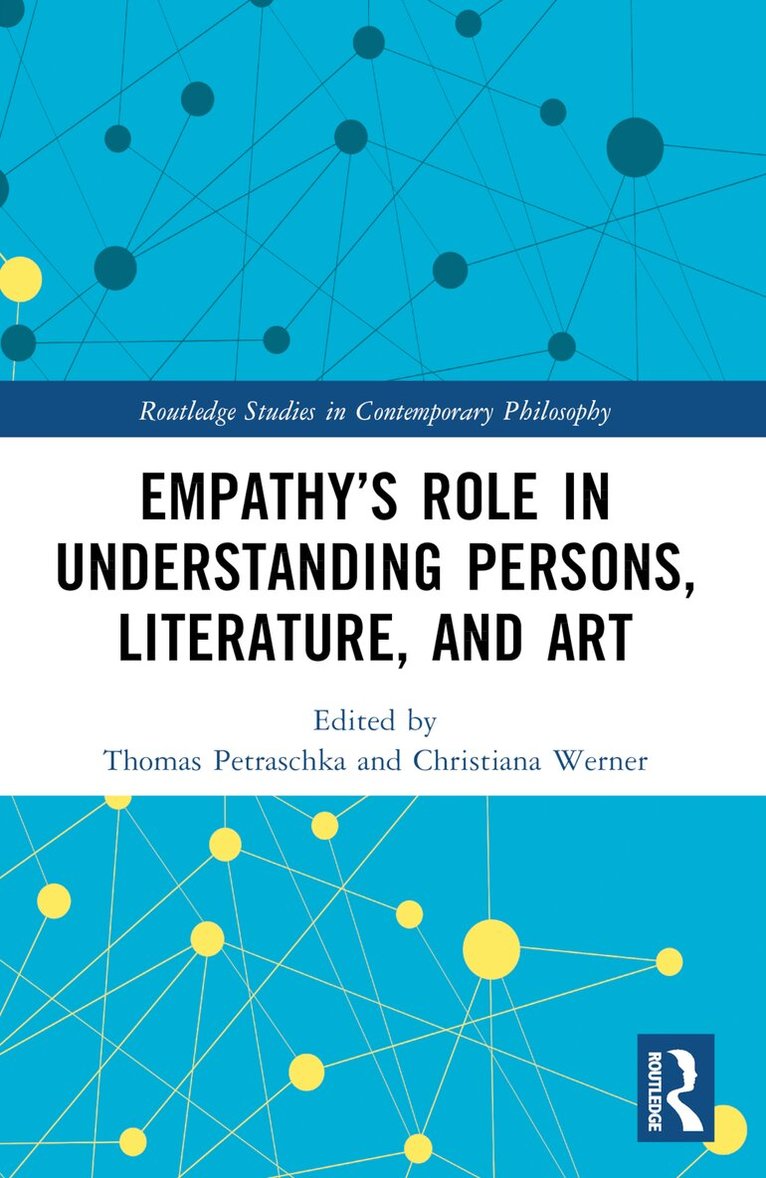
    Empathy’s Role in Understanding Persons, Literature, and Art

    AvThomas Petraschka,Christiana Werner

    Häftad, Engelska, 2024

    Del i serien Routledge Studies in Contemporary Philosophy

    718 kr

    Beställningsvara. Skickas inom 10-15 vardagar. Fri frakt över 249 kr.

    Beskrivning

    This volume critically discusses the role empathy plays in different processes of understanding. More precisely, it clarifies empathy’s role in interpersonal understanding and appreciating works of literature and art. The volume also includes a section on historical theories of empathy’s role in understanding.When it comes to understanding other persons, empathy is typically seen as a process that enables the empathizer to recognize a target person’s mental states, a process which is in turn seen as “understanding” this person. This volume, however, explores empathy’s role in understanding beyond mere mental state recognition. With contributions on processes of interpersonal understanding and understanding of literature and art, it provides readers with an overview over both differences and similarities regarding empathy’s epistemic role in two rather different areas. Since important roots of the debate about empathic understanding lie at the end of the nineteenth and the beginning of the twentieth century, the historical section of the volume focusses specifically on this period.Empathy’s Role in Understanding Persons, Literature, and Art will appeal to scholars and advanced students working in the philosophy of mind, epistemology, aesthetics and the history of philosophy, as well as in literary studies and art history.The Open Access version of this book, available at www.taylorfrancis .com, has been made available under a Creative Commons Attribution-Non Commercial-No Derivatives 4.0 license.

    Produktinformation

    • Utgivningsdatum:2024-12-18
    • Mått:152 x 229 x 21 mm
    • Vikt:453 g
    • Format:Häftad
    • Språk:Engelska
    • Serie:Routledge Studies in Contemporary Philosophy
    • Antal sidor:380
    • Förlag:Taylor & Francis Ltd
    • ISBN:9781032367781

    Utforska kategorier

    • Filosofiska discipliner inom Filosofi och religion
    • Litteraturteori inom Skönlitteratur

    Mer om författaren

    Thomas Petraschka is Assistant Professor (non-tenured) for German Literature in Regensburg (Germany). His areas of specialization are theory of literature and aesthetics. He is the author of Einfühlung. Theorie und Kulturgeschichte einer ästhetischen Denkfigur 1770–1930. Christiana Werner is Research Associate at the University of Duisburg-Essen (Germany), has a temporary position at the University of Gießen, and is member of the research group “Mind and Imagination”. She was Postdoc at the University of Goettingen and did her PhD at the University of Regensburg.

    Innehållsförteckning

    • Empathic Understanding. Historical and Recent Perspectives on Empathy’s Role in Social Cognition and Aesthetics Thomas Petraschka and Christiana Werner Section 1: Empathy and Understanding Other Persons 1. Empathy Skills and Habits Shannon Spaulding 2. Can interactional approaches solve the empathy-sharing conundrum? Stefano Vincini 3. Seeing Others as Ends in Themselves. From the Empathic to the Moral Point of View Catrin Misselhorn 4. Experience and Understanding in Response to Holocaust Testimony Anja Berninger 5. Murdochian Self-Empathy Eva-Maria Düringer 6. The Structure of Rational Agency and the Phenomenal Dimensions of Empathic Understanding Karsten R. Stueber Section 2: Empathy and Understanding Literature and Art 7. Is There a Role for Emotion in Literary Criticism? Peter Lamarque 8. Empathy, Fiction, and Non-Fiction Derek Matravers 9. “Tell me, how does it feel?” – Learning what it is like through literature Christiana Werner 10. Affective Resonance and Narrative Immersion Suzanne Keen 11. Empathy for the devil Claudia Hillebrandt 12. “Empathy is a swindle!” – or is it? Philip K. Dick’s Do Androids Dream of Electric Sheep? as an empathy test for readers Eva-Maria Konrad Section 3: The History of Empathic Understanding 13. Imagination in Early Phenomenological Accounts of Empathy Íngrid Vendrell Ferran 14. I Feel You: Toward a Schelerian Conception of Empathy Jean Moritz Müller 15. “[T]heirs is the future way of studying aesthetics” – Vernon Lee and the German Aesthetics of Empathy Thomas Petraschka 16. Vernon Lee’s Aesthetics: Empathy, Emotion, and Embodiment Jesse Prinz 17. Empathy and Enjoyment. On the use of reproductions in school practice after 1900 Joseph Imorde 18. How Der Blaue Reiter reacted to Worringer’s interpretation of Lipps’s Schiller-based theory of empathy Robin Rehm