• Fri frakt över 249 kr
  • •
  • Snabba leveranser
  • •
  • Billiga böcker
Kundservice

Du är på sajten för privatpersoner.

Företag, bibliotek eller offentlig verksamhet?

Du handlar på classic.bokus.com, där alla dina funktioner finns intakta.
Till classic.bokus.com
Bokus logotyp. Gå till startsidan.
  • Erbjudanden
  • Nyheter
  • Student
  • Topplistor
  • Barn & ungdom
  • Bokus Play
  • E-böcker
  • Pocketböcker
  • Spel & pussel

10% rabatt på allt med kod NYSTART10 →

Sidfot

Mina sidor

    Hjälp

    • Kundservice
    • Vanliga frågor och svar
    • Frakt och leverans
    • Retur vid ångerrätt
    • Reklamera vara
    • Betalning
    • Köpvillkor
    • Allmänna villkor
    • Information om webbplatsens tillgänglighet

    Om Bokus

    • Om oss
    • Pressrum
    • För studenter
    • För företag
    • För bibliotek och offentlig verksamhet
    • För leverantörer
    • Hållbarhet

    Populärt

    • Aktuella erbjudanden
    • Presentkort
    • Studentlitteratur
    • Nya böcker
    • Topplistor
    • Signerade böcker
    • Engelska böcker

    Inspiration

    • Boktips
    • BookTok
    • Populära bokserier
    • Barnbokskaraktärer
    • Populära författare
    Logotyp för Bokus
    Följ oss på Facebook (extern länk)Följ oss på Instagram (extern länk)Följ oss på YouTube (extern länk)Följ oss på TikTok (extern länk)
    bokus @ CookiesAnpassa cookiesIntegritetspolicyKöpvillkor
    Till Citymail hemsida (extern länk)Till Budbee hemsida (extern länk)Till Postnord hemsida (extern länk)Till Schenker hemsida (extern länk)Till Early Bird hemsida (extern länk)Till Walleys hemsida (extern länk)
    1. Samhälle och politik
    2. Samhälle och kultur
    3. Kultur och medier
    4. Referensverk och tvärvetenskap

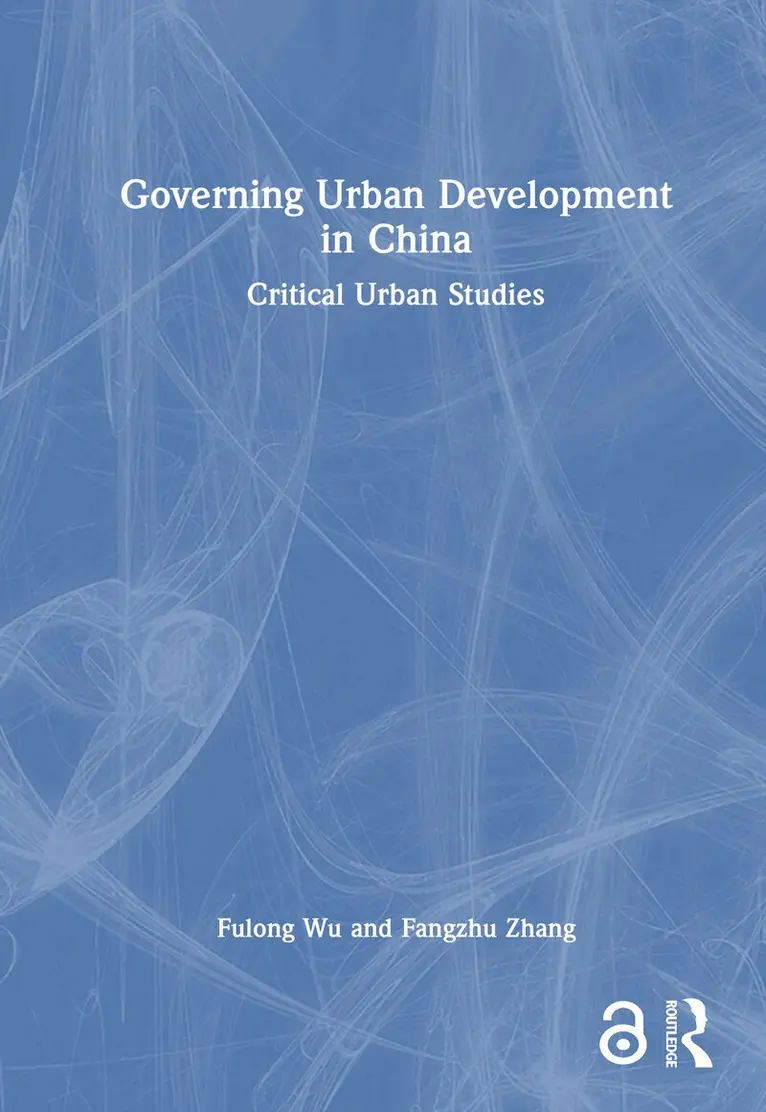
    Governing Urban Development in China

    Critical Urban Studies

    AvFulong Wu,Fangzhu Zhang

    Inbunden, Engelska, 2024

    2 423 kr

    Beställningsvara. Skickas inom 10-15 vardagar. Fri frakt över 249 kr.

    Fler format och utgåvor

    Häftad

    569 kr

    Beskrivning

    The book investigates urban development and governance in China and introduces China perspectives to the understanding of governing urban development in the 21st century.Building upon a rich and burgeoning literature on China, the book explains major changes in governance, offers a well-synthesized account of state-centered governance, and provides in-depth discussions on urban governance, city and regional planning, financing and financialization, urban redevelopment, local economic development and innovation, and environmental governance. The book bridges theoretical concepts in critical urban studies and empirical research on China and thus depicts a fuller picture of changing and variegated urban governance in the contemporary world. The book theorizes Chinese urban governance from the ground up and derives a concept of state entrepreneurialism as a framework for narrating urban governance in China. Following this framework, each chapter begins with a brief introduction to key concepts in urban geography and then depicts the urban development process on the ground in China. Then, the chapters discuss these concepts and explanations because many are derived from a different context, often in Western economies. At the end of each chapter, the phenomenal urban changes are evaluated with their theoretical implications.This book offers contextualized insights into critical geographical studies of urban governance and is the first essential complementary reading for both urban scholars and those exploring the geography of China. It will be of interest to students and researchers in Urban Geography, Urban Studies, Urban Planning, Sociology, Political Science, and China Studies. The book can also be complementary reading in China Studies, especially in governance and politics.

    Produktinformation

    • Utgivningsdatum:2024-12-17
    • Mått:178 x 254 x 17 mm
    • Vikt:560 g
    • Format:Inbunden
    • Språk:Engelska
    • Antal sidor:208
    • Förlag:Taylor & Francis Ltd
    • ISBN:9781032408934

    Utforska kategorier

    • Referensverk och tvärvetenskap inom Samhälle och politik
    • Sociala grupper och identitet inom Samhälle och politik
    • Geografi inom Naturvetenskap och teknik

    Mer om författaren

    Fulong Wu is Bartlett Professor of Planning at University College London. He received his BSc and MSc from Nanjing University, and his PhD from the University of Hong Kong. He has taught previously at Southampton and Cardiff universities. In 2016, he was conferred the award of Fellow of Academy of Social Sciences in the UK. His research interests include urban development in China and its social and sustainable challenges. He is the author of Planning for Growth: Urban and Regional Planning in China (Routledge, 2015), Creating Chinese Urbanism: Urban Revolution and Governance Change (UCL Press, 2022), and co-editor (with Roger Keil) of After Suburbia: Urbanization in the 21st Century (2022). He is the principal investigator of a European Research Council (ERC) Advanced Grant – Rethinking China’s Urban Governance.Fangzhu Zhang is Professor of China Planning and joint coordinator for the China Planning Research Group in the Bartlett School of Planning, University College London (UCL), UK. Her main research interests focus on innovation and governance, environmental planning and eco-city development, urban financialization, and urban village redevelopment in China. She has been involved in several research projects funded by the British Academy, ESRC (UK), and the EU. She is a co-editor of Handbook on China’s Urban Environmental Governance. She is the founding Editor-in-Chief of Transactions in Planning and Urban Research. Currently, she is working on the ERC Advanced Grant research project—Rethinking China’s Urban Governance.

    Innehållsförteckning

    • Introduction1. Governance: theories and perspectives2. State entrepreneurialism: historical formation and practices3. Planning: state centrality and political mandates4. Financialization: the long shadow of the state5. Urban redevelopment: beyond the dynamics of the growth machine6. Innovation: a hybrid ‘national indigenous’ model7. Environment: the socio-ecological fix under ecological civilizationConclusion