Fangzhu Zhang - Böcker
Visar alla böcker från författaren Fangzhu Zhang. Handla med fri frakt och snabb leverans.
5 produkter
5 produkter
2 155 kr
Skickas inom 10-15 vardagar
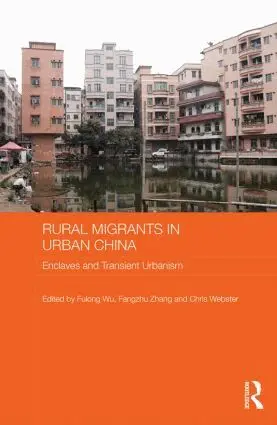
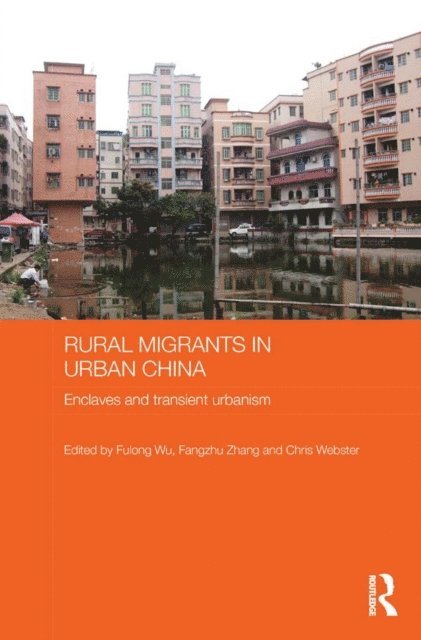
After millions of migrants moved from China’s countryside into its sprawling cities a unique kind of ‘informal’ urban enclave was born – ‘villages in the city’. Like the shanties and favelas before them elsewhere, there has been huge pressure to redevelop these blemishes to the urban face of China’s economic vision. Unlike most developing countries, however, these are not squatter settlements but owner-occupied settlements developed semi-formally by ex-farmers turned small-developers and landlords who rent shockingly high-density rooms to rural migrants, who can outnumber their landlord villagers. A strong state, matched with well-organised landlords collectively represented through joint-stock companies, has meant that it has been relatively easy to grow the city through demolition of these soft migrant enclaves. The lives of the displaced migrants then enter a transient phase from an informal to a formal urbanity. This book looks at migrants and their enclave ‘villages in the city’ and reveals the characteristics and changes in migrants’ livelihoods and living places.Using an interdisciplinary approach, the book analyses how living in the city transforms and changes rural migrant households, and explores the social lives and micro economies of migrant neighbourhoods. It goes on to discuss changing housing and social conditions and spatial changes in the urban villages of major Chinese cities, as well as looking into transient urbanism and examining the consequences of redevelopment and upgrading of the ‘villages in the city’; in particular, the planning, regeneration, politics of development, and socio-economic implications of these immense social, economic and physical upheavals.
1 953 kr
Skickas inom 10-15 vardagar
The book investigates urban development and governance in China and introduces China perspectives to the understanding of governing urban development in the 21st century.Building upon a rich and burgeoning literature on China, the book explains major changes in governance, offers a well-synthesized account of state-centered governance, and provides in-depth discussions on urban governance, city and regional planning, financing and financialization, urban redevelopment, local economic development and innovation, and environmental governance. The book bridges theoretical concepts in critical urban studies and empirical research on China and thus depicts a fuller picture of changing and variegated urban governance in the contemporary world. The book theorizes Chinese urban governance from the ground up and derives a concept of state entrepreneurialism as a framework for narrating urban governance in China. Following this framework, each chapter begins with a brief introduction to key concepts in urban geography and then depicts the urban development process on the ground in China. Then, the chapters discuss these concepts and explanations because many are derived from a different context, often in Western economies. At the end of each chapter, the phenomenal urban changes are evaluated with their theoretical implications.This book offers contextualized insights into critical geographical studies of urban governance and is the first essential complementary reading for both urban scholars and those exploring the geography of China. It will be of interest to students and researchers in Urban Geography, Urban Studies, Urban Planning, Sociology, Political Science, and China Studies. The book can also be complementary reading in China Studies, especially in governance and politics.
522 kr
Skickas inom 10-15 vardagar
The book investigates urban development and governance in China and introduces China perspectives to the understanding of governing urban development in the 21st century.Building upon a rich and burgeoning literature on China, the book explains major changes in governance, offers a well-synthesized account of state-centered governance, and provides in-depth discussions on urban governance, city and regional planning, financing and financialization, urban redevelopment, local economic development and innovation, and environmental governance. The book bridges theoretical concepts in critical urban studies and empirical research on China and thus depicts a fuller picture of changing and variegated urban governance in the contemporary world. The book theorizes Chinese urban governance from the ground up and derives a concept of state entrepreneurialism as a framework for narrating urban governance in China. Following this framework, each chapter begins with a brief introduction to key concepts in urban geography and then depicts the urban development process on the ground in China. Then, the chapters discuss these concepts and explanations because many are derived from a different context, often in Western economies. At the end of each chapter, the phenomenal urban changes are evaluated with their theoretical implications.This book offers contextualized insights into critical geographical studies of urban governance and is the first essential complementary reading for both urban scholars and those exploring the geography of China. It will be of interest to students and researchers in Urban Geography, Urban Studies, Urban Planning, Sociology, Political Science, and China Studies. The book can also be complementary reading in China Studies, especially in governance and politics.
807 kr
Skickas inom 10-15 vardagar
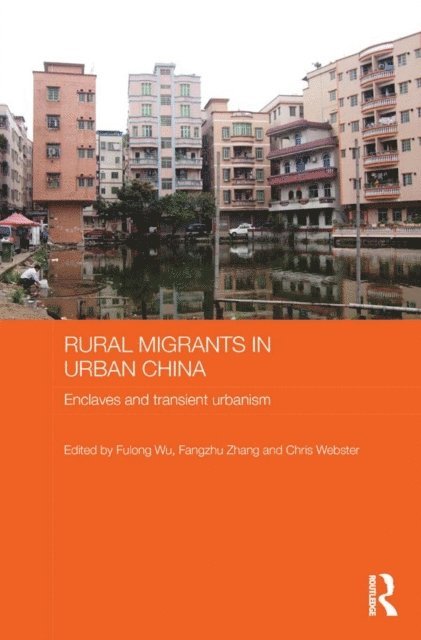
After millions of migrants moved from China’s countryside into its sprawling cities a unique kind of ‘informal’ urban enclave was born – ‘villages in the city’. Like the shanties and favelas before them elsewhere, there has been huge pressure to redevelop these blemishes to the urban face of China’s economic vision. Unlike most developing countries, however, these are not squatter settlements but owner-occupied settlements developed semi-formally by ex-farmers turned small-developers and landlords who rent shockingly high-density rooms to rural migrants, who can outnumber their landlord villagers. A strong state, matched with well-organised landlords collectively represented through joint-stock companies, has meant that it has been relatively easy to grow the city through demolition of these soft migrant enclaves. The lives of the displaced migrants then enter a transient phase from an informal to a formal urbanity. This book looks at migrants and their enclave ‘villages in the city’ and reveals the characteristics and changes in migrants’ livelihoods and living places.Using an interdisciplinary approach, the book analyses how living in the city transforms and changes rural migrant households, and explores the social lives and micro economies of migrant neighbourhoods. It goes on to discuss changing housing and social conditions and spatial changes in the urban villages of major Chinese cities, as well as looking into transient urbanism and examining the consequences of redevelopment and upgrading of the ‘villages in the city’; in particular, the planning, regeneration, politics of development, and socio-economic implications of these immense social, economic and physical upheavals.
3 404 kr
Skickas inom 7-10 vardagar
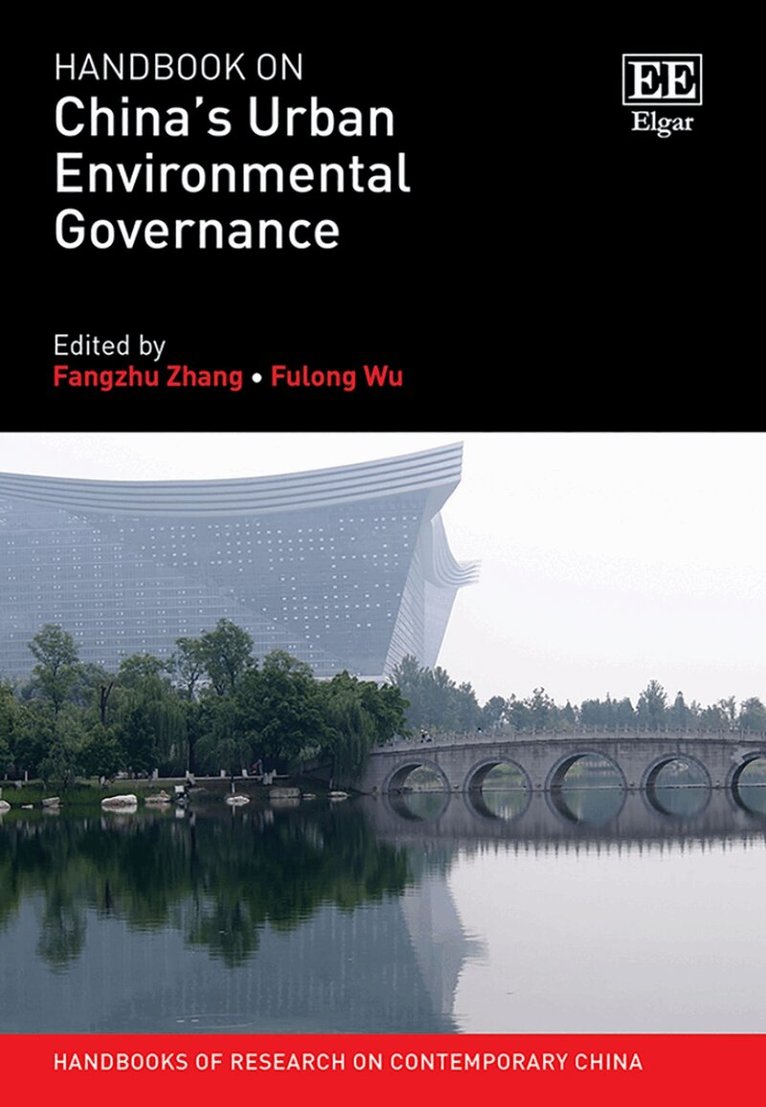
This timely and comprehensive Handbook addresses how Chinese cities govern the environmental changes generated by fast economic growth and urbanisation. Outlining the relationship between the state, market, and society, this Handbook provides a systematic understanding of urban environmental governance in China.Exploring the context of changing urban environmental policies in China, leading international scholars highlight the arts of governance and governmentality through experimentation and discourse. Chapters investigate the political ecologies of eco-cities and conservation, urban waste management, and governance and sustainability transitions, as well as focusing on low-carbon innovations and green buildings. With a territorial perspective grounded in Chinese cities, contributors interrogate changing and complex state–market–society dynamics in urbanisation and urban environmental governance.With a thorough and systematic analysis of new environmental initiatives, practices, and impacts, this Handbook provides scholars, students, and policy researchers of environmental studies, politics, and East Asian studies with an exemplary selection of contemporary research on China’s urban environmental governance.