Fulong Wu – författare
Visar alla böcker från författaren Fulong Wu. Handla med fri frakt och snabb leverans.
20 produkter
20 produkter
2 329 kr
Skickas inom 10-15 vardagar
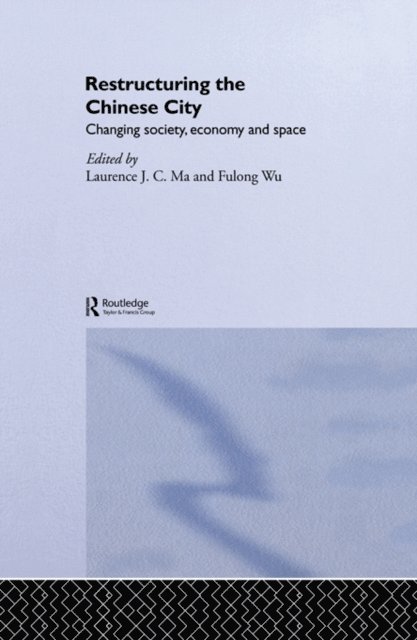
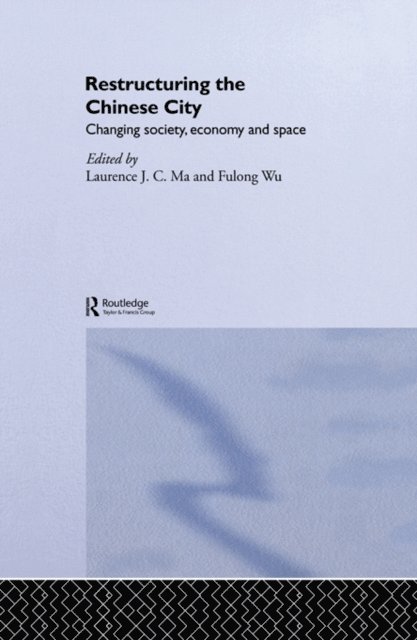
A sea of change has occurred in China since the 1978 economic reforms. Bringing together the work of leading scholars specializing in urban China, this book examines what has happened to the Chinese city undergoing multiple transformations during the reform era, with an emphasis on new processes of urban formation and the consequent reconstituted urban spaces. With arguments against the convergence thesis that sees cities everywhere becoming more Western in form and suggestions that the Chinese city is best seen as a multiplex city, Restructuring the Chinese City is an indispensable text for Chinese specialists, urban scholars and advanced students in urban geography, urban planning and China studies.
2 187 kr
Skickas inom 10-15 vardagar
Introducing readers to the far-reaching global orientation that is now taking place in urban China, an international team of contributors describe overarching globalization through a detailed examination of the transformation of the built environment. A range of urban development processes are analyzed including urbanization, real estate development, changing landscapes, the industrial restructuring of the second-tier city, and the formation of the city-region in the context of global and local interactions. In examining city development and local practices as part of globalization processes, the global city is treated as a collection of microcosms and concrete places, overcoming the analytical tension of the dichotomy of the perceived 'East versus West' divide.
2 329 kr
Skickas inom 10-15 vardagar
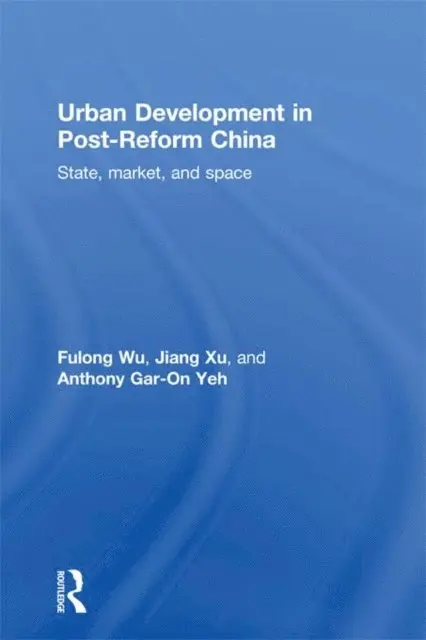
Radically reoriented under market reform, Chinese cities present both the landscapes of the First and Third World, and are increasingly playing a critical role in the country’s economic development. Yet, radical marketization co-exists with the ever-presence of state control. Exploring the interaction of China’s market development, state regulation and the resulting transformation and creation of new urban spaces, this innovative, key book provides the first integrated treatment of China’s urban development in the dynamic market transition. Focusing on land and housing development, the authors, all renowned authorities in this field, show how the market has been ‘created’ under post-reform urban conditions, and examine ‘the state in action’, highlighting how changing urban governance towards local entrepreneurial state facilitates market formation. A significant, original contribution, they highlight the key actors and their institutional contexts. China has been very successful in using urban land development as an economic growth engine, and here the authors investigate complex interactions between the market and state in creating this new urbanism. Taking a unique perspective, they marshal original ideas and empirical work based on field studies and collaborative work with colleagues in China.
1 373 kr
Skickas inom 10-15 vardagar
With urbanism becoming the key driver of socio-economic change in China, this book provides much needed up-to-date material on Chinese urban development. Demonstrating how it transcends the centrally-planned model of economic growth, and assessing the extent to which it has gone beyond the common wisdom of Chinese ‘gradualism’, the book covers a wide range of important topics, including:local land development the local state private-public partnership foreign investment urbanization ageinghome ownership. Providing a clear appraisal of recent trends in Chinese urbanism, this book puts forward important new conceptual resources to fill the gap between the outdated model of the ‘Third World’ city and the globalizing cities of the West.
2 192 kr
Skickas inom 10-15 vardagar
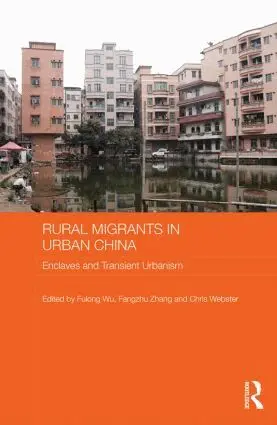
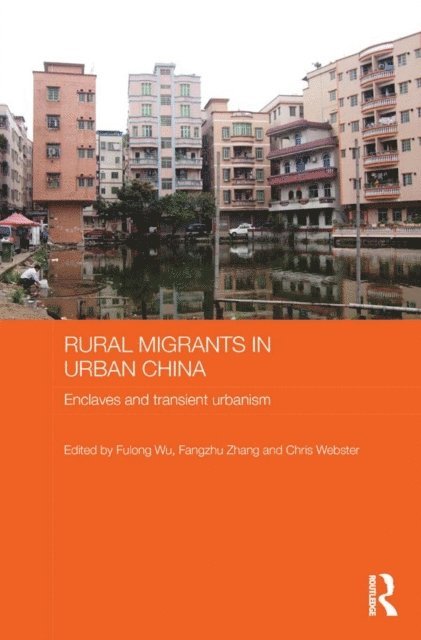
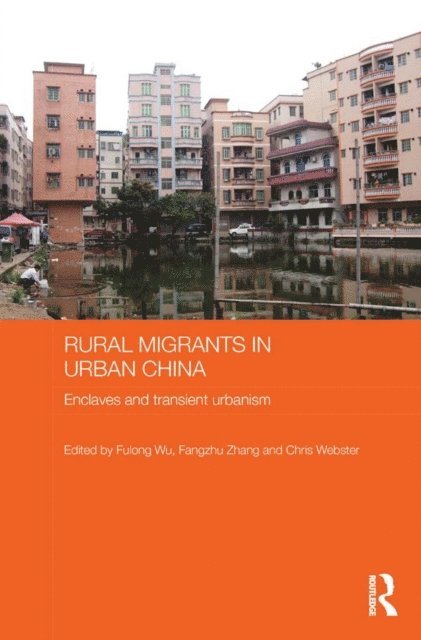
After millions of migrants moved from China’s countryside into its sprawling cities a unique kind of ‘informal’ urban enclave was born – ‘villages in the city’. Like the shanties and favelas before them elsewhere, there has been huge pressure to redevelop these blemishes to the urban face of China’s economic vision. Unlike most developing countries, however, these are not squatter settlements but owner-occupied settlements developed semi-formally by ex-farmers turned small-developers and landlords who rent shockingly high-density rooms to rural migrants, who can outnumber their landlord villagers. A strong state, matched with well-organised landlords collectively represented through joint-stock companies, has meant that it has been relatively easy to grow the city through demolition of these soft migrant enclaves. The lives of the displaced migrants then enter a transient phase from an informal to a formal urbanity. This book looks at migrants and their enclave ‘villages in the city’ and reveals the characteristics and changes in migrants’ livelihoods and living places.Using an interdisciplinary approach, the book analyses how living in the city transforms and changes rural migrant households, and explores the social lives and micro economies of migrant neighbourhoods. It goes on to discuss changing housing and social conditions and spatial changes in the urban villages of major Chinese cities, as well as looking into transient urbanism and examining the consequences of redevelopment and upgrading of the ‘villages in the city’; in particular, the planning, regeneration, politics of development, and socio-economic implications of these immense social, economic and physical upheavals.
696 kr
Skickas inom 10-15 vardagar
Introducing readers to the far-reaching global orientation that is now taking place in urban China, an international team of contributors describe overarching globalization through a detailed examination of the transformation of the built environment. A range of urban development processes are analyzed including urbanization, real estate development, changing landscapes, the industrial restructuring of the second-tier city, and the formation of the city-region in the context of global and local interactions. In examining city development and local practices as part of globalization processes, the global city is treated as a collection of microcosms and concrete places, overcoming the analytical tension of the dichotomy of the perceived 'East versus West' divide.
444 kr
Skickas inom 10-15 vardagar
With urbanism becoming the key driver of socio-economic change in China, this book provides much needed up-to-date material on Chinese urban development. Demonstrating how it transcends the centrally-planned model of economic growth, and assessing the extent to which it has gone beyond the common wisdom of Chinese ‘gradualism’, the book covers a wide range of important topics, including:local land development the local state private-public partnership foreign investment urbanization ageinghome ownership. Providing a clear appraisal of recent trends in Chinese urbanism, this book puts forward important new conceptual resources to fill the gap between the outdated model of the ‘Third World’ city and the globalizing cities of the West.
2 739 kr
Skickas inom 10-15 vardagar
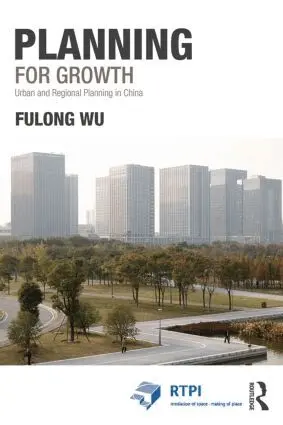
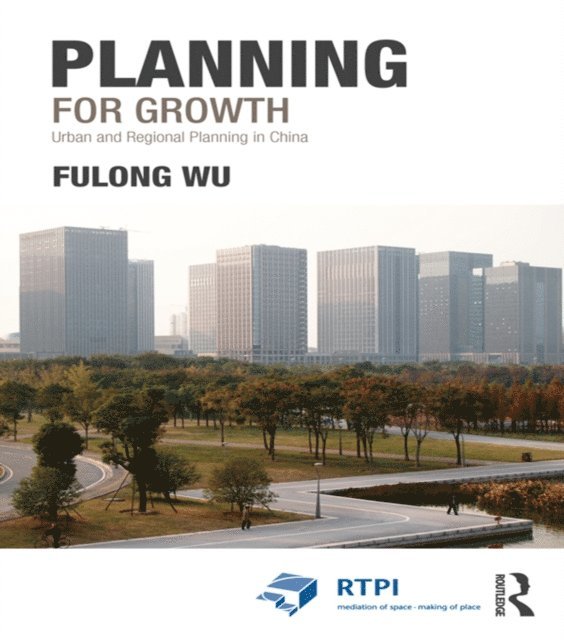
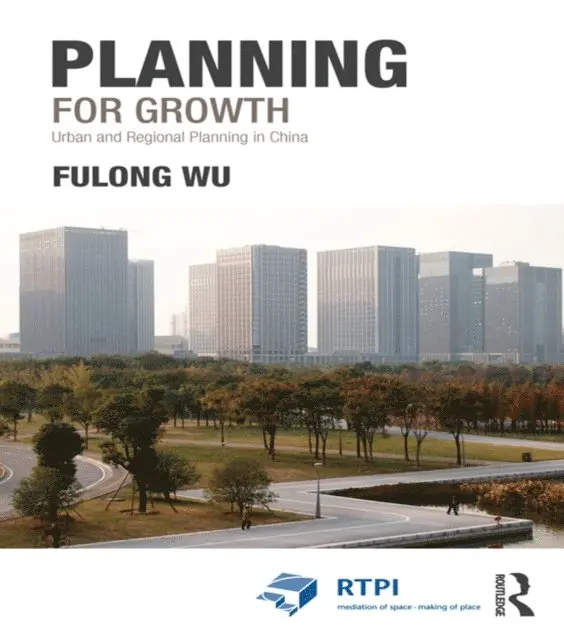
Planning for Growth: Urban and Regional Planning in China provides an overview of the changes in China’s planning system, policy, and practices using concrete examples and informative details in language that is accessible enough for the undergraduate but thoroughly grounded in a wealth of research and academic experience to support academics. It is the first accessible text on changing urban and regional planning in China under the process of transition from a centrally planned socialist economy to an emerging market in the world. Fulong Wu, a leading authority on Chinese cities and urban and regional planning, sets up the historical framework of planning in China including its foundation based on the proactive approach to economic growth, the new forms of planning, such as the ‘strategic spatial plan’ and ‘urban cluster plans’, that have emerged and stimulated rapid urban expansion and transformed compact Chinese cities into dispersed metropolises. And goes on to explain the new planning practices that began to pay attention to eco-cities, new towns and new development areas. Planning for Growth: Urban and Regional Planning in China demonstrates that planning is not necessarily an ‘enemy of growth’ and plays an important role in Chinese urbanization and economic growth. On the other hand, it also shows planning’s limitations in achieving a more sustainable and just urban future.
731 kr
Skickas inom 10-15 vardagar
Planning for Growth: Urban and Regional Planning in China provides an overview of the changes in China’s planning system, policy, and practices using concrete examples and informative details in language that is accessible enough for the undergraduate but thoroughly grounded in a wealth of research and academic experience to support academics. It is the first accessible text on changing urban and regional planning in China under the process of transition from a centrally planned socialist economy to an emerging market in the world. Fulong Wu, a leading authority on Chinese cities and urban and regional planning, sets up the historical framework of planning in China including its foundation based on the proactive approach to economic growth, the new forms of planning, such as the ‘strategic spatial plan’ and ‘urban cluster plans’, that have emerged and stimulated rapid urban expansion and transformed compact Chinese cities into dispersed metropolises. And goes on to explain the new planning practices that began to pay attention to eco-cities, new towns and new development areas. Planning for Growth: Urban and Regional Planning in China demonstrates that planning is not necessarily an ‘enemy of growth’ and plays an important role in Chinese urbanization and economic growth. On the other hand, it also shows planning’s limitations in achieving a more sustainable and just urban future.
3 133 kr
Skickas inom 5-8 vardagar
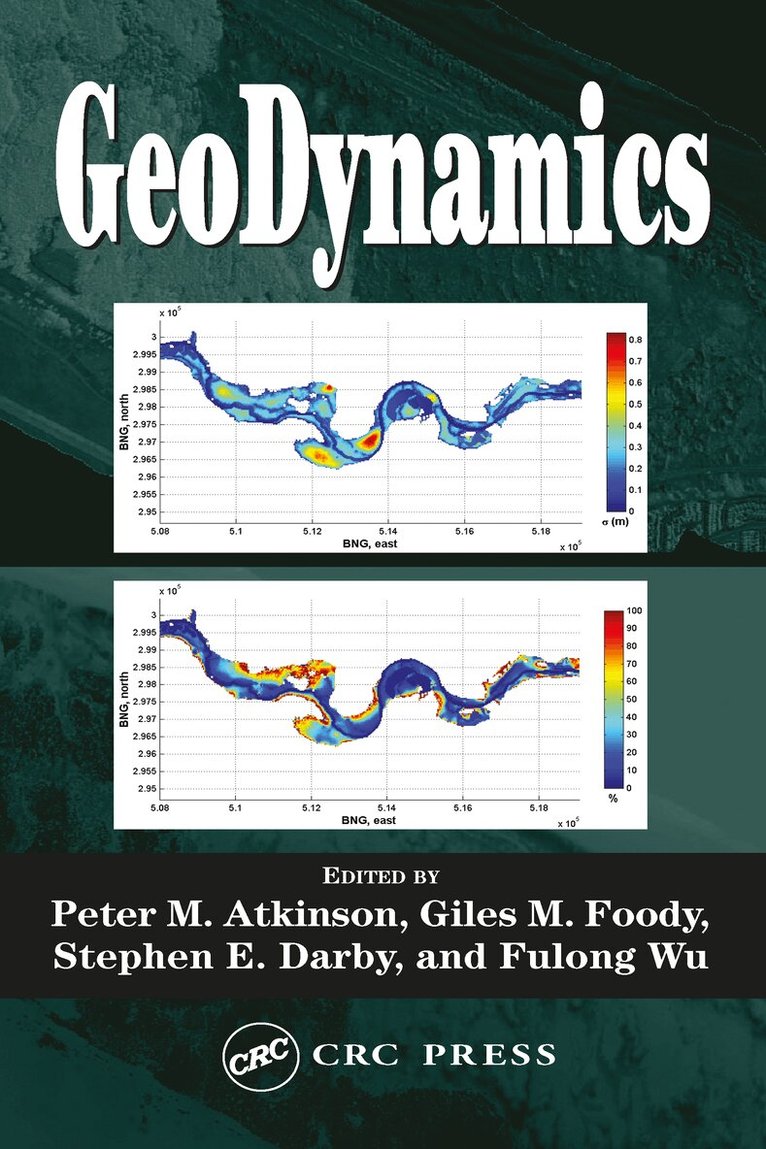
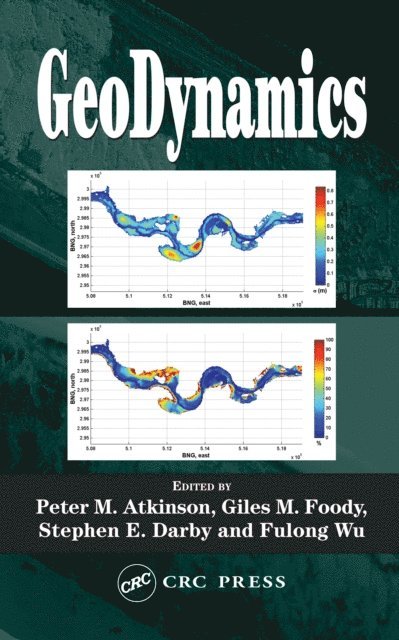
While remote sensing gives a surface depiction of the world, its recent convergence with GIS enables richer depictions that can be used to simulate physical processes, identify trends, and make more accurate predictions.GeoDynamics is based on specialized lectures from an international field of experts, addressing remote sensing, spatially distributed modeling of land surface processes, and urban dynamics as part of the GeoComputation conference. It focuses on this symbiotic relationship in a detailed discussion of both remote sensing and spatially distributed dynamic modeling.The book analyzes recent developments in assembling geographical information such as: the ubiquitous deployment of portable measurement devices enabled with global positioning technology and its impact on the field; the management, benefits, and challenges of modeling dynamic processes in three dimensions; the implications of temporal granularity of simulations to predictions; and the appropriate representation of human factors in GIS. It illustrates the importance of incorporating interdisciplinary sciences to hone GIS capabilities, the advantage of sharing data and representations, and effective communication through visualization. This book establishes how these integrated technologies have become a central part of building spatial representations.GeoDynamics is a lasting record of this groundbreaking conference and a valuable contribution to the growing literature on GeoDynamics for academics and practitioners alike.
2 124 kr
Skickas inom 10-15 vardagar
This book investigates changing geographies of fast growing Asian metropolitan regions, in particular their peripheral areas.Through examining the intersection of global suburbanisation and Asian urbanism, the book depicts a complex (sub)urban world in Asia. It explains how the forces of globalisation, the logic of capital accumulation, and the history of rural-urban divide and interaction, path-dependent local institutions, and government policies work together to reshape the geographies of Asian urbanism. Touching on social, environmental, governance and planning aspects of contemporary urban Asia, the chapters in this volume provide grounded studies of residential relocation and changing rural settlements, property development by a congregation of developers, political ecologies of water provision, middle-class consumers, and local state agencies, transit-oriented development and infrastructure finance in peri-urban areas. It demonstrates an assemblage of actors and coexistence of multiple urban governance regimes with everyday negotiations.Changing Asian Urban Geographies will be interesting not only to those who wish to know more about Asian urban geographies but also to scholars and students wishing to see Asian metropolises in a comparative perspective of (sub)urban dynamics. The chapters in this book were originally published in Urban Geography.
581 kr
Skickas inom 10-15 vardagar
This book investigates changing geographies of fast growing Asian metropolitan regions, in particular their peripheral areas.Through examining the intersection of global suburbanisation and Asian urbanism, the book depicts a complex (sub)urban world in Asia. It explains how the forces of globalisation, the logic of capital accumulation, and the history of rural-urban divide and interaction, path-dependent local institutions, and government policies work together to reshape the geographies of Asian urbanism. Touching on social, environmental, governance and planning aspects of contemporary urban Asia, the chapters in this volume provide grounded studies of residential relocation and changing rural settlements, property development by a congregation of developers, political ecologies of water provision, middle-class consumers, and local state agencies, transit-oriented development and infrastructure finance in peri-urban areas. It demonstrates an assemblage of actors and coexistence of multiple urban governance regimes with everyday negotiations.Changing Asian Urban Geographies will be interesting not only to those who wish to know more about Asian urban geographies but also to scholars and students wishing to see Asian metropolises in a comparative perspective of (sub)urban dynamics. The chapters in this book were originally published in Urban Geography.
1 987 kr
Skickas inom 10-15 vardagar
The book investigates urban development and governance in China and introduces China perspectives to the understanding of governing urban development in the 21st century.Building upon a rich and burgeoning literature on China, the book explains major changes in governance, offers a well-synthesized account of state-centered governance, and provides in-depth discussions on urban governance, city and regional planning, financing and financialization, urban redevelopment, local economic development and innovation, and environmental governance. The book bridges theoretical concepts in critical urban studies and empirical research on China and thus depicts a fuller picture of changing and variegated urban governance in the contemporary world. The book theorizes Chinese urban governance from the ground up and derives a concept of state entrepreneurialism as a framework for narrating urban governance in China. Following this framework, each chapter begins with a brief introduction to key concepts in urban geography and then depicts the urban development process on the ground in China. Then, the chapters discuss these concepts and explanations because many are derived from a different context, often in Western economies. At the end of each chapter, the phenomenal urban changes are evaluated with their theoretical implications.This book offers contextualized insights into critical geographical studies of urban governance and is the first essential complementary reading for both urban scholars and those exploring the geography of China. It will be of interest to students and researchers in Urban Geography, Urban Studies, Urban Planning, Sociology, Political Science, and China Studies. The book can also be complementary reading in China Studies, especially in governance and politics.
526 kr
Skickas inom 10-15 vardagar
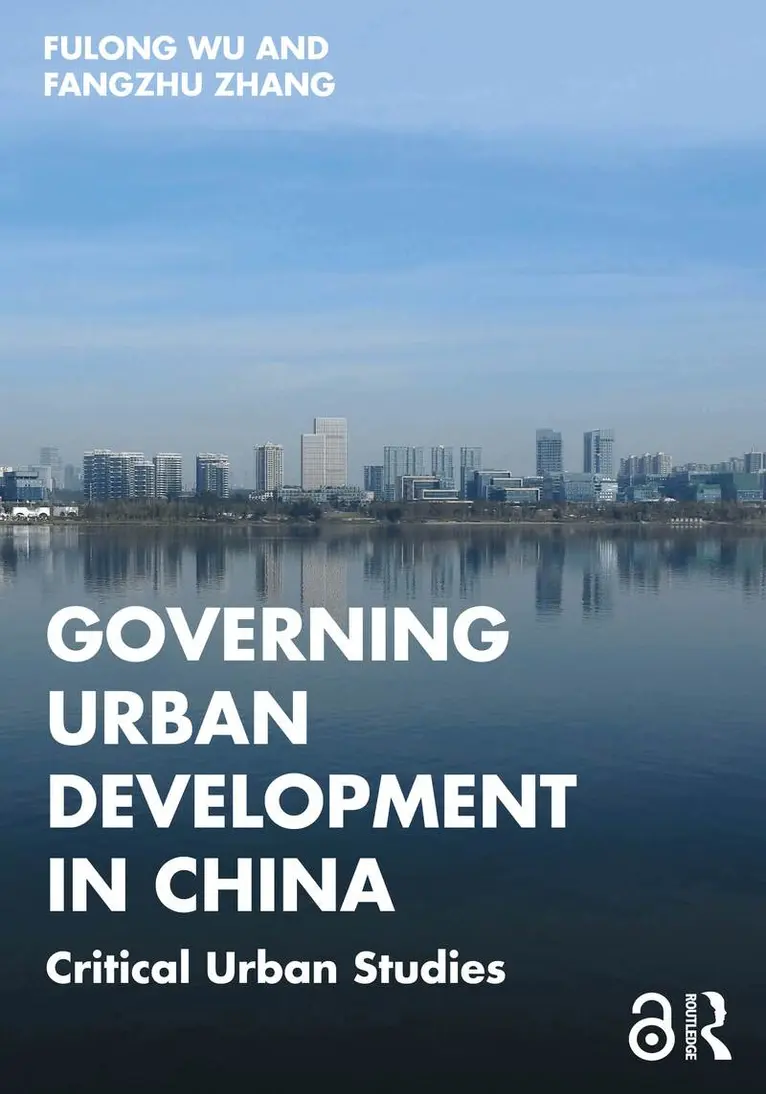
The book investigates urban development and governance in China and introduces China perspectives to the understanding of governing urban development in the 21st century.Building upon a rich and burgeoning literature on China, the book explains major changes in governance, offers a well-synthesized account of state-centered governance, and provides in-depth discussions on urban governance, city and regional planning, financing and financialization, urban redevelopment, local economic development and innovation, and environmental governance. The book bridges theoretical concepts in critical urban studies and empirical research on China and thus depicts a fuller picture of changing and variegated urban governance in the contemporary world. The book theorizes Chinese urban governance from the ground up and derives a concept of state entrepreneurialism as a framework for narrating urban governance in China. Following this framework, each chapter begins with a brief introduction to key concepts in urban geography and then depicts the urban development process on the ground in China. Then, the chapters discuss these concepts and explanations because many are derived from a different context, often in Western economies. At the end of each chapter, the phenomenal urban changes are evaluated with their theoretical implications.This book offers contextualized insights into critical geographical studies of urban governance and is the first essential complementary reading for both urban scholars and those exploring the geography of China. It will be of interest to students and researchers in Urban Geography, Urban Studies, Urban Planning, Sociology, Political Science, and China Studies. The book can also be complementary reading in China Studies, especially in governance and politics.
813 kr
Skickas inom 10-15 vardagar
After millions of migrants moved from China’s countryside into its sprawling cities a unique kind of ‘informal’ urban enclave was born – ‘villages in the city’. Like the shanties and favelas before them elsewhere, there has been huge pressure to redevelop these blemishes to the urban face of China’s economic vision. Unlike most developing countries, however, these are not squatter settlements but owner-occupied settlements developed semi-formally by ex-farmers turned small-developers and landlords who rent shockingly high-density rooms to rural migrants, who can outnumber their landlord villagers. A strong state, matched with well-organised landlords collectively represented through joint-stock companies, has meant that it has been relatively easy to grow the city through demolition of these soft migrant enclaves. The lives of the displaced migrants then enter a transient phase from an informal to a formal urbanity. This book looks at migrants and their enclave ‘villages in the city’ and reveals the characteristics and changes in migrants’ livelihoods and living places.Using an interdisciplinary approach, the book analyses how living in the city transforms and changes rural migrant households, and explores the social lives and micro economies of migrant neighbourhoods. It goes on to discuss changing housing and social conditions and spatial changes in the urban villages of major Chinese cities, as well as looking into transient urbanism and examining the consequences of redevelopment and upgrading of the ‘villages in the city’; in particular, the planning, regeneration, politics of development, and socio-economic implications of these immense social, economic and physical upheavals.
676 kr
Skickas inom 10-15 vardagar
A sea of change has occurred in China since the 1978 economic reforms. Bringing together the work of leading scholars specializing in urban China, this book examines what has happened to the Chinese city undergoing multiple transformations during the reform era, with an emphasis on new processes of urban formation and the consequent reconstituted urban spaces. With arguments against the convergence thesis that sees cities everywhere becoming more Western in form and suggestions that the Chinese city is best seen as a multiplex city, Restructuring the Chinese City is an indispensable text for Chinese specialists, urban scholars and advanced students in urban geography, urban planning and China studies.
812 kr
Skickas inom 5-8 vardagar
After Suburbia presents a cross-section of state-of-the-art scholarship in critical global suburban research and provides an in-depth study of the planet’s urban peripheries to grasp the forms of urbanization in the twenty-first century.Based on cutting-edge conceptual thought and steeped in richly detailed empirical work conducted over the past decade, After Suburbia draws on research from Asia, Africa, Australia, Europe, and the Americas to showcase comprehensive global scholarship on the urban periphery. Contributors explicitly reject the traditional centre-periphery dichotomy and the prioritization of epistemologies that favour the Global North, especially North American cases, over other experiences. In doing so, the book strongly advances the notion of a post-suburban reality in which traditional dynamics of urban extension outward from the centre are replaced by a set of complex contradictory developments. After Suburbia examines multiple centralities and diverse peripheries which mesh to produce a surprisingly contradictory and diverse metropolitan landscape.
389 kr
Skickas inom 5-8 vardagar
After Suburbia presents a cross-section of state-of-the-art scholarship in critical global suburban research and provides an in-depth study of the planet’s urban peripheries to grasp the forms of urbanization in the twenty-first century.Based on cutting-edge conceptual thought and steeped in richly detailed empirical work conducted over the past decade, After Suburbia draws on research from Asia, Africa, Australia, Europe, and the Americas to showcase comprehensive global scholarship on the urban periphery. Contributors explicitly reject the traditional centre-periphery dichotomy and the prioritization of epistemologies that favour the Global North, especially North American cases, over other experiences. In doing so, the book strongly advances the notion of a post-suburban reality in which traditional dynamics of urban extension outward from the centre are replaced by a set of complex contradictory developments. After Suburbia examines multiple centralities and diverse peripheries which mesh to produce a surprisingly contradictory and diverse metropolitan landscape.
3 497 kr
Skickas inom 5-8 vardagar
This timely and comprehensive Handbook addresses how Chinese cities govern the environmental changes generated by fast economic growth and urbanisation. Outlining the relationship between the state, market, and society, this Handbook provides a systematic understanding of urban environmental governance in China.Exploring the context of changing urban environmental policies in China, leading international scholars highlight the arts of governance and governmentality through experimentation and discourse. Chapters investigate the political ecologies of eco-cities and conservation, urban waste management, and governance and sustainability transitions, as well as focusing on low-carbon innovations and green buildings. With a territorial perspective grounded in Chinese cities, contributors interrogate changing and complex state–market–society dynamics in urbanisation and urban environmental governance.With a thorough and systematic analysis of new environmental initiatives, practices, and impacts, this Handbook provides scholars, students, and policy researchers of environmental studies, politics, and East Asian studies with an exemplary selection of contemporary research on China’s urban environmental governance.
1 850 kr
Skickas inom 5-8 vardagar
Urban poverty is an emerging problem. This book explores the household and neighbourhood factors that lead to both the generation and continuance of urban poverty in China. It is argued that the urban Chinese are not a homogenous social group, but combine laid-off workers and rural migrants, resulting in stark contrasts between migrant and workers' neighbourhoods and villages.The expert authors examine the new urban poor in China and the dynamics of their poor neighbourhoods, highlighting both household experience and neighbourhood changes affecting the urban poor. Urban Poverty in China is based upon a comprehensive household survey in six Chinese cities and provides insights into microscopic and neighbourhood-level poverty dynamics. The comprehensive study explores the spatial implications such as concentration of poverty as well as the differentiation within poor neighbourhoods.This informative book tells an insightful story about evolving urban poverty in Chinese cities that will be invaluable to researchers and postgraduate students within urban studies, geography, social policy and development studies as well as Chinese and Asian studies. It will also prove to be an invaluable read for researchers in urban and social development and international development agencies.