• Fri frakt över 249 kr
  • •
  • Snabba leveranser
  • •
  • Billiga böcker
Kundservice

Du är på sajten för privatpersoner.

Företag, bibliotek eller offentlig verksamhet?

Du handlar på classic.bokus.com, där alla dina funktioner finns intakta.
Till classic.bokus.com
Bokus logotyp. Gå till startsidan.
  • Erbjudanden
  • Nyheter
  • Student
  • Topplistor
  • Barn & ungdom
  • Bokus Play
  • E-böcker
  • Pocketböcker
  • Spel & pussel

10% rabatt på allt med kod: NYSTART10 →

Sidfot

Mina sidor

    Hjälp

    • Kundservice
    • Vanliga frågor och svar
    • Frakt och leverans
    • Retur vid ångerrätt
    • Reklamera vara
    • Betalning
    • Köpvillkor
    • Allmänna villkor
    • Information om webbplatsens tillgänglighet

    Om Bokus

    • Om oss
    • Pressrum
    • För studenter
    • För företag
    • För bibliotek och offentlig verksamhet
    • För leverantörer
    • Hållbarhet

    Populärt

    • Aktuella erbjudanden
    • Presentkort
    • Studentlitteratur
    • Nya böcker
    • Topplistor
    • Signerade böcker
    • Engelska böcker

    Inspiration

    • Boktips
    • BookTok
    • Populära bokserier
    • Barnbokskaraktärer
    • Populära författare
    Logotyp för Bokus
    Följ oss på Facebook (extern länk)Följ oss på Instagram (extern länk)Följ oss på YouTube (extern länk)Följ oss på TikTok (extern länk)
    bokus @ CookiesAnpassa cookiesIntegritetspolicyKöpvillkor
    Till Citymail hemsida (extern länk)Till Budbee hemsida (extern länk)Till Postnord hemsida (extern länk)Till Schenker hemsida (extern länk)Till Early Bird hemsida (extern länk)Till Walleys hemsida (extern länk)
    1. Djur och Natur
    2. Naturböcker
    3. Växtböcker

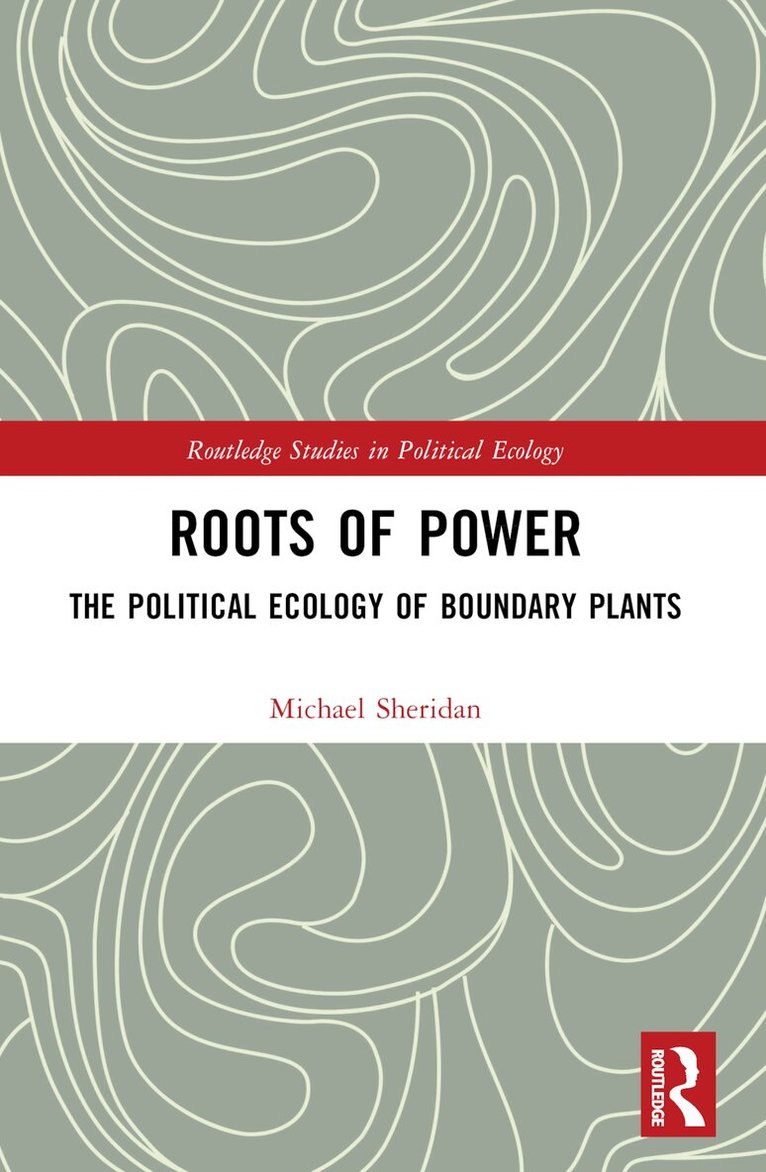
    Roots of Power

    The Political Ecology of Boundary Plants

    AvMichael Sheridan

    Häftad, Engelska, 2024

    Del i serien Routledge Studies in Political Ecology

    624 kr

    Beställningsvara. Skickas inom 10-15 vardagar. Fri frakt över 249 kr.

    Fler format och utgåvor

    E-bok

    738 kr

    E-bok

    738 kr

    Inbunden

    2 421 kr

    Beskrivning

    Roots of Power tells five stories of plants, people, property, politics, peace, and protection in tropical societies. In Cameroon, French Polynesia, Papua New Guinea, St. Vincent, and Tanzania, dracaena and cordyline plants are simultaneously property rights institutions, markers of social organization, and expressions of life-force and vitality. In addition to their localized roles in forming landscapes and societies, these plants mark multiple boundaries and demonstrate deep historical connections across much of the planet’s tropics. These plants’ deep roots in society and culture have made them the routes through which postcolonial agrarian societies have negotiated both social and cultural continuity and change. This book is a multi-sited ethnographic political ecology of ethnobotanical institutions. It uses five parallel case studies to investigate the central phenomenon of "boundary plants" and establish the linkages among the case studies via both ancient and relatively recent demographic transformations such as the Bantu expansion across tropical Africa, the Austronesian expansion into the Pacific, and the colonial system of plantation slavery in the Black Atlantic. Each case study is a social-ecological system with distinctive characteristics stemming from the ways that power is organized by kinship and gender, social ranking, or racialized capitalism. This book contributes to the literature on property rights institutions and land management by arguing that tropical boundary plants’ social entanglements and cultural legitimacy make them effective foundations for development policy. Formal recognition of these institutions could reduce contradiction, conflict, and ambiguity between resource managers and states in postcolonial societies and contribute to sustainable livelihoods and landscapes. This book will appeal to scholars and students of environmental anthropology, political ecology, ethnobotany, landscape studies, colonial history, and development studies, and readers will benefit from its demonstration of the comparative method.

    Produktinformation

    • Utgivningsdatum:2024-08-26
    • Mått:156 x 234 x 16 mm
    • Vikt:453 g
    • Format:Häftad
    • Språk:Engelska
    • Serie:Routledge Studies in Political Ecology
    • Antal sidor:276
    • Förlag:Taylor & Francis Ltd
    • ISBN:9781032411422

    Utforska kategorier

    • Växtböcker inom Djur och Natur
    • Botanik inom Naturvetenskap och teknik
    • Miljövetenskap och miljöpolitik inom Naturvetenskap och teknik

    Mer om författaren

    Michael Sheridan teaches anthropology and environmental studies at Middlebury College in Vermont.

    Recensioner i media

    "In this lucid and innovative book, Mike Sheridan traces the remarkable global histories and cultural meanings of two powerfully charged boundary-marking plants – dracaena and cordyline – through five case studies of indigenous societies in Tanzania, Cameroon, New Guinea, French Polynesia, and the Caribbean. In critical dialogue with posthumanist approaches, his multi-sited ethnography of human-plant relations sets a model for political ecology. In the tradition of Eric Wolf, he masterfully combines history, culture, and power!"Alf Hornborg, Professor of Human Ecology, Lund University "In Roots of Power, it is fascinating to see tropical boundary plants being used to ‘beat the bounds’ of social science theorizing in so many directions. The author follows two sets of cultivars whose uncannily repetitive evocations offer a sense of definition in an entangled field!"Marilyn Strathern, Emeritus Professor of Social Anthropology, University of Cambridge"This brilliantly integrative ethnography explores the living boundaries of properties, and the properties people imbue in boundary plants themselves. Sheridan shows what else these mean in people’s lives – material, social, and spiritual. Roots of Power marks a conjunction in the field of anthropology itself, conjoining deep work with far-reaching comparative study!"Parker Shipton, Professor of Anthropology, Boston University"Michael Sheridan’s Roots of Power: The Political Ecology of Boundary Plants tells five stories of plants, people, property, peace, and protection. With assured prose and impressive scholarship Sheridan shows how two humble plants, used traditionally throughout the global tropics to set property boundaries, are also conduits for social harmony, resistance against oppression, and spiritual journeys. This is an important book, not only for the professional scholar, but also for those interested in the majesty of small things that so profoundly influence the gamut of human life, from the comity of neighbors to the deepest entanglements of social and political power!"Judith Carney, Distinguished Research Professor, Geography, UCLA"Historically, plants have been used as boundary markers in different communities around the world. Through the lens of dracaena and cordyline plants, Michael Sheridan delivers the first global comparative study of plants as social, political, and cultural boundary markers. A theoretical tour de force, this book demonstrates the power of anthropology to understand socio-cultural phenomena over time and space. Based on multi-sited ethnography in five countries, Sheridan analyses processes of socioecological change involving property relations, group identities, land use, and domains of meaning. This book is a new and refreshingly productive approach to the expanding field of political ecology, and to the discourse on property rights everywhere!"N. Thomas Håkansson, Professor Emeritus, Swedish University of Agricultural Sciences; Adjunct Full Professor of Anthropology, University of Kentucky"The book delivers on its ambitious framing by effectively combining ethnographic methods with political ecology frameworks across five case studies. Sheridan shows that the two boundary plants in question, Dracaena fragrans and Cordyline fruticosa, serve ‘polymarcating’ roles. They organize land but also evoke ideas about identity, community, belonging, and social order... The introduction, second chapter, and conclusion directly address a range of concepts from anthropology, history, cultural studies, development economics, and more. Sheridan draws useful insights from classic anthropology as well as the New Institutional Economics, Actor-Network Theory, and the Evolutionary Theory of Land Rights. Sheridan’s critique of post-humanist scholarly approaches is especially valuable"Jonathan E. Robins,The Journal of Pacific History (17 Oct 2024)"An ambitious multi-sited project, Roots of Power does well to interpret through the lens of poststructuralist political ecology in order to understand how communities… engage with, value, and make meaning of Dracaena and Cordyline… [Sheridan] prompts scholars and policymakers to continue to imagine other futures of governance—ones that take plants seriously."Kathleen Cruz Gutierrez, The Journal of Society & Natural Resources (23 May 2025)"Michael Sheridan’s Roots of Power: The Political Ecology of Boundary Plants examines the concept of a boundary plant across five case-studies...By drawing together the common thread—the agency of plants in human lives—Sheridan is able to foreground the complexities of engaging with other-than-human beings...the multi-sited ethnography, in conjunction with historical data and an exploration of power, demonstrates a model of meaning-making which sits at the intersection of anthropology, ecology, and history."Jayaditya Vittal, Ethnobiology Letters (2 Dec 2025)

    Innehållsförteckning

    • Chap 1 Introduction: Approaching the Boundary Multi-sited ethnographyPolitical ecology Ethnobotany Institutions Outline of the book Chap 2 Beating the Bounds for Boundary Plants Structure, territory, and tenureFrom structure to processSymbolic boundary processes Monomarcation and polymarcationThe spatial turnThe plant and multispecies turnsThe ontological turnRe-turning to political economyConclusionChap 3 Tanzania: Knots of Peace on KilimanjaroKilimanjaro as a social-ecological systemLiving land tenureAncestors in the landscapeKnots of peace, order, and meaningConclusionChap 4 Cameroon: Bounded Vitality and Rank in the Oku MonarchyOku as a social-ecological systemBoundary plants and land tenure in OkuSocial organization and boundary plants on patrolMasquerades, witchcraft, and life-force in OkuLife flowing through boundary plantsConclusionChap 5 Papua New Guinea: Embodying Places, Emplacing BodiesThe vegecultures of OceaniaPapua New Guinea as a social-ecological systemCordyline as a botanica franca Mapping social relations with boundary plants Beauty, place, and orderConclusionChap 6 French Polynesia: Rank and Revitalization in the Society IslandsVegecultures and social ranking in Remote OceaniaThe Society Islands as social-ecological systems Boundary plants and monuments to hierarchyThe conjunctures of cordyline and colonialismRevitalized boundaries in a new societyDecentralized protection and powerConclusionChap 7 St Vincent: Dragons in a Postslavery Peasant SocietyBoundary plants in the PlantationoceneSt. Vincent as a social-ecological systemBoundary struggles in the provision groundsThe social organization of dragonsThe red dragon is the guideConclusionChap 8 Conclusion: Beyond BoundariesMethods revisitedBoundaries and routes of power in the pastBoundary plants and the roots of power todayBeyond the bounds References