Routledge Studies in Political Ecology – serie
Visar alla böcker i serien Routledge Studies in Political Ecology. Handla med fri frakt och snabb leverans.
17 produkter
17 produkter
Häftad, Engelska, 2020
714 kr
Skickas inom 10-15 vardagar
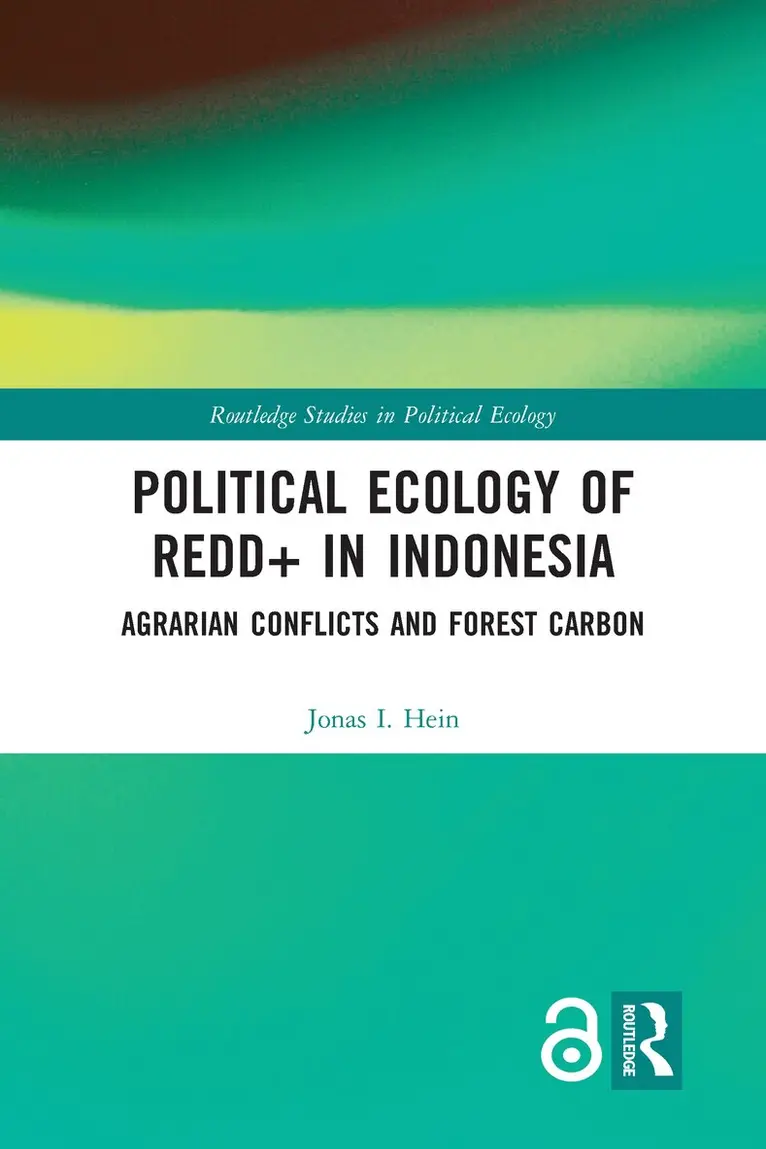
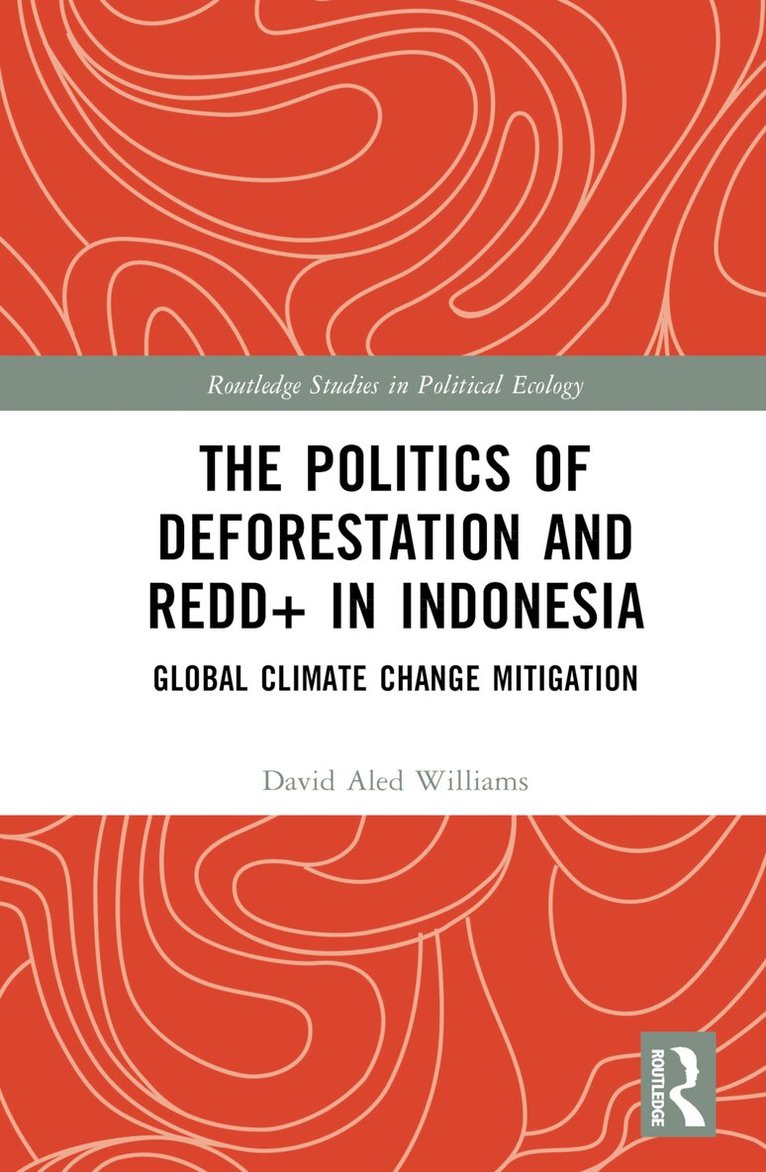
Indonesia’s commitment to reducing land-based greenhouse gas emissions significantly includes the expansion of conservation areas, but these developments are not free of conflicts. This book provides a comprehensive analysis of agrarian conflicts in the context of the implementation of REDD+ (Reducing Emissions from Deforestation and Forest Degradation) and forest carbon offsetting in Indonesia, a country where deforestation is a major issue. The author analyzes new kinds of transnational agrarian conflicts which have strong implications for global environmental justice in the REDD+ pilot province of Jambi on the island of Sumatra. The chapters cover: the rescaling of the governance of forests; privatization of conservation; and the transnational dimensions of agrarian conflicts and peasants' resistance in the context of REDD+. The book builds on an innovative conceptual approach linking political ecology, politics of scale and theories of power. It fills an important knowledge and research gap by focusing on the socially differentiated impacts of REDD+ and new forest carbon offsetting initiatives in Southeast Asia, providing a multi-scalar perspective.It is aimed at scholars in the areas of political ecology, human geography, climate change mitigation, forest and natural resource management, as well as environmental justice and agrarian studies. The Open Access version of this book, available at http://www.tandfebooks.com/doi/view/10.4324/9781351066020, has been made available under a Creative Commons Attribution-Non Commercial-No Derivatives 4.0 license.
Häftad, Engelska, 2020
631 kr
Skickas inom 10-15 vardagar
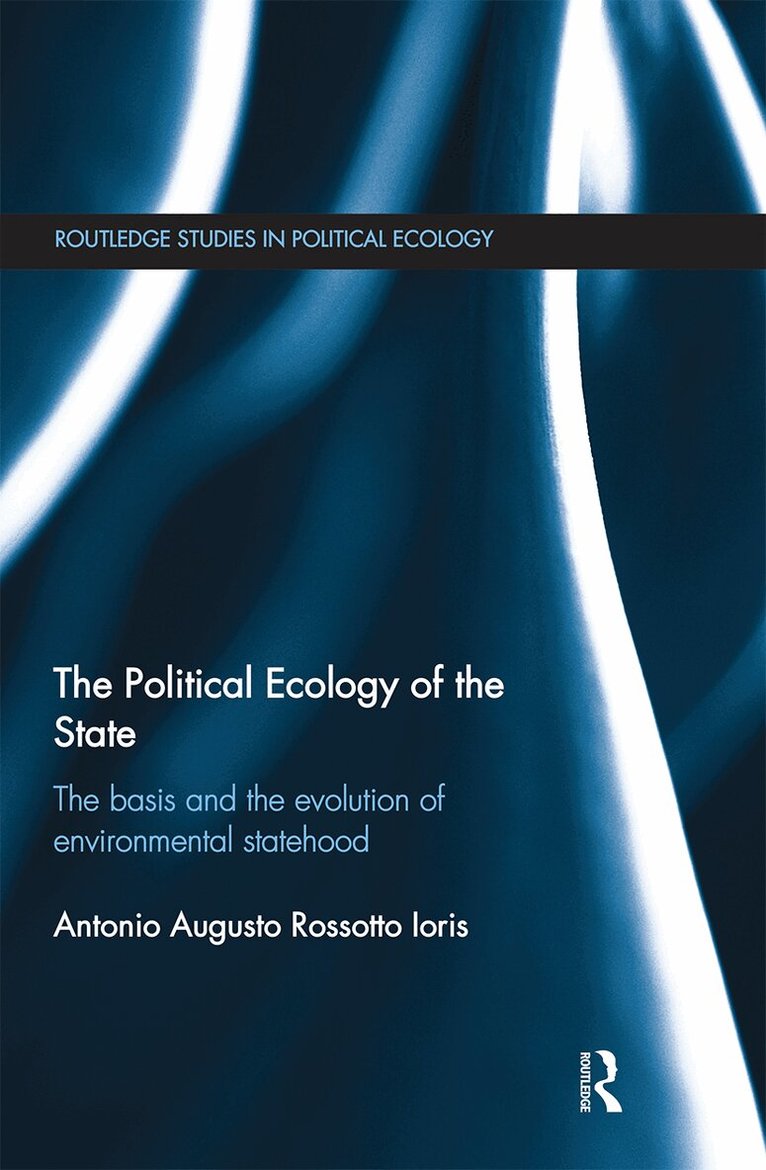
The contemporary state is not only the main force behind environmental change, but the reactions to environmental problems have played a crucial role in the modernisation of the state apparatus, especially because of its mediatory role.The Political Ecology of the State is the first book to critically assess the philosophical basis of environmental statehood and regulation, addressing the emergence and evolution of environmental regulation from the early twentieth century to the more recent phase of ecological modernisation and the neoliberalisation of nature. The state is understood as the result of permanent socionatural interactions and multiple forms of contestation, from a critical politico-ecological approach. This book examines the tension between pro- and anti-commons tendencies that have permeated the organisation and failures of the environmental responses put forward by the state. It provides a reinterpretation of the achievements and failures of mainstream environmental policies and regulation, and offers a review of the main philosophical influences behind different periods of environmental statehood and regulation. It sets out an agenda for going beyond conventional state regulation and grassroots dealings with the state, and as such redefines the environmental apparatus of the state.
Inbunden, Engelska, 2014
2 366 kr
Skickas inom 10-15 vardagar
The contemporary state is not only the main force behind environmental change, but the reactions to environmental problems have played a crucial role in the modernisation of the state apparatus, especially because of its mediatory role.The Political Ecology of the State is the first book to critically assess the philosophical basis of environmental statehood and regulation, addressing the emergence and evolution of environmental regulation from the early twentieth century to the more recent phase of ecological modernisation and the neoliberalisation of nature. The state is understood as the result of permanent socionatural interactions and multiple forms of contestation, from a critical politico-ecological approach. This book examines the tension between pro- and anti-commons tendencies that have permeated the organisation and failures of the environmental responses put forward by the state. It provides a reinterpretation of the achievements and failures of mainstream environmental policies and regulation, and offers a review of the main philosophical influences behind different periods of environmental statehood and regulation. It sets out an agenda for going beyond conventional state regulation and grassroots dealings with the state, and as such redefines the environmental apparatus of the state.
Inbunden, Engelska, 2015
2 157 kr
Skickas inom 10-15 vardagar
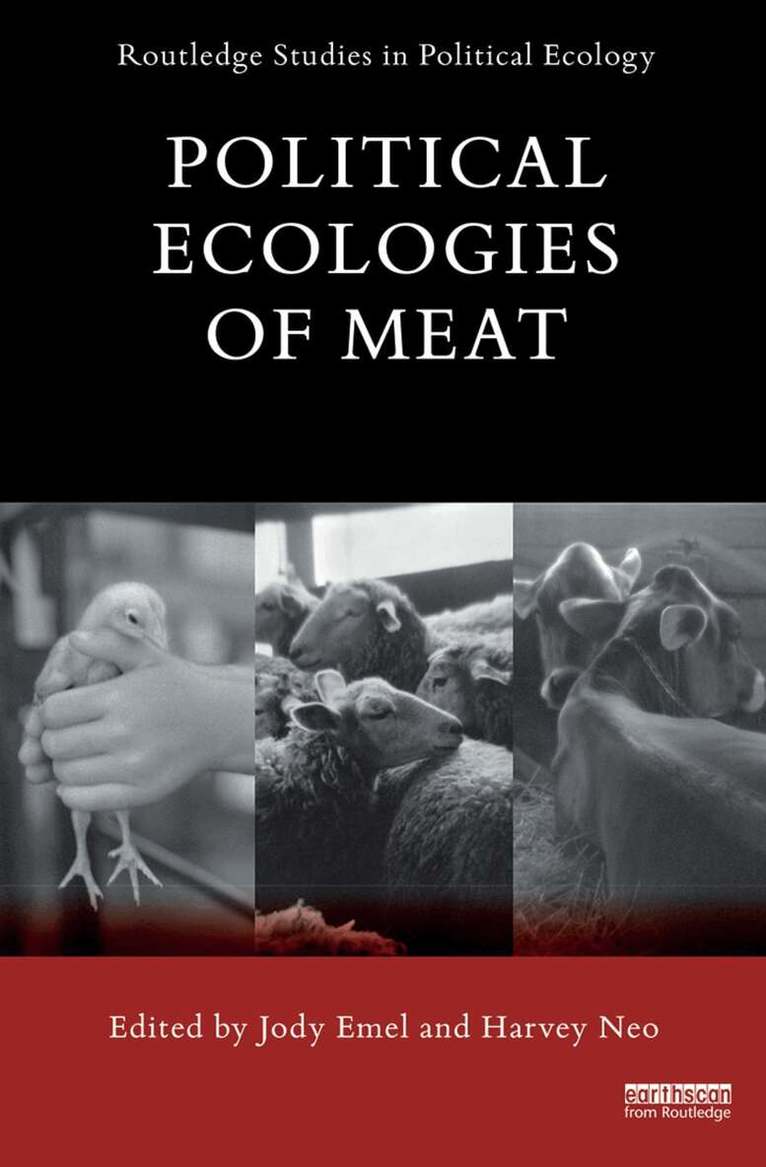
Livestock production worldwide is increasing rapidly, in part due to economic growth and demand for meat in industrializing countries. Yet there are many concerns about the sustainability of increased meat production and consumption, from perspectives including human health, animal welfare, climate change and environmental pollution. This book tackles the key issues of contemporary meat production and consumption through a lens of political ecology, which emphasizes the power relations producing particular social, economic and cultural interactions with non-human nature. Three main topics are addressed: the political ecology of global livestock production trends; changes in production systems around the world and their implications for environmental justice; and existing and emerging governance strategies for meat production and consumption systems and their implications. Case studies of different systems at varying scales are included, drawn from Asia, Africa, the Americas and Europe. The book includes an editorial introduction to set the context and synthesize key messages for the reader.
Häftad, Engelska, 2015
742 kr
Skickas inom 10-15 vardagar
Livestock production worldwide is increasing rapidly, in part due to economic growth and demand for meat in industrializing countries. Yet there are many concerns about the sustainability of increased meat production and consumption, from perspectives including human health, animal welfare, climate change and environmental pollution. This book tackles the key issues of contemporary meat production and consumption through a lens of political ecology, which emphasizes the power relations producing particular social, economic and cultural interactions with non-human nature. Three main topics are addressed: the political ecology of global livestock production trends; changes in production systems around the world and their implications for environmental justice; and existing and emerging governance strategies for meat production and consumption systems and their implications. Case studies of different systems at varying scales are included, drawn from Asia, Africa, the Americas and Europe. The book includes an editorial introduction to set the context and synthesize key messages for the reader.
Inbunden, Engelska, 2023
2 157 kr
Skickas inom 10-15 vardagar
This book reflects on Indonesia’s recent experience with REDD+ (Reducing Emissions from Deforestation and forest Degradation), all set within a broader discussion of neoliberal environmentalism, hyper-capitalism, and Indonesian carbon politics.Drawing on the author’s political ethnographic fieldwork conducted in Jakarta, Central Sulawesi, and Oslo, where the author examined Norway’s interests and role in implementing REDD+, this book discusses the long evolution of the idea that foreign state and private financing can be used to protect tropical forests and the carbon stored within them, resulting in both local economic development and global climate benefits. It shows how neoliberal environmental approaches to climate change, of which REDD+ is a leading example, increase the severity of political contestations that must be overcome to reach global climate mitigation goals, and how recent incarnations of REDD+ have tended to forget earlier scholarly advice to couple anti-deforestation approaches with policies that reduce industrial carbon emissions. In Indonesia, tectonic political and economic forces are shown to have negatively impacted REDD+ implementation. Using a political ecology approach, the book links the literature on REDD+ with that covering Indonesia’s recent democratic regression, highlighting how the country’s environmental performance is inextricably linked to the timbre of its political governance. Given the severity of the political contestations that must be overcome to reach its stated goals, REDD+ cannot replace global policies that drastically reduce industrial carbon emissions.This book will be of great interest to students and scholars of political ecology, deforestation, climate change, environmental politics, natural resource management, and environmental conservation.
Häftad, Engelska, 2024
590 kr
Skickas inom 10-15 vardagar
This book reflects on Indonesia’s recent experience with REDD+ (Reducing Emissions from Deforestation and forest Degradation), all set within a broader discussion of neoliberal environmentalism, hyper-capitalism, and Indonesian carbon politics.Drawing on the author’s political ethnographic fieldwork conducted in Jakarta, Central Sulawesi, and Oslo, where the author examined Norway’s interests and role in implementing REDD+, this book discusses the long evolution of the idea that foreign state and private financing can be used to protect tropical forests and the carbon stored within them, resulting in both local economic development and global climate benefits. It shows how neoliberal environmental approaches to climate change, of which REDD+ is a leading example, increase the severity of political contestations that must be overcome to reach global climate mitigation goals, and how recent incarnations of REDD+ have tended to forget earlier scholarly advice to couple anti-deforestation approaches with policies that reduce industrial carbon emissions. In Indonesia, tectonic political and economic forces are shown to have negatively impacted REDD+ implementation. Using a political ecology approach, the book links the literature on REDD+ with that covering Indonesia’s recent democratic regression, highlighting how the country’s environmental performance is inextricably linked to the timbre of its political governance. Given the severity of the political contestations that must be overcome to reach its stated goals, REDD+ cannot replace global policies that drastically reduce industrial carbon emissions.This book will be of great interest to students and scholars of political ecology, deforestation, climate change, environmental politics, natural resource management, and environmental conservation.
Inbunden, Engelska, 2023
2 019 kr
Skickas inom 10-15 vardagar
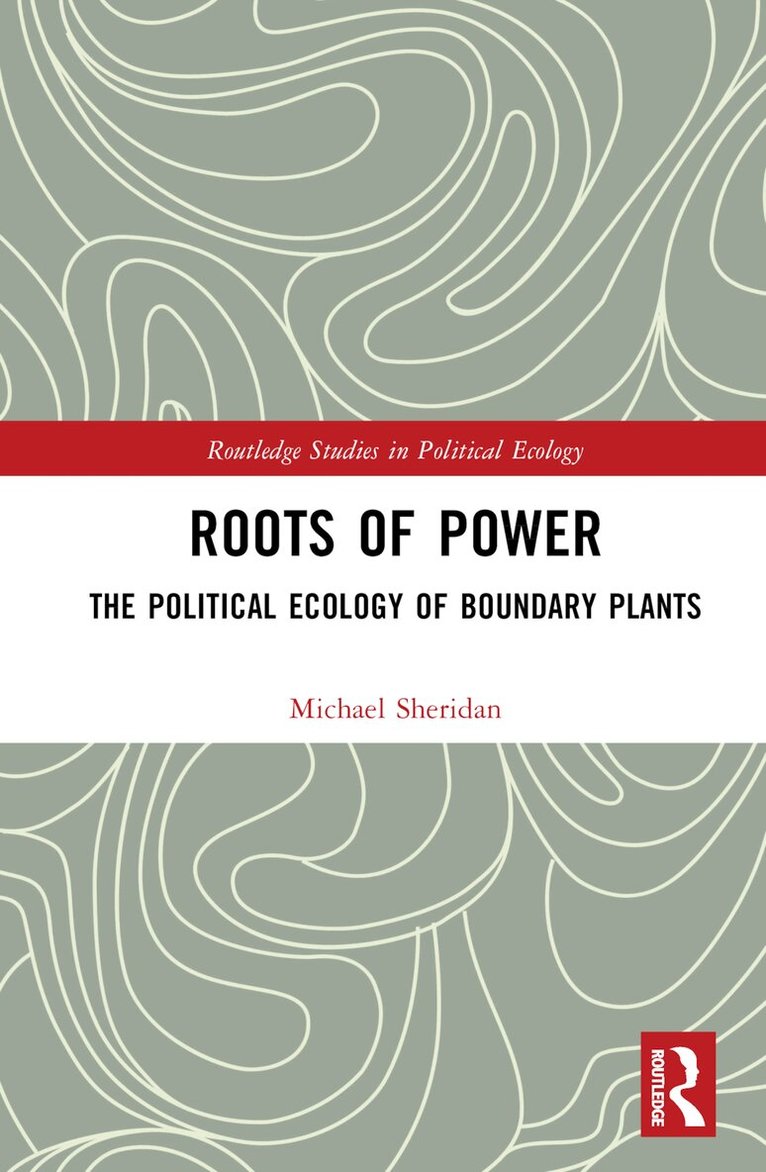
Roots of Power tells five stories of plants, people, property, politics, peace, and protection in tropical societies. In Cameroon, French Polynesia, Papua New Guinea, St. Vincent, and Tanzania, dracaena and cordyline plants are simultaneously property rights institutions, markers of social organization, and expressions of life-force and vitality. In addition to their localized roles in forming landscapes and societies, these plants mark multiple boundaries and demonstrate deep historical connections across much of the planet’s tropics. These plants’ deep roots in society and culture have made them the routes through which postcolonial agrarian societies have negotiated both social and cultural continuity and change. This book is a multi-sited ethnographic political ecology of ethnobotanical institutions. It uses five parallel case studies to investigate the central phenomenon of "boundary plants" and establish the linkages among the case studies via both ancient and relatively recent demographic transformations such as the Bantu expansion across tropical Africa, the Austronesian expansion into the Pacific, and the colonial system of plantation slavery in the Black Atlantic. Each case study is a social-ecological system with distinctive characteristics stemming from the ways that power is organized by kinship and gender, social ranking, or racialized capitalism. This book contributes to the literature on property rights institutions and land management by arguing that tropical boundary plants’ social entanglements and cultural legitimacy make them effective foundations for development policy. Formal recognition of these institutions could reduce contradiction, conflict, and ambiguity between resource managers and states in postcolonial societies and contribute to sustainable livelihoods and landscapes. This book will appeal to scholars and students of environmental anthropology, political ecology, ethnobotany, landscape studies, colonial history, and development studies, and readers will benefit from its demonstration of the comparative method.
Häftad, Engelska, 2024
590 kr
Skickas inom 10-15 vardagar
Roots of Power tells five stories of plants, people, property, politics, peace, and protection in tropical societies. In Cameroon, French Polynesia, Papua New Guinea, St. Vincent, and Tanzania, dracaena and cordyline plants are simultaneously property rights institutions, markers of social organization, and expressions of life-force and vitality. In addition to their localized roles in forming landscapes and societies, these plants mark multiple boundaries and demonstrate deep historical connections across much of the planet’s tropics. These plants’ deep roots in society and culture have made them the routes through which postcolonial agrarian societies have negotiated both social and cultural continuity and change. This book is a multi-sited ethnographic political ecology of ethnobotanical institutions. It uses five parallel case studies to investigate the central phenomenon of "boundary plants" and establish the linkages among the case studies via both ancient and relatively recent demographic transformations such as the Bantu expansion across tropical Africa, the Austronesian expansion into the Pacific, and the colonial system of plantation slavery in the Black Atlantic. Each case study is a social-ecological system with distinctive characteristics stemming from the ways that power is organized by kinship and gender, social ranking, or racialized capitalism. This book contributes to the literature on property rights institutions and land management by arguing that tropical boundary plants’ social entanglements and cultural legitimacy make them effective foundations for development policy. Formal recognition of these institutions could reduce contradiction, conflict, and ambiguity between resource managers and states in postcolonial societies and contribute to sustainable livelihoods and landscapes. This book will appeal to scholars and students of environmental anthropology, political ecology, ethnobotany, landscape studies, colonial history, and development studies, and readers will benefit from its demonstration of the comparative method.
Inbunden, Engelska, 2025
2 157 kr
Skickas inom 10-15 vardagar
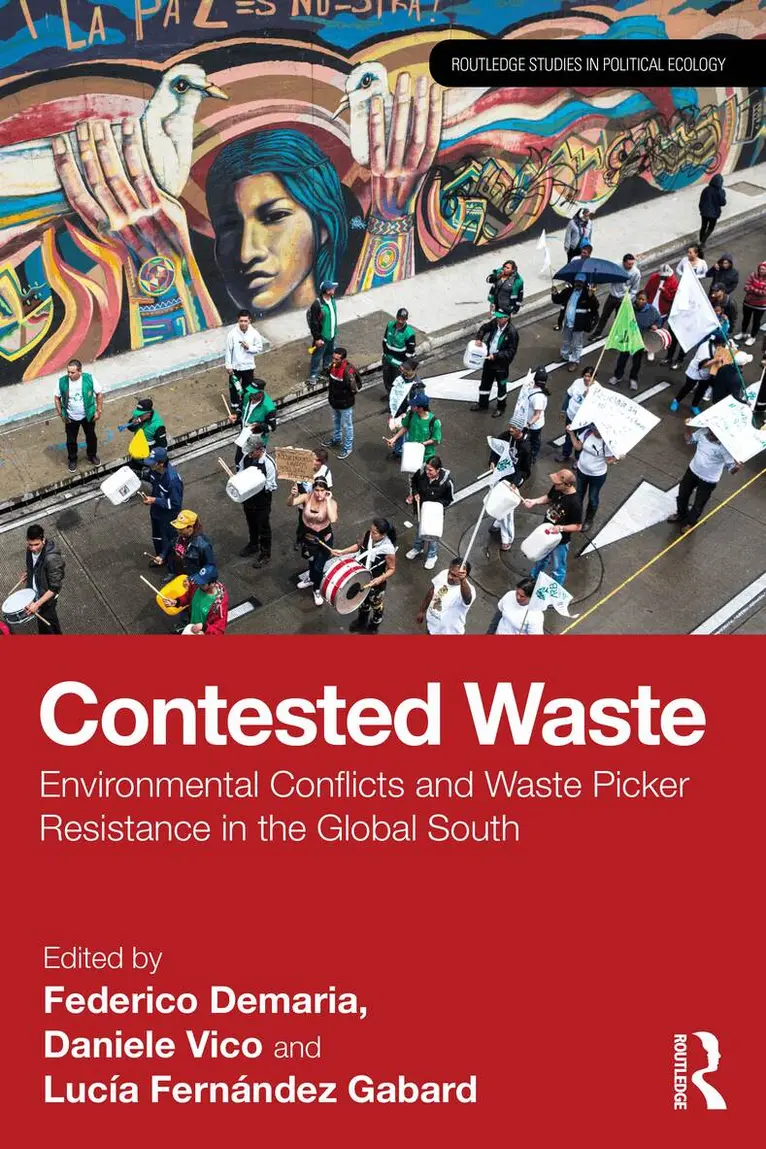
Contested Waste’ examines socio-environmental conflicts involving waste pickers in the Global South, uncovering the systemic injustices that underpin contemporary waste policies. Driven by the privatisation of waste management, these conflicts expose the “recycling paradox”: while waste pickers make critical, uncompensated contributions to sustainability, they are further excluded.This book analyses how modern waste policies marginalise waste pickers, triggering conflicts in cities across Africa, Latin America, and Asia. Drawing on over 70 conflicts documented in the Global Environmental Justice Atlas, the book explores how privatisation, incineration, and waste enclosures displace informal recyclers and worsen the sustainability crisis. These processes exemplify “Capital Accumulation by Dispossession,” as waste streams are enclosed and privatised, excluding waste pickers, and “Capital Accumulation by Contamination,” as environmental burdens are shifted onto marginalised communities. The book also showcases waste pickers’ resilience as they organise to fight for justice and equitable waste systems.Essential for scholars, policymakers, and activists in environmental justice, development, and urban studies, this book reveals the structural drivers of waste conflicts and the transformative power of grassroots resistance in shaping sustainable and inclusive urban futures.
Häftad, Engelska, 2025
590 kr
Skickas inom 10-15 vardagar
Contested Waste’ examines socio-environmental conflicts involving waste pickers in the Global South, uncovering the systemic injustices that underpin contemporary waste policies. Driven by the privatisation of waste management, these conflicts expose the “recycling paradox”: while waste pickers make critical, uncompensated contributions to sustainability, they are further excluded.This book analyses how modern waste policies marginalise waste pickers, triggering conflicts in cities across Africa, Latin America, and Asia. Drawing on over 70 conflicts documented in the Global Environmental Justice Atlas, the book explores how privatisation, incineration, and waste enclosures displace informal recyclers and worsen the sustainability crisis. These processes exemplify “Capital Accumulation by Dispossession,” as waste streams are enclosed and privatised, excluding waste pickers, and “Capital Accumulation by Contamination,” as environmental burdens are shifted onto marginalised communities. The book also showcases waste pickers’ resilience as they organise to fight for justice and equitable waste systems.Essential for scholars, policymakers, and activists in environmental justice, development, and urban studies, this book reveals the structural drivers of waste conflicts and the transformative power of grassroots resistance in shaping sustainable and inclusive urban futures.
Inbunden, Engelska, 2026
2 222 kr
Skickas inom 10-15 vardagar
This book explores the critical intersection of contemporary livestock production and some of today’s most urgent challenges: the spread of emerging infectious diseases, the sustainability of food systems, and the contested promises of One Health.It provides insights that cut across disciplines and geographies, from both the social and the natural sciences, reflecting the interdisciplinary aspirations of One Health. Yet, in foregrounding especially cutting edge contributions from ecology and the social sciences, this book addresses the persistent knowledge gap from these fields, which have frequently been neglected in favor of the veterinary sciences. By including contributions from across these fields, the book broadens and critically deepen the conversation around One Health.The book is intended for a wide interdisciplinary audience of scholars, students, and practitioners concerned with livestock production, public health, and the future of food systems.
Inbunden, Engelska, 2016
2 157 kr
Skickas inom 10-15 vardagar
Ethiopia is facing environmental and poverty challenges, and urgently needs effective management of its environmental resources. Much of the Ethiopian landscape has been significantly altered and reshaped by centuries of human activities, and three-quarters of the rural population is living on degraded land. Over the past two decades the country has seen rapid economic and population growth and unparalleled land use change.This book explores the challenges of sustaining the resource base while fuelling the economy and providing for a growing population that is greatly dependent on natural resources for income and livelihoods. Adopting a political ecology perspective, this book comprehensively examines human impacts on the environment in Ethiopia, defining the environment both in terms of the quantity and quality of renewable and non-renewable natural resources. With high levels of economic production and consumption also come unintended side effects: waste discharges, emissions of pollutants, and industrial effluents. These pollutants can degrade the quality of water, air, land, and forests as well as harm the health of people, animals, and other living organisms if untreated or disposed of improperly. This book demonstrates how the relationship between society and environment is inherently and delicately interwoven, providing an account of Ethiopia’s current environment and natural resource base and future considerations for environmentally sustainable development.
Häftad, Engelska, 2018
687 kr
Skickas inom 10-15 vardagar
Ethiopia is facing environmental and poverty challenges, and urgently needs effective management of its environmental resources. Much of the Ethiopian landscape has been significantly altered and reshaped by centuries of human activities, and three-quarters of the rural population is living on degraded land. Over the past two decades the country has seen rapid economic and population growth and unparalleled land use change.This book explores the challenges of sustaining the resource base while fuelling the economy and providing for a growing population that is greatly dependent on natural resources for income and livelihoods. Adopting a political ecology perspective, this book comprehensively examines human impacts on the environment in Ethiopia, defining the environment both in terms of the quantity and quality of renewable and non-renewable natural resources. With high levels of economic production and consumption also come unintended side effects: waste discharges, emissions of pollutants, and industrial effluents. These pollutants can degrade the quality of water, air, land, and forests as well as harm the health of people, animals, and other living organisms if untreated or disposed of improperly. This book demonstrates how the relationship between society and environment is inherently and delicately interwoven, providing an account of Ethiopia’s current environment and natural resource base and future considerations for environmentally sustainable development.
Inbunden, Engelska, 2018
2 366 kr
Skickas inom 10-15 vardagar
Indonesia’s commitment to reducing land-based greenhouse gas emissions significantly includes the expansion of conservation areas, but these developments are not free of conflicts. This book provides a comprehensive analysis of agrarian conflicts in the context of the implementation of REDD+ (Reducing Emissions from Deforestation and Forest Degradation) and forest carbon offsetting in Indonesia, a country where deforestation is a major issue. The author analyzes new kinds of transnational agrarian conflicts which have strong implications for global environmental justice in the REDD+ pilot province of Jambi on the island of Sumatra. The chapters cover: the rescaling of the governance of forests; privatization of conservation; and the transnational dimensions of agrarian conflicts and peasants' resistance in the context of REDD+. The book builds on an innovative conceptual approach linking political ecology, politics of scale and theories of power. It fills an important knowledge and research gap by focusing on the socially differentiated impacts of REDD+ and new forest carbon offsetting initiatives in Southeast Asia, providing a multi-scalar perspective.It is aimed at scholars in the areas of political ecology, human geography, climate change mitigation, forest and natural resource management, as well as environmental justice and agrarian studies. The Open Access version of this book, available at http://www.tandfebooks.com/doi/view/10.4324/9781351066020, has been made available under a Creative Commons Attribution-Non Commercial-No Derivatives 4.0 license.
Häftad, Engelska, 2018
714 kr
Skickas inom 10-15 vardagar
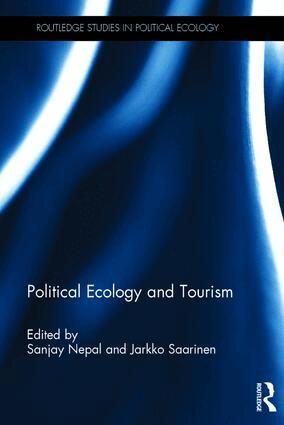
Political ecology explicitly addresses the relations between the social and the natural, arguing that social and environmental conditions are deeply and inextricably linked. Its emphasis on the material state of nature as the outcome of political processes, as well as the construction and understanding of nature itself as political is greatly relevant to tourism. Very few tourism scholars have used political ecology as a lens to examine tourism-centric natural resource management issues. This book brings together experts in the field, with a foreword from Piers Blaikie, to provide a global exploration of the application of political ecology to tourism. It addresses the underlying issues of power, ownership, and policies that determine the ways in which tourism development decisions are made and implemented. Furthermore, contributions document the complex array of relationships between tourism stakeholders, including indigenous communities, and multiple scales of potential conflicts and compromises. This groundbreaking book covers 15 contributions organized around four cross-cutting themes of communities and livelihoods; class, representation, and power; dispossession and displacement; and, environmental justice and community empowerment. This book will be of great interest to students and scholars in tourism, geography, anthropology, sociology, environmental studies, and natural resources management.
Inbunden, Engelska, 2016
2 157 kr
Skickas inom 10-15 vardagar
Political ecology explicitly addresses the relations between the social and the natural, arguing that social and environmental conditions are deeply and inextricably linked. Its emphasis on the material state of nature as the outcome of political processes, as well as the construction and understanding of nature itself as political is greatly relevant to tourism. Very few tourism scholars have used political ecology as a lens to examine tourism-centric natural resource management issues. This book brings together experts in the field, with a foreword from Piers Blaikie, to provide a global exploration of the application of political ecology to tourism. It addresses the underlying issues of power, ownership, and policies that determine the ways in which tourism development decisions are made and implemented. Furthermore, contributions document the complex array of relationships between tourism stakeholders, including indigenous communities, and multiple scales of potential conflicts and compromises. This groundbreaking book covers 15 contributions organized around four cross-cutting themes of communities and livelihoods; class, representation, and power; dispossession and displacement; and, environmental justice and community empowerment. This book will be of great interest to students and scholars in tourism, geography, anthropology, sociology, environmental studies, and natural resources management.