• Fri frakt över 249 kr
  • •
  • Snabba leveranser
  • •
  • Billiga böcker
Kundservice

Du är på sajten för privatpersoner.

Företag, bibliotek eller offentlig verksamhet?

Du handlar på classic.bokus.com, där alla dina funktioner finns intakta.
Till classic.bokus.com
Bokus logotyp. Gå till startsidan.
  • Erbjudanden
  • Nyheter
  • Student
  • Topplistor
  • Barn & ungdom
  • Bokus Play
  • E-böcker
  • Pocketböcker
  • Spel & pussel

10% studentrabatt med kod TERM26

Sidfot

Mina sidor

    Hjälp

    • Kundservice
    • Vanliga frågor och svar
    • Frakt och leverans
    • Retur vid ångerrätt
    • Reklamera vara
    • Betalning
    • Köpvillkor
    • Allmänna villkor
    • Information om webbplatsens tillgänglighet

    Om Bokus

    • Om oss
    • Pressrum
    • För studenter
    • För företag
    • För bibliotek och offentlig verksamhet
    • För leverantörer
    • Hållbarhet

    Populärt

    • Aktuella erbjudanden
    • Presentkort
    • Studentlitteratur
    • Nya böcker
    • Topplistor
    • Signerade böcker
    • Engelska böcker

    Inspiration

    • Boktips
    • BookTok
    • Populära bokserier
    • Barnbokskaraktärer
    • Populära författare
    Logotyp för Bokus
    Följ oss på Facebook (extern länk)Följ oss på Instagram (extern länk)Följ oss på YouTube (extern länk)Följ oss på TikTok (extern länk)
    bokus @ CookiesAnpassa cookiesIntegritetspolicyKöpvillkor
    Till Citymail hemsida (extern länk)Till Budbee hemsida (extern länk)Till Postnord hemsida (extern länk)Till Schenker hemsida (extern länk)Till Early Bird hemsida (extern länk)Till Walleys hemsida (extern länk)
    1. Samhälle och politik
    2. Social välfärd och brottslighet
    3. Socialt arbete och välfärd

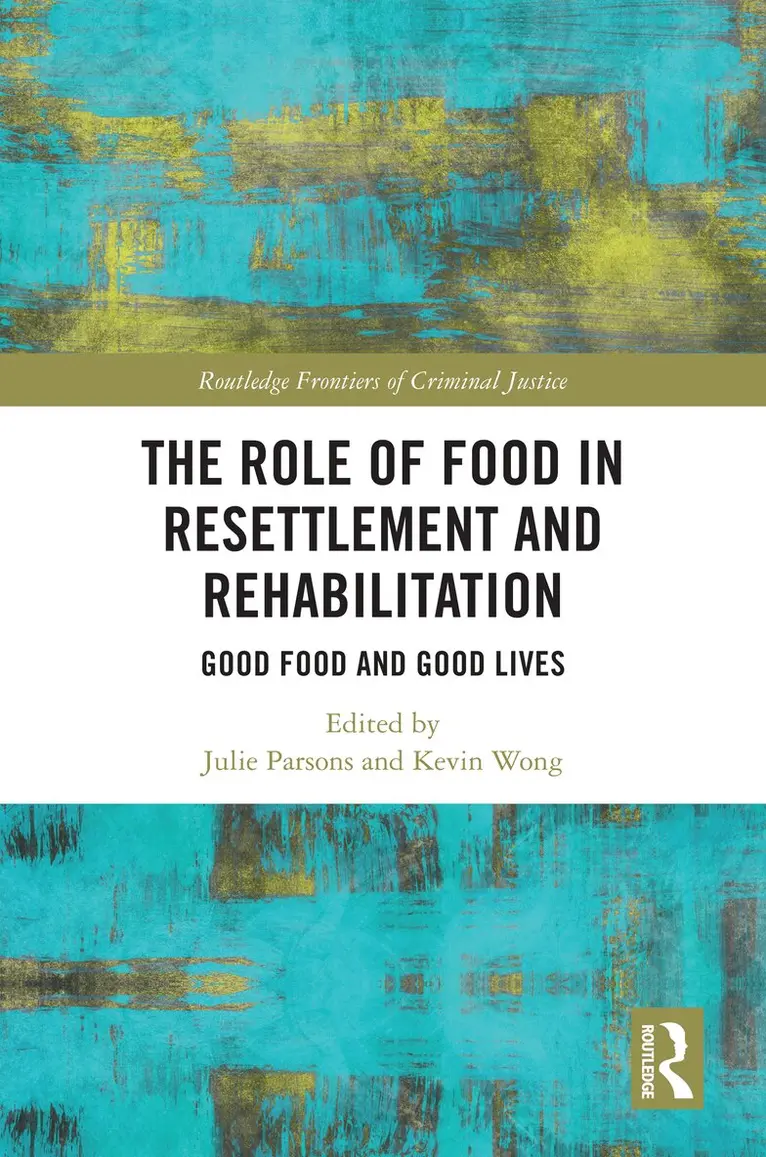
    Role of Food in Resettlement and Rehabilitation

    Good Food and Good Lives

    AvJulie Parsons,Kevin Wong

    Häftad, Engelska, 2026

    Del i serien Routledge Frontiers of Criminal Justice

    701 kr

    Slutsåld

    Beskrivning

    Exploring the role of food in enabling people with convictions to live a “good life”, this book examines the tangible ways in which growing food, cooking, and eating together has the potential to be both transformative and small steps incremental in facilitating desistance journeys for people with convictions.At its most reductive, food sustains us physically; it’s the fuel which keeps us alive. Of course, emotionally, culturally, and socially it does more than that. This edited book addresses an under-researched area of resettlement and rehabilitation which has real-world application to policy and practice in criminal justice and related areas such as mental health, physical health, employment, and education. Importantly, given the relatability of food growing, cooking, and eating to the wider public, it offers opportunities to connect the desistance journeys and lives of people with convictions to the wider public.The Role of Food in Resettlement and Rehabilitation will be of great interest to students and scholars of criminology, sociology, social work, and food studies. It is also important reading for government policymakers in criminal justice and health care, social policy, and criminal justice practitioners, including prison governors, social workers, and providers of services for people with convictions in custody and community.

    Produktinformation

    • Utgivningsdatum:2026-09-28
    • Mått:156 x 234 x 13 mm
    • Vikt:359 g
    • Format:Häftad
    • Språk:Engelska
    • Serie:Routledge Frontiers of Criminal Justice
    • Antal sidor:232
    • Förlag:Taylor & Francis Ltd
    • ISBN:9781032448497

    Utforska kategorier

    • Socialt arbete och välfärd inom Samhälle och politik
    • Kriminalvård och straff inom Samhälle och politik
    • Folkhälsa och hälsopedagogik inom Medicin

    Mer om författaren

    Julie Parsons is Associate Professor in Sociology and Criminology. Since 2015, she has conducted a series of funded research projects at a resettlement scheme for criminal justice-affected people, establishing the PeN project (https://penprojectlandworks.org/) there in 2016. She is passionate about the power of everyday foodways in bringing people together.Kevin Wong is Reader in Community Justice and Associate Director, Policy Evaluation and Research Unit, Manchester Metropolitan University. He is the Editor of the British Journal of Community Justice, Director of the Manchester International Crime and Justice Film Festival, and an Associate Member of the UK Ministry of Justice Corrections Services Accreditation and Advisory Panel.

    Recensioner i media

    “In this excellent edited book Julie Parsons and Kevin Wong explore the contribution of food and its associated practices in helping individuals to live meaningful and productive lives following their involvement with the criminal justice system. Their use of the Good Lives Model as an overarching conceptual framework is strikingly original and resonates beautifully with its insistence that effective human agency depends as much on our embodiment as a capacity for reflection and planning.”—Professor Tony Ward, PhD, DipClinPsyc, FRSNZ, Developer of the Good Lives Model“The Role of Food in Resettlement and Rehabilitation is a collective labour of love, curated by two outstanding scholars of lived experiences of justice. It is a groundbreaking collection about pioneers in our midst who are quietly building solidarity and making communities more just and liveable for all.”—Professor Mary Corcoran, Keele University“Until now, extraordinarily little has been written about leaving behind the prison’s very unusual and often impoverished ‘foodscape’ and re-entering social worlds with different possibilities and problems in which food plays a vital part. Putting it more simply, food really matters for rehabilitation and reintegration!”—Professor Fergus McNeill, University of Glasgow

    Innehållsförteckning

    • 1. Everyday Foodways, an ingredient for good lives 2. The Back on Track café: foodways, co-production and affective community space 3. Prison Kitchens: institutionalising Kitchenism and Collective Cooking 4. 'It’s changed my behaviour and drug takin; things are changing without even realising': the transformational potential of land-based programmes. 5. Serving Time: An Exploration of the ‘Invisible Walls’ of Rehabilitation 6. ‘Doing Commensality’, Eating together in the visiting room: Families, food, and commensality 7. Healthy, humane and rehabilitative: the role of food in prisons across Scandinavia 8. Greener on the Outside for Prisons (GOOP): A Whole System Health and Justice Intervention of Growing Food for Good Lives 9. Community payback-supported mutual aid in food production and distribution: cooperating out of crime and food poverty? 10. Negotiation and reconciliation of ‘food cultures’ among catering managers and men in custody in Scottish prisons 11. The transformational potential of ‘doing’ everyday foodways for people with custodial and non-custodial sentences at LandWorks– a case study. 12. What’s good food got to do with It? Reflections on food as a mechanism of community building within and against the carceral state 13. Food justice – Concluding Comments