• Fri frakt över 249 kr
  • •
  • Snabba leveranser
  • •
  • Billiga böcker
Kundservice

Du är på sajten för privatpersoner.

Företag, bibliotek eller offentlig verksamhet?

Du handlar på classic.bokus.com, där alla dina funktioner finns intakta.
Till classic.bokus.com
Bokus logotyp. Gå till startsidan.
  • Erbjudanden
  • Nyheter
  • Student
  • Topplistor
  • Barn & ungdom
  • Bokus Play
  • E-böcker
  • Pocketböcker
  • Spel & pussel

10% rabatt på allt med kod: NYSTART10 →

Sidfot

Mina sidor

    Hjälp

    • Kundservice
    • Vanliga frågor och svar
    • Frakt och leverans
    • Retur vid ångerrätt
    • Reklamera vara
    • Betalning
    • Köpvillkor
    • Allmänna villkor
    • Information om webbplatsens tillgänglighet

    Om Bokus

    • Om oss
    • Pressrum
    • För studenter
    • För företag
    • För bibliotek och offentlig verksamhet
    • För leverantörer
    • Hållbarhet

    Populärt

    • Aktuella erbjudanden
    • Presentkort
    • Studentlitteratur
    • Nya böcker
    • Topplistor
    • Signerade böcker
    • Engelska böcker

    Inspiration

    • Boktips
    • BookTok
    • Populära bokserier
    • Barnbokskaraktärer
    • Populära författare
    Logotyp för Bokus
    Följ oss på Facebook (extern länk)Följ oss på Instagram (extern länk)Följ oss på YouTube (extern länk)Följ oss på TikTok (extern länk)
    bokus @ CookiesAnpassa cookiesIntegritetspolicyKöpvillkor
    Till Citymail hemsida (extern länk)Till Budbee hemsida (extern länk)Till Postnord hemsida (extern länk)Till Schenker hemsida (extern länk)Till Early Bird hemsida (extern länk)Till Walleys hemsida (extern länk)
    1. Ekonomi och Ledarskap
    2. Nationalekonomi
    3. Ekonomisk historia

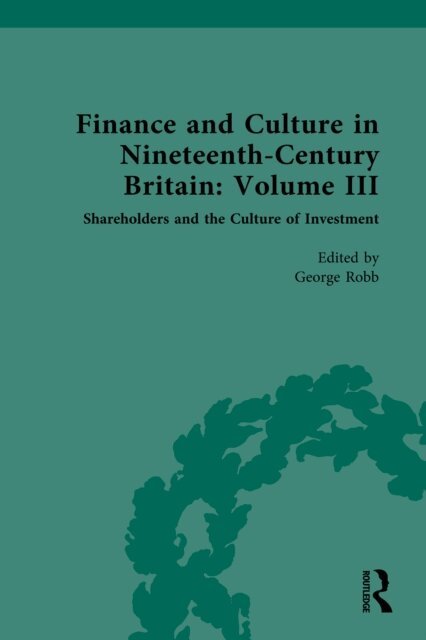
    Finance and Culture in Nineteenth Century Britain

    Volume III: Shareholders and the Culture of Investment

    AvGeorge Robb

    Inbunden, Engelska, 2026

    1 814 kr

    Beställningsvara. Skickas inom 10-15 vardagar. Fri frakt över 249 kr.

    Beskrivning

    This four-volume primary source collection examines the links between the financial world and British culture in the nineteenth-century. The twenty-first-century financial world had its origins in nineteenth-century Britain with industrialism, imperial expansion, and a robust securities market. New developments in limited liability and financial journalism democratized investment, rendering Victorian Britain a nation of shareholders. The City of London and the London Stock Exchange sat at the very centre of international finance, much as the New York Stock Exchange does today. The history of nineteenth-century finance is also the history of culture and cultural change. Finance cut across all aspects of life in the nineteenth-century. It was central to many social and political issues, including the “woman question” (should women invest their own money?) and Liberal reform (did a laissez-faire economy adequately protect ordinary investors?) The ups and downs of the stock market were also central to the plots of Victorian novels and plays. This multi-volume collection of primary source materials, accompanied by extensive editorial commentary, document the origins, growth, and impact of Britain’s financial system.

    Produktinformation

    • Utgivningsdatum:2026-03-23
    • Mått:156 x 234 x 23 mm
    • Vikt:800 g
    • Format:Inbunden
    • Språk:Engelska
    • Antal sidor:296
    • Förlag:Taylor & Francis Ltd
    • ISBN:9781032448589

    Utforska kategorier

    • Ekonomisk historia inom Ekonomi och Ledarskap
    • Europas historia inom Historia och arkeologi
    • Socialhistoria och kulturhistoria inom Historia och arkeologi

    Mer om författaren

    George Robb is a Professor of British history at William Paterson University of New Jersey. For more than thirty years he has researched and written about British and American financial history.

    Innehållsförteckning

    • Volume III: Shareholders and the Culture of InvestmentPart 1. Shareholders and Their World1. David Morier Evans, Speculative Notes and Notes on Speculation (London: Groombridge and Sons, 1864), pp. 141-46.2. Union Bank of London, Charing Cross Branch, Schedule of Stock and Share Certificates belonging to Mrs. Lewes, 1 May 1879.3. [W.M. Thackeray], “A Doe in the City,” Punch 9 (1 November 1845), p. 191.4. [Anon.], ‘Scenes from the Life of an Unprotected Female’, Punch 18 (January 1850), pp. 22-23.5. [Anon.], ‘Dividend Day’, All the Year Round (11 November 1893), pp. 462-64.6. Eastern Counties Railway, Shareholders’ Meeting, London Standard (1 March 1849), p. 4.7. George W. Hemming, ‘Railway Shareholders’, Saturday Review 1 (1856), pp. 225-26.8. C.H. Thorpe, How to Invest and How to Speculate (London: Grant Richards, 1901), pp. 65-78.9. Charlotte Riddell, George Geith of Fen Court, 3 Vols. (London: Tinsley Brothers, 1864), Vol. 1, pp. 43-55.10. Bracebridge Hemyng, ‘Time and Tide Wait for No Man: A Tale of the Tape’, The Stockbroker’s Wife and Other Sensational Tales of the Stock Exchange (London: John and Robert Maxwell, 1885), pp. 159-72.11. Alexander Innes Shand, ‘Speculative Investments’, Blackwood’s Magazine 120 (September 1876), pp. 293-316.Part 2. Advice Books for Investors12. Thomas Mortimer, Every Man His Own Broker; or, A Guide to the Stock-Exchange, 12th edition (London: W.J. and J. Richardson, 1798), pp. v-xxii.13. [George G. Carey], A New Guide to the Public Funds; or, Every Man His Own Stock-Broker (London: D.B. Woodward, 1835), pp. 80-90.14. Gresham Omnium, A Handy Guide to Safe Investments (London: Groombridge and Sons, 1860), pp. 50-69.15. Arthur Crump, The Theory of Stock Exchange Speculation (London: Longmans, Green, Reader, and Dyer, 1874), pp. 41-60.16. George Gregory, Hints to Speculators and Investors in Stocks and Shares (London: George Gregory & Co., 1891), pp. 13-21.17. A.J. Wilson, Practical Hints to Investors and Some Words to Speculators (London: Clement Wilson, 1897), pp. 9-27.18. [Emma Sophia Galton], Guide to the Unprotected in Everyday Matters Relating to Property and Income by a Banker’s Daughter (London: Macmillan and Co., 1863), pp. 9-15.19. Caroline Haddon, Where Does Your Interest Come From?: A Word to Lady Investors (London: John Heywood, 1886)Part 3. Financial Journalism and the Money Article20. George Goschen, ‘Seven Per Cent’, Edinburgh Review 121 (January 1865), pp. 114-29.21. Walter Bagehot, ‘What to Buy—I: A Series of Popular Articles on Investment’, Economist 24 (15 December 1866), pp. 1449-51.22. Amy Bell, ‘How Women May Invest Their Money’, Englishwoman’s Review (April 1892), pp. 85-87, and (July 1892), pp. 159-61.23. Olive Malvery, ‘Women and the Money Market’, The Ladies’ Realm 21 (November 1906), pp. 41-5.24. [Anon.], ‘The Sham Financial Press’, The Statist (9 April 1887), pp. 389-90.25. Charles Duguid, How to Read the Money Article (London: Effingham Wilson, 1901), pp. 99-106.Part 4. Institutional Shareholders and Trusts26. Samuel Brown, ‘On the Investment of the Funds of Assurance Companies’, Assurance Magazine 7 (April 1858), pp. 241-54.27. Board of Trade, Statements of Accounts and Life Assurance and Annuity Business, 1902 (London: HMSO, 1904), p. 2.28. Augustine Birrell, The Duties and Liabilities of Trustees (London: Macmillan and Co., 1896), pp. 125-39.29. C.H. Thorpe, How to Invest and How to Speculate (London: Grant Richards, 1901), pp. 104-14.Part 5. Investors and Imperialism30. ‘The Dangers of Lending to Semi-Civilised Countries’, Economist 25 (23 November 1867), pp. 1321-22.31. George Baden-Powell, Proceedings of the Royal Colonial Institute, Vol. 18 (London: Sampson Low, Marston, Searle and Rivington, 1887), pp. 253-75.32. [Anon.], The East India Government Guarantee on Railways (London: William H. Allen and Co., 1861), pp. 4-12.33. Dadabhai Naoroji, Poverty and Un-British Rule in India (London: Swan Sonnenschein and Co., 1901), pp. 33-34, 54-55.34. Olive Schreiner, Trooper Peter Halket of Mashonaland (London: T. Fisher Unwin, 1897), pp. 13-37.35. John A. Hobson, Imperialism: A Study (London: James Nisbet and Co., 1902), pp. 56-63.Index