• Fri frakt över 249 kr
  • •
  • Snabba leveranser
  • •
  • Billiga böcker
Kundservice

Du är på sajten för privatpersoner.

Företag, bibliotek eller offentlig verksamhet?

Du handlar på classic.bokus.com, där alla dina funktioner finns intakta.
Till classic.bokus.com
Bokus logotyp. Gå till startsidan.
  • Erbjudanden
  • Nyheter
  • Student
  • Topplistor
  • Barn & ungdom
  • Bokus Play
  • E-böcker
  • Pocketböcker
  • Spel & pussel

Må bättre, för mindre! Upp till 50% rabatt på hälsoböcker

Sidfot

Mina sidor

    Hjälp

    • Kundservice
    • Vanliga frågor och svar
    • Frakt och leverans
    • Retur vid ångerrätt
    • Reklamera vara
    • Betalning
    • Köpvillkor
    • Allmänna villkor
    • Information om webbplatsens tillgänglighet

    Om Bokus

    • Om oss
    • Pressrum
    • För studenter
    • För företag
    • För bibliotek och offentlig verksamhet
    • För leverantörer
    • Hållbarhet

    Populärt

    • Aktuella erbjudanden
    • Presentkort
    • Studentlitteratur
    • Nya böcker
    • Topplistor
    • Signerade böcker
    • Engelska böcker

    Inspiration

    • Boktips
    • BookTok
    • Populära bokserier
    • Barnbokskaraktärer
    • Populära författare
    Logotyp för Bokus
    Följ oss på Facebook (extern länk)Följ oss på Instagram (extern länk)Följ oss på YouTube (extern länk)Följ oss på TikTok (extern länk)
    bokus @ CookiesAnpassa cookiesIntegritetspolicyKöpvillkor
    Till Citymail hemsida (extern länk)Till Budbee hemsida (extern länk)Till Postnord hemsida (extern länk)Till Schenker hemsida (extern länk)Till Early Bird hemsida (extern länk)Till Walleys hemsida (extern länk)
    1. Naturvetenskap och teknik
    2. Geovetenskap
    3. Miljövetenskap och miljöpolitik

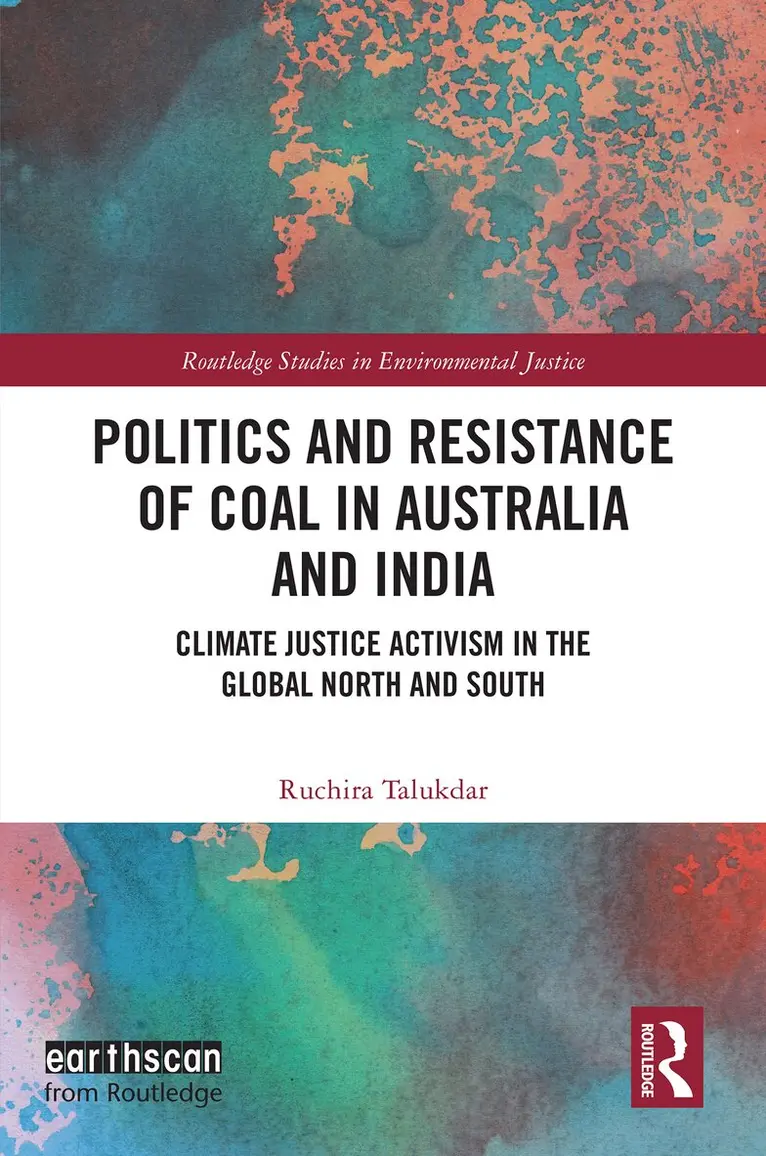
    Politics and Resistance of Coal in Australia and India

    Climate Justice Activism in the Global North and South

    AvRuchira Talukdar

    Inbunden, Engelska, 2025

    Del i serien Routledge Studies in Environmental Justice

    2 434 kr

    Beställningsvara. Skickas inom 10-15 vardagar. Fri frakt över 249 kr.

    Fler format och utgåvor

    Häftad

    684 kr

    E-bok

    774 kr

    E-bok

    774 kr

    Beskrivning

    Since 2009, international climate activism has focused on stopping coalmining in solidarity with local and Indigenous struggles that are resisting coalmining. Based on ethnographic and historic research in Australia and India, this book compares the politics and resistance to coal in the two countries, particularly focusing on the time period between 2009 and 2018, and the case of the Carmichael coalmine in Queensland and the Mahan coalmine in central India. This book shows differences and similarities in the political economy of coal and creates understanding about the significantly different imperatives and narratives of anti-coal environmentalism, in Australia and India. Through the Stop Adani movement and its collaboration with the Wangan and Jagalingou Traditional Owners and farmers against coalmining in Queensland, and Greenpeace and forest-based communities resisting coalmining in Madhya Pradesh, Ruchira Talukdar not only explores anti-coal movement dynamics but also how these movements grapple with the violation of Indigenous land rights through coal extraction, in both places. Drawing on differences and patterns in Australian and Indian anti-coal activisms, this book proposes a global outlook – an intersectional framework beyond the singularity of ‘stopping coal’ that can encapsulate visions for secure futures of communities on the frontlines of fossil fuel struggles – for climate activism. The conclusions help to decolonize climate activism as well as make it cognizant of global North-South contextual differences for effective solidarity.The author’s unique vantage point through experience in environmental activism over 20 years across Australia and India combined with research in both countries, makes this book a crucial resource for scholars and practitioners in just transition, climate politics and environmental activism across the global North and South.

    Produktinformation

    • Utgivningsdatum:2025-01-31
    • Mått:156 x 234 x 26 mm
    • Vikt:720 g
    • Format:Inbunden
    • Språk:Engelska
    • Serie:Routledge Studies in Environmental Justice
    • Antal sidor:372
    • Förlag:Taylor & Francis Ltd
    • ISBN:9781032531243

    Utforska kategorier

    • Miljövetenskap och miljöpolitik inom Naturvetenskap och teknik
    • Lantbruk, fiske och skogsbruk inom Ekonomi och Ledarskap

    Mer om författaren

    Ruchira Talukdar has worked in environment movement in India and Australia, in Greenpeace, Australian Conservation Foundation and Friends of the Earth, for two decades. Her research and writing focusses on comparative aspects of climate justice between the global North and South, with specific reference to Australia and South Asia. Her PhD thesis compared the politics and resistance to coal in Australia and India. Ruchira co-founded Sapna South Asian Climate Solidarity, a climate justice project based out of Australia, for effective global North solidarity for just climate futures in the global South. She is based out of Melbourne and Calcutta.

    Recensioner i media

    “Impeccably researched, Ruchira Talukdar’s book is a timely contribution to the ongoing debates on coal in two most coal dependent countries of the world: India and Australia. This book is far greater than the poisoning curse of coal; it offers a passionate and devastating critique of dirty coal, and an enriching analysis of the resistances and different approaches to decarbonisation in these two countries. A fine book, immensely significant in shaping how the world will think about just transition.”Kuntala Lahiri-Dutt, Professor in Resource, Environment and Development, The Australian National University“One of the provocative aspects of this book is the ultimate moral argument that combines human rights and land justice. This argument is quite significant. Human rights alone can fail to link with anti-colonial, resurgence, abolition, and other land-based social justice movements. Ruchira Talukdar makes a brilliant connection between human rights and land rights, and offers a solution to what are problematic rhetoric, policies, and proposals that privilege human rights against the deeper aspirations of many communities and populations suffering from injustice, and facing risks from climate change and climate change drivers. There are very few studies comparing northern and southern environmentalisms, placing historic and contemporary environmentalism in both contexts in cross-communication.”Kyle Whyte, George Willis Pack Professor and University Diversity and Social Transformation Professor, University of Michigan“In this meticulous and in-depth investigation of anti-coal politics in Australia and India, Ruchira Talukdar shows us the power of subsistence communities in India and Indigenous peoples in Australia in slowing the pace of coal mine expansion and driving the shift towards renewable energy. While often on the frontline of coal extractivism – tied to human rights abuses, destruction of Country and exposure to environmental pollutants – subsistence and Indigenous communities are also the front line of its resistance. At times this resistance lines up alongside the environment movement; and other times it does not. This book comprehensively draws out the continuities and discontinuities between these rights-based campaigns and the broader environment movement. In so doing, it exposes how national and global environment movements sometimes sideline and/or silence a rights-based agenda as they seek to meet their own goals.By giving voice to the environmentalism of the poor in India and Indigenous rights in Australia, this book demonstrates why centring rights, including Indigenous rights, will be vital to achieve social justice and environmental responsibility in a decarbonised world. Everyone aspiring for a climate just future should read this book. And those of us in the environment movement should definitely down tools long enough to read this book and let its message soak in; then pick our tools back up just a little more carefully.”Kristen Lyons, Professor in Environment and Development Sociology, University of Queensland

    Innehållsförteckning

    • ContentsChapter 1: Introduction – A comparative ethnography of anti-coal activism in Australia and India1. Research case studies and questions2. Research approach, methods, materials and structure3. Book chapters and literaturesChapter 2: Environmentalism of the global North and South: historic divisions and potential for common ground 1. A critique of wilderness-centric Northern environmentalism2. Australian environmentalism3. Indian environmentalism4. Environmentalism’s divisions and common ground in the climate eraChapter 3: Environmentalism of the poor in neoliberal India1. Constitutional democracy2. How the postcolonial State shaped Indian environmentalism3. How the neoliberal State shapes environmentalism of the poor4. Environmentalism of the poor in neoliberal IndiaAnalysis: Environmentalism’s journey from democratising development to dissent as democracyChapter 4: Countering coal in India: politics of the Mahan coal mine Background: Greenpeace’s activism in India1. Political economy of coal in India2. Politics and resistance of the Mahan coalmine (2010-2014)3. State crackdown and fight back by Greenpeace (2014-2016)Analysis: Countering coal through asserting democratic rightsChapter 5: An anti-coal movement in India’s energy capital Background: discontent and displacement in Singrauli1. Use and abuse of the Forest Rights Act2. Formation of the Mahan Sangharsh Samiti3. State-corporate nexus in Mahan4. An unusual alliance and its resistance5. A celebration of people’s forest rightsAnalysis: Significance of forest rights in India’s energy capitalChapter 6: Environmentalism in the era of Australia’s minerals boom1. Contradictions and unevenness of the Australian State2. Minerals boom and contradictions of the Australian State3. Narratives, politics and alliances of environmentalism during the resource boomAnalysis: Environmentalism’s transformation to End(ing) Coal!Chapter 7: Countering coal in Australia: the politics of the Carmichael coalmine1. Political economy of coal in Australia2. Environmental politics of the Carmichael coalmine (2012-2018)3. Land rights politics of the Carmichael coalmine (2010-2018)Analysis: Countering coalmining through various scales of contestationsChapter 8: Resistances from coal’s new frontier in the Galilee Basin in Central Queensland Background: Settler colonialism in the in the Galilee Basin1. Tactics of anti-coal environmentalism2. Rural discontent over coal and Farmers for Climate Action3. ‘We meet at the crossroad’: Wangan and Jagalingou’s alliancesAnalysis: The significance of countering Adani from Central QueenslandChapter 9: A global outlook for anti-coal climate justice activism 1. Varieties of climate justice2. Green relations with Indigenous and farmers’ groups3. Indigenous land rights and resistances compared4. Coal politics and environmental campaigns in Australia and India5. Discussion: Possibilities and challenges in building a North-South intersectional outlook for environmentalism6. Contributions to Political Ecology and Environmental Justice ResearchConclusionIndex