• Fri frakt över 249 kr
  • •
  • Snabba leveranser
  • •
  • Billiga böcker
Kundservice

Du är på sajten för privatpersoner.

Företag, bibliotek eller offentlig verksamhet?

Du handlar på classic.bokus.com, där alla dina funktioner finns intakta.
Till classic.bokus.com
Bokus logotyp. Gå till startsidan.
  • Erbjudanden
  • Nyheter
  • Student
  • Topplistor
  • Barn & ungdom
  • Bokus Play
  • E-böcker
  • Pocketböcker
  • Spel & pussel

Må bättre, för mindre! Upp till 50% rabatt på hälsoböcker

Sidfot

Mina sidor

    Hjälp

    • Kundservice
    • Vanliga frågor och svar
    • Frakt och leverans
    • Retur vid ångerrätt
    • Reklamera vara
    • Betalning
    • Köpvillkor
    • Allmänna villkor
    • Information om webbplatsens tillgänglighet

    Om Bokus

    • Om oss
    • Pressrum
    • För studenter
    • För företag
    • För bibliotek och offentlig verksamhet
    • För leverantörer
    • Hållbarhet

    Populärt

    • Aktuella erbjudanden
    • Presentkort
    • Studentlitteratur
    • Nya böcker
    • Topplistor
    • Signerade böcker
    • Engelska böcker

    Inspiration

    • Boktips
    • BookTok
    • Populära bokserier
    • Barnbokskaraktärer
    • Populära författare
    Logotyp för Bokus
    Följ oss på Facebook (extern länk)Följ oss på Instagram (extern länk)Följ oss på YouTube (extern länk)Följ oss på TikTok (extern länk)
    bokus @ CookiesAnpassa cookiesIntegritetspolicyKöpvillkor
    Till Citymail hemsida (extern länk)Till Budbee hemsida (extern länk)Till Postnord hemsida (extern länk)Till Schenker hemsida (extern länk)Till Early Bird hemsida (extern länk)Till Walleys hemsida (extern länk)
    1. Samhälle och politik
    2. Samhälle och kultur
    3. Kultur och medier
    4. Referensverk och tvärvetenskap

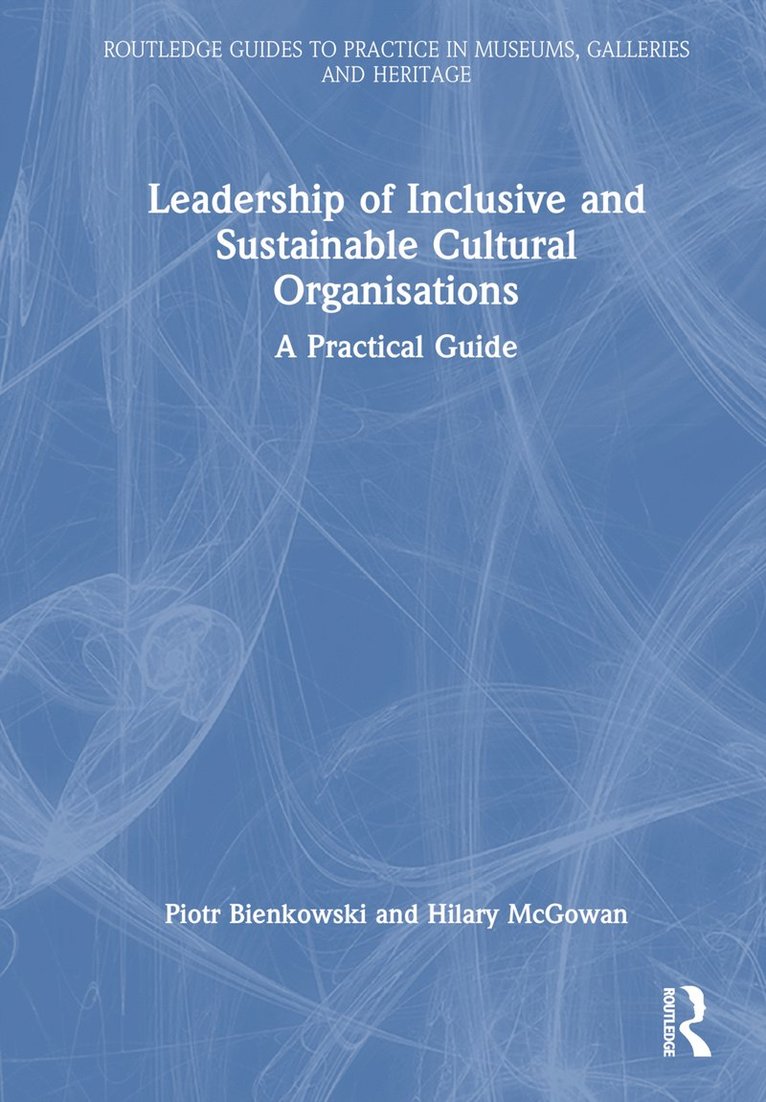
    Leadership of Inclusive and Sustainable Cultural Organisations

    A Practical Guide

    AvPiotr Bienkowski,Hilary McGowan

    Inbunden, Engelska, 2024

    Del i serien Routledge Guides to Practice in Museums, Galleries and Heritage

    2 506 kr

    Beställningsvara. Skickas inom 10-15 vardagar. Fri frakt över 249 kr.

    Fler format och utgåvor

    Häftad

    545 kr

    Beskrivning

    Leadership of Inclusive and Sustainable Cultural Organisations: A Practical Guide is the first book to provide guidance on how to lead cultural organisations that are inclusive, diverse and sustainable, and responsive to the public, their communities, their own staff and to popular movements.The book’s seven parts cover the qualities and skills a leader needs, and practical advice on how to develop an organisation that is sustainable, inclusive and diverse. It covers the role of the governing body, how to create an organisation that is constantly learning and adapting, how to deal with political, public and financial pressures, and what external sources of support they can call on. Each chapter is devoted to a specific issue that might be encountered on the leadership journey and is extensively cross-referenced to other relevant chapters.Including a list of helpful suggestions of useful and practical publications for further reading, Leadership of Inclusive and Sustainable Cultural Organisations is a unique guide to cultural leadership. This book is an essential resource for all cultural practitioners with a leadership role within an organisation or aspiring to such a role. It will also be instructive to students of cultural heritage management.

    Produktinformation

    • Utgivningsdatum:2024-11-29
    • Mått:174 x 246 x 17 mm
    • Vikt:560 g
    • Format:Inbunden
    • Språk:Engelska
    • Serie:Routledge Guides to Practice in Museums, Galleries and Heritage
    • Antal sidor:222
    • Förlag:Taylor & Francis Ltd
    • ISBN:9781032542430

    Utforska kategorier

    • Referensverk och tvärvetenskap inom Samhälle och politik
    • Ledarskap och motivation inom Ekonomi och Ledarskap

    Mer om författaren

    Piotr Bienkowski has over 40 years of experience across the cultural sector, working in Europe and the Middle East. He was Professor of Archaeology and Museology at the University of Manchester, Director of Manchester Museum, and has developed inclusive practice with museums, galleries, science centres, the performing arts and community trusts. He now advises a wide range of cultural organisations as a consultant, working with them to embed inclusion and participation, and on organisational change and leadership at all levels.Hilary McGowan works throughout the cultural sector. She helps organisations to improve their leadership and governance so they can thrive in the future. Her distinguished track record includes a background as an arts, museums and heritage director, and as a coach. Hilary established her own business 30 years ago and has worked with 250 different clients. As a Trustee of Bletchley Park, she played a leading role in its transformation; she is now a Trustee of the Egypt Exploration Society.They are the co-authors of Managing Change in Museums and Galleries: A Practical Guide (Routledge 2021).

    Innehållsförteckning

    • Foreword by Amparo Leyman Pino; Introduction; PART 1 Developing the individual as a leader – 1. Self-belief and self-confidence; 2. Role models or finding your own style?; 3. Learning on the job vs. being trained; 4. Self-reflection; 5. Recognising your weaknesses and blind spots; 6. Managing your own well-being; 7. Flexibility: Welcoming challenge and different perspectives; 8. The power of a personal network; 9. How to respond to criticism; 10. Modelling values and behaviour; PART 2 The tool box: The skills you need – 11. Strategic skills: Don’t get bogged down; 12. Political antennae and horizon scanning; 13. The emotionally intelligent leader: Listening, empathy, sensitivity, care and compassion; 14. Financial skills: Managing the money; 15. Fundraising skills: Following the money; 16. Business planning; 17. Being entrepreneurial; 18. Understanding law and rights; 19. Building trust; 20. Understanding users’ needs and agendas; 21. Effective delegation; 22. Influencing upwards; 23. Engaging with uncertainty and risk; 24. How to have difficult conversations and deal with uncomfortable issues; PART 3 Leading a sustainable organisation – 25. Where does leadership sit in your organisation?; 26. Finding common purpose; 27. Leading change; 28. Balancing conflicting priorities; 29. Chasing funding and how to say ‘no’; 30. Leading a specialist workforce and the problem of silo-working; 31. Internal communications; 32. Developing distributed leadership and sharing decision-making; 33. Staff morale and well-being; 34. How to deal with restructures, redundancies, cuts and downsizing; 35. Crisis management; 36. Capacity building: When to use consultants; PART 4 Diversity and inclusion – 37. Why valuing and respecting difference makes your organisation better; 38. Identifying and dealing with racism and bias; 39. Equitable recruitment; 40. Using inclusive language; 41. Building a diverse leadership team; 42. Supporting champions of inclusion across the organisation; 43. Diversifying staff and visitors/users; 44. Building a participatory organisation; 45. Accessibility; 46. Digital inclusivity; PART 5 Governance for an inclusive and sustainable organisation – 47. The strategic role of the board; 48. Roles of board members in leadership; 49. It shouldn’t be who you know: A skills-based board; 50. Board diversity and young trustees; 51. Ethical behaviour; 52. ‘Founder’s Syndrome’; 53. Working with, and influencing, your governing body, and the relationship between chair and CEO; 54. Conflicts of loyalty; 55. Succession planning and transition leadership; PART 6 Leading a learning organisation; 56. What is a ‘learning organisation’?; 57. Evaluation as learning; 58. Organisational reflective practice; 59. How to harness internal networks; 60. Don’t avoid uncomfortable issues; 61. The importance of organisational memory—and how to sustain it; PART 7 Advocacy and external networks – 62. Advocacy with politicians; 63. External communications as advocacy; 64. Strategic peer networks and mentoring; 65. How to involve stakeholders; 66. Developing partnerships; 67. External voices and critical friends; 68. How to respond to popular causes and campaigns and survive ‘culture wars’; Appendix A: Resources to help you; Appendix B: Useful publications; Index.