• Fri frakt över 249 kr
  • •
  • Snabba leveranser
  • •
  • Billiga böcker
Kundservice

Du är på sajten för privatpersoner.

Företag, bibliotek eller offentlig verksamhet?

Du handlar på classic.bokus.com, där alla dina funktioner finns intakta.
Till classic.bokus.com
Bokus logotyp. Gå till startsidan.
  • Erbjudanden
  • Nyheter
  • Student
  • Topplistor
  • Barn & ungdom
  • Bokus Play
  • E-böcker
  • Pocketböcker
  • Spel & pussel

10% rabatt på allt med kod: NYSTART10 →

Sidfot

Mina sidor

    Hjälp

    • Kundservice
    • Vanliga frågor och svar
    • Frakt och leverans
    • Retur vid ångerrätt
    • Reklamera vara
    • Betalning
    • Köpvillkor
    • Allmänna villkor
    • Information om webbplatsens tillgänglighet

    Om Bokus

    • Om oss
    • Pressrum
    • För studenter
    • För företag
    • För bibliotek och offentlig verksamhet
    • För leverantörer
    • Hållbarhet

    Populärt

    • Aktuella erbjudanden
    • Presentkort
    • Studentlitteratur
    • Nya böcker
    • Topplistor
    • Signerade böcker
    • Engelska böcker

    Inspiration

    • Boktips
    • BookTok
    • Populära bokserier
    • Barnbokskaraktärer
    • Populära författare
    Logotyp för Bokus
    Följ oss på Facebook (extern länk)Följ oss på Instagram (extern länk)Följ oss på YouTube (extern länk)Följ oss på TikTok (extern länk)
    bokus @ CookiesAnpassa cookiesIntegritetspolicyKöpvillkor
    Till Citymail hemsida (extern länk)Till Budbee hemsida (extern länk)Till Postnord hemsida (extern länk)Till Schenker hemsida (extern länk)Till Early Bird hemsida (extern länk)Till Walleys hemsida (extern länk)
    1. Psykologi och pedagogik
    2. Pedagogik
    3. Pedagogisk teori och filosofi

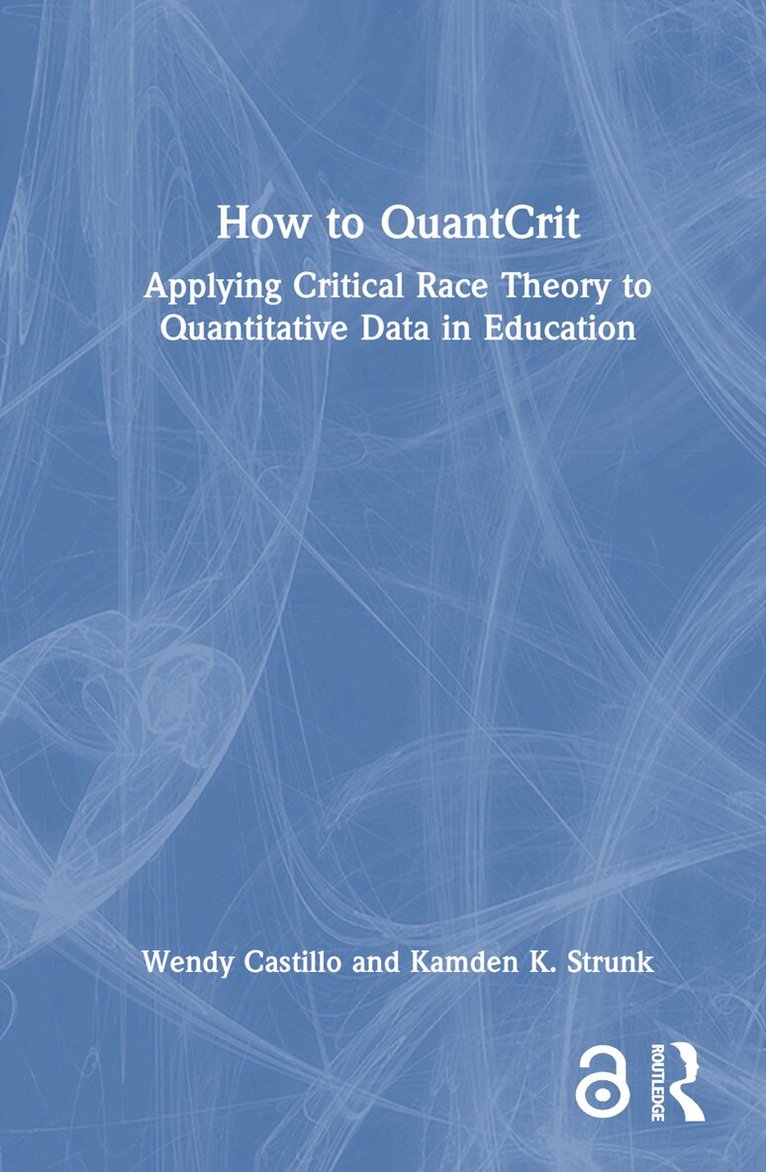
    How to QuantCrit

    Applying Critical Race Theory to Quantitative Data in Education

    AvWendy Castillo,Kamden K. Strunk

    Inbunden, Engelska, 2024

    2 352 kr

    Beställningsvara. Skickas inom 10-15 vardagar. Fri frakt över 249 kr.

    Fler format och utgåvor

    Häftad

    607 kr

    Beskrivning

    How to QuantCrit equips researchers and users of quantitative data with practices to alter how they collect and analyze quantitative data. Using Quantitative Critical Race Theory (QuantCrit) as a framework, this book develops the foundation for an iterative praxis to explore a range of questions that prompt practitioners and stakeholders to be engaged critics in working towards a more just and equitable society.The book begins with an overview of QuantCrit and its five tenets: (1) the centrality of racism; (2) numbers are not neutral; (3) categories are neither ‘natural’ nor given; (4) the importance voice and insight (data cannot speak for themselves); and (5) a social justice/equity orientation. Each subsequent chapter begins with a more detailed explanation and exploration of the tenet. Then, the chapters move into actionable steps that researchers and data users can take to implement QuantCrit into applied practice. Finally, the book closes with thoughts on working to use quantitative data for racial justice.This book is intended for researchers, data users, and graduate students in education and education-related disciplines. It offers insights and suggested actions that range from working with existing data sets in more racially just ways to more radically reimagining the entire educational research process. As such, the book offers ideas and information that can be useful for anyone working with quantitative educational data.Winner of the American Educational Studies Association Critics’ Choice Book Awards 2025The Open Access version of this book, available at http://www.taylorfrancis.com, has been made available under a Creative Commons Attribution-Non Commercial-No Derivatives (CC-BY-NC-ND) 4.0 license. The Open Access version of this book was funder by the Spencer Foundation and WT Grant Foundation.

    Produktinformation

    • Utgivningsdatum:2024-10-21
    • Mått:156 x 234 x 12 mm
    • Vikt:340 g
    • Format:Inbunden
    • Språk:Engelska
    • Antal sidor:128
    • Förlag:Taylor & Francis Ltd
    • ISBN:9781032552897

    Utforska kategorier

    • Pedagogisk teori och filosofi inom Psykologi och pedagogik
    • Referensverk och tvärvetenskap inom Samhälle och politik
    • Psykologisk metod inom Psykologi och pedagogik

    Mer om författaren

    Wendy Castillo, Ph.D. is an Assistant Professor in Urban Education and Quantitative Methods at Montclair State University, Montclair, NJ. Her work focuses on applying a racial equity lens to quantitative methods including using QuantCrit and other anti-racism approaches.Kamden K. Strunk, Ph.D. is a Professor of Educational Research Methodologies at Virginia Commonwealth University, Richmond, VA. His work focuses on critical approaches to quantitative methodologies, intersectional queer and trans studies in education, and improving teaching and learning conditions toward equity.

    Recensioner i media

    "How to QuantCrit is the first of its kind. The text provides a needed historical account of racism in social sciences statistics and offers insights into how quantitative approaches should be used to de-center whiteness while including practical use (and examples) of each QuantCrit tenets." -- Marvin G. Powell, Ph.D., George Mason University, USA"Quantitative Critical Race Theory (QuantCrit) has grown rapidly to become an important strand in research internationally. Quantitative methods have sometimes been antithetical to antiracism but QuantCrit offers a powerful new way forward. In this landmark study – the first book-length exploration of QuantCrit – Castillo and Strunk explore the approach in detail, offering real-world examples of how to apply the insights in practice. It adds up to a unique and invaluable resource for everyone with an interest in quantitative research and racial justice." -- David Gillborn, author of 'White Lies: Racism, Education and Critical Race Theory'

    Innehållsförteckning

    • 1. What is QuantCrit? Critical Quantitative Methodologies, Critical Race Theory, and QuantCrit as a Methodological Framework 2. The Centrality of Racism 3. Numbers Are Not Neutral 4. Categories Are Neither Neutral nor Natural 5. Voice and Insight: Data Cannot “Speak for Themselves” 6. The Necessity of a Justice and Equity Orientation 7. Conclusion: Quantitative Methodologies for Racial Justice