• Fri frakt över 249 kr
  • •
  • Snabba leveranser
  • •
  • Billiga böcker
Kundservice

Du är på sajten för privatpersoner.

Företag, bibliotek eller offentlig verksamhet?

Du handlar på classic.bokus.com, där alla dina funktioner finns intakta.
Till classic.bokus.com
Bokus logotyp. Gå till startsidan.
  • Erbjudanden
  • Nyheter
  • Student
  • Topplistor
  • Barn & ungdom
  • Bokus Play
  • E-böcker
  • Pocketböcker
  • Spel & pussel

10% studentrabatt med kod TERM26

Sidfot

Mina sidor

    Hjälp

    • Kundservice
    • Vanliga frågor och svar
    • Frakt och leverans
    • Retur vid ångerrätt
    • Reklamera vara
    • Betalning
    • Köpvillkor
    • Allmänna villkor
    • Information om webbplatsens tillgänglighet

    Om Bokus

    • Om oss
    • Pressrum
    • För studenter
    • För företag
    • För bibliotek och offentlig verksamhet
    • För leverantörer
    • Hållbarhet

    Populärt

    • Aktuella erbjudanden
    • Presentkort
    • Studentlitteratur
    • Nya böcker
    • Topplistor
    • Signerade böcker
    • Engelska böcker

    Inspiration

    • Boktips
    • BookTok
    • Populära bokserier
    • Barnbokskaraktärer
    • Populära författare
    Logotyp för Bokus
    Följ oss på Facebook (extern länk)Följ oss på Instagram (extern länk)Följ oss på YouTube (extern länk)Följ oss på TikTok (extern länk)
    bokus @ CookiesAnpassa cookiesIntegritetspolicyKöpvillkor
    Till Citymail hemsida (extern länk)Till Budbee hemsida (extern länk)Till Postnord hemsida (extern länk)Till Schenker hemsida (extern länk)Till Early Bird hemsida (extern länk)Till Walleys hemsida (extern länk)
    1. Samhälle och politik
    2. Samhälle och kultur
    3. Sociala och etiska frågor

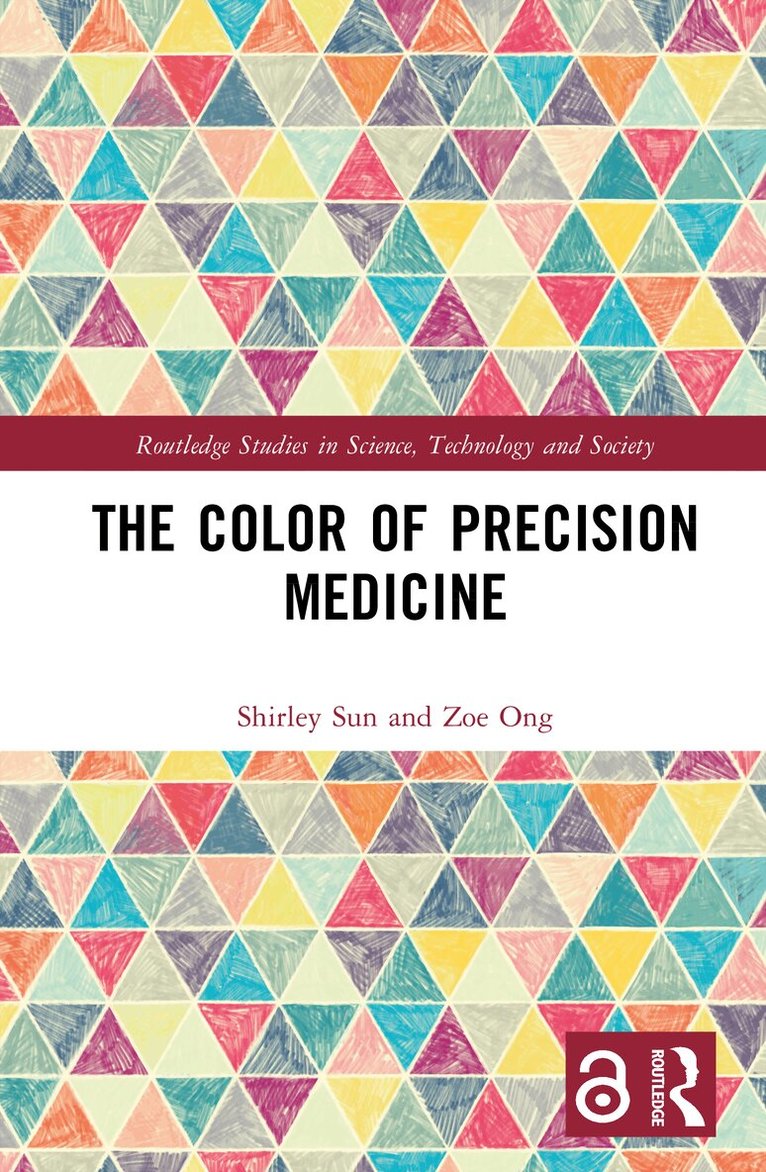
    Color of Precision Medicine

    AvShirley Sun,Zoe Ong

    Inbunden, Engelska, 2024

    Del i serien Routledge Studies in Science, Technology and Society

    2 506 kr

    Beställningsvara. Skickas inom 10-15 vardagar. Fri frakt över 249 kr.

    Fler format och utgåvor

    Häftad

    705 kr

    Beskrivning

    Will genome-based precision medicine fix the problem of race/ethnicity-based medicine? To answer this question, Sun and Ong propose the concept of racialization of precision medicine, defined as the social processes by which racial/ethnic categories are incorporated (or not) into the development, interpretation, and implementation of precision medicine research and practice.Drawing on interview data with physicians and scientists in the field of cancer care, this book addresses the following questions: Who are the racializers in precision medicine, how and why do they do it? Under what conditions do clinicians personalize medical treatments in the context of cancer therapies? The chapters elucidate different ways in which racialization occurs and reveal that there exists an inherent contradiction in the usage of race/ethnicity as precision medicine moves from bench to bedside. The relative resources theory is proposed to explain that whether race/ethnicity-based medicine will be replaced by genomic medicine depends on the resources available at the individual and systemic levels. Furthermore, this book expands on how racialization happens not only in pharmacogenomic drug efficacy studies, but also in drug toxicity studies and cost-effectiveness studies.An important resource for clinicians, researchers, public health policymakers, health economists, and journalists on how to deracialize precision medicine.

    Produktinformation

    • Utgivningsdatum:2024-04-23
    • Mått:156 x 234 x 11 mm
    • Vikt:453 g
    • Format:Inbunden
    • Språk:Engelska
    • Serie:Routledge Studies in Science, Technology and Society
    • Antal sidor:148
    • Förlag:Taylor & Francis Ltd
    • ISBN:9781032565583

    Utforska kategorier

    • Sociala och etiska frågor inom Samhälle och politik
    • Rättsliga frågor i hälso- och sjukvården inom Medicin
    • Klinisk medicin och internmedicin inom Medicin

    Mer om författaren

    Shirley Sun is an associate professor of sociology at the Nanyang Technological University (NTU), Singapore. Her research areas are medical sociology and sociology of science, knowledge, and technology. She is the author of “Socio-economics of Personalized Medicine in Asia” (2017, London and New York: Routledge).Zoe Ong is a PhD candidate from the Interdisciplinary Graduate Program at the Wee Kim Wee School of Communication and Information, Nanyang Technological University (NTU), Singapore. With an MSc in biological sciences, her research interests include cancer and genetics, digital health, health communication, and health literacy.

    Innehållsförteckning

    • Table of Contents1 . IntroductionPrecision medicine (PM): A global phenomenonWhat is precision medicine? Definitions, sites and scale.Precision medicine as an alternative to race-based medicineWhat is race-based medicine and racial profiling in medicine?Problems with race-based medicine/racial profiling in medicineIs genome-based precision medicine really the answer? Addressing the debate: Racialization as the key conceptRacialization of national census categoriesRacialization in science (or, scientific racism) in colonial contextsRacialization of medicine in colonial contextsRacialization in medicine in contemporary timesIn the (post-)Genomic Era: Racialization of human genomic scienceWhat is the future of genome-based precision medicine? An empirical examination in cancer care in three post-colonial societies.Chapter outline2 . Using race to overcome race: An inherent contradiction in precision medicineIntroductionUsing race to overcome race: understanding an inherent contradiction in translational precision medicinFirst domain: Searching for the genetic biomarker in scientific researchSecond domain: Recruiting suitable human subjects for clinical trialsThird domain: Medical decision-making in the clinicConclusion3. Trans-National colors: Race, Ethnicity and Genomic Science in the United States of America, Canada and SingaporeIntroductionIs race biological or socially constructed? A brief overview.Where and how do racialization happen in genomic science?Materials for racialization of a population sample and/or patient Issues with the different ways of racialization Perspectives from the genomic science community about the relationship between race and geneticsNo clear distinction between ethnoracial population groupsGenetic heterogeneity within an ethnoracial population groupRace as a social constructIf race is socially constructed, why are there differences in frequencies of genetic alleles between racial/ethnic groups?If not race, what drives human genomic diversity?Conclusion4. The “relative resources” model: Heterogeneity of resources and the racialization of precision medicineIntroductionThe “personalized medicine” versus “racialized medicine” debate“Race is really the poor man’s genomic test”: The relative resources modelFinancial resourcesHuman and informatics resourcesLegal and infrastructural resourcesImplications of the relative resources modelConclusion5. Pharmacogenetic/Pharmacogenomic Drug Toxicity Studies, Race/Ethnicity and Managing Adverse Drug Reactions in the Clinic: Ongoing TensionsIntroductionExamples of racialised pharmacogenomic studies in the US, Canada and SingaporeAllopurinol5-Fluorouracil (5-FU)Cost-effectiveness studies, race/ethnicity and precision medicineWho is Asian and who is Caucasian?Debating race/ethnicity-based pharmacogenetic toxicity data in the clinicSubjective interpretation of drug toxicity risksToxicity is a multi-factor phenomenon and is not just about geneticsPharmacogenetics/pharmacogenomics studies and pharmaceutical companies are at odds. Conclusion6 ConclusionWhat is already known on the topics of race-based medicine, precision medicine, and the molecularization of race?What does this book add to the existing state of the art?What are the arguments and findings in each chapter?How might this study affect research, practice or policy? ResearchPracticePolicyScience communication by scientists and journalistsMedical educationWhat should different stakeholders take away from this book?ScientistsPhysicians/medical doctorsPublic policy makersHealth economistsWhat are the theoretical and empirical contributions of this book?On “racialization”On the nexus of relative resources and racialization of precision medicineOn differential racializationWhat are the tensions with the usage of race/ethnicity in genomic science with medical and public health implications?What are some of the limitations of this study?What are some of the future research projects based on this book?