• Fri frakt över 249 kr
  • •
  • Snabba leveranser
  • •
  • Billiga böcker
Kundservice

Du är på sajten för privatpersoner.

Företag, bibliotek eller offentlig verksamhet?

Du handlar på classic.bokus.com, där alla dina funktioner finns intakta.
Till classic.bokus.com
Bokus logotyp. Gå till startsidan.
  • Erbjudanden
  • Nyheter
  • Student
  • Topplistor
  • Barn & ungdom
  • Bokus Play
  • E-böcker
  • Pocketböcker
  • Spel & pussel

10% rabatt på allt med kod NYSTART10 →

Sidfot

Mina sidor

    Hjälp

    • Kundservice
    • Vanliga frågor och svar
    • Frakt och leverans
    • Retur vid ångerrätt
    • Reklamera vara
    • Betalning
    • Köpvillkor
    • Allmänna villkor
    • Information om webbplatsens tillgänglighet

    Om Bokus

    • Om oss
    • Pressrum
    • För studenter
    • För företag
    • För bibliotek och offentlig verksamhet
    • För leverantörer
    • Hållbarhet

    Populärt

    • Aktuella erbjudanden
    • Presentkort
    • Studentlitteratur
    • Nya böcker
    • Topplistor
    • Signerade böcker
    • Engelska böcker

    Inspiration

    • Boktips
    • BookTok
    • Populära bokserier
    • Barnbokskaraktärer
    • Populära författare
    Logotyp för Bokus
    Följ oss på Facebook (extern länk)Följ oss på Instagram (extern länk)Följ oss på YouTube (extern länk)Följ oss på TikTok (extern länk)
    bokus @ CookiesAnpassa cookiesIntegritetspolicyKöpvillkor
    Till Citymail hemsida (extern länk)Till Budbee hemsida (extern länk)Till Postnord hemsida (extern länk)Till Schenker hemsida (extern länk)Till Early Bird hemsida (extern länk)Till Walleys hemsida (extern länk)
    1. Historia och arkeologi
    2. Historia
    3. Afrikas historia

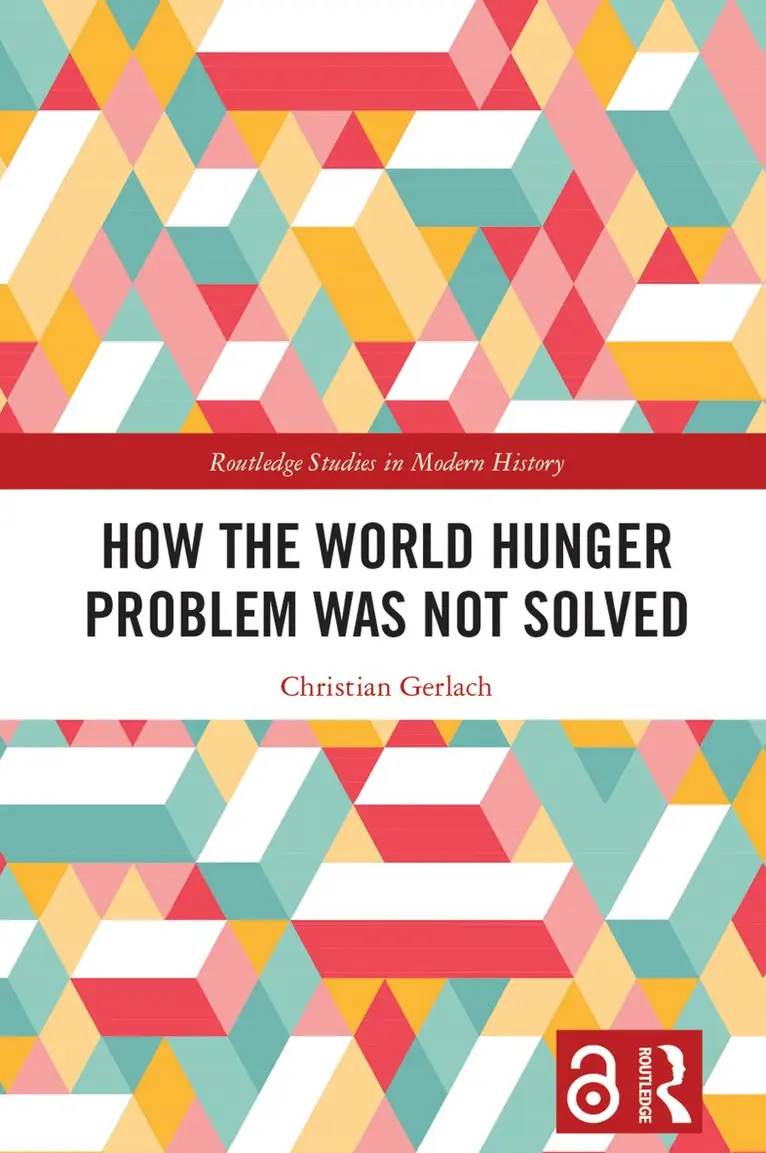
    How the World Hunger Problem Was not Solved

    AvChristian Gerlach

    Inbunden, Engelska, 2024

    Del i serien Routledge Studies in Modern History

    2 495 kr

    Beställningsvara. Skickas inom 10-15 vardagar. Fri frakt över 249 kr.

    Fler format och utgåvor

    Häftad

    681 kr

    Beskrivning

    The world food crisis (1972–1975) gave rise to new development concepts. To eradicate world hunger, small peasants were supposed to use ‘modern’ inputs like high-yielding seeds, fertilizer, pesticides and irrigation. This would turn subsistence producers into business owners, transform rural areas, invigorate national economies and the crisis-stricken world economy and thus stabilize capitalism.Together with an in-depth account of the world food crisis, this book analyses how this global scheme largely failed. It shows its diverse initiators, their reasoning and motives, its political breakthrough, the degrees to which it was implemented globally and nationally in the following decades and its socioeconomic effects in rural areas. Despite internationally coordinated policies and coercive means, the scheme failed on all levels: situation analysis, design, policies, incapable institutions (including big business), implementation and peasants’ responses. Selective realization in certain regions and for certain crops and the appropriation of funds by local elites often aggravated inequality and hunger. Case studies are about Bangladesh, Indonesia, Tanzania and Mali. The book shows limits to global social engineering, imperialism and state control.It is aimed at students, scholars, activists and non-specialists interested in development and the world food problem.The Open Access version of this book, available at http://www.taylorfrancis.com, has been made available under a Creative Commons Attribution-Non Commercial-No Derivatives (CC-BY-NC-ND) 4.0 license.

    Produktinformation

    • Utgivningsdatum:2024-02-14
    • Mått:156 x 234 x 38 mm
    • Vikt:1 040 g
    • Format:Inbunden
    • Språk:Engelska
    • Serie:Routledge Studies in Modern History
    • Antal sidor:614
    • Förlag:Taylor & Francis Ltd
    • ISBN:9781032584928

    Utforska kategorier

    • Afrikas historia inom Historia och arkeologi
    • Asiens historia inom Historia och arkeologi
    • Lantbruk, fiske och skogsbruk inom Ekonomi och Ledarskap

    Mer om författaren

    Christian Gerlach is Professor of History at the University of Bern. His fields of research are mass violence, war and the history of agriculture, food, hunger and development. Among his earlier books is Extremely Violent Societies: Mass Violence in the Twentieth Century World (2010).

    Innehållsförteckning

    • 1. Introduction: the Global Level 2. The World Food Crisis, 1972-75 3. A Global Wave of Famines 4. The Small Peasant approach to Combatting Hunger and Poverty; Ideas and Breakthrough 5. Degrees of Implementation: Global Perspectives 6. Unexpected Limits of Growth: The Spread of Capital and Technology 7. Bangladesh: Impoverishment, Hunger and Credit 8. Indonesia: Limits to Farming Intensification and Poverty Alleviation 9. Tanzania: Impoverishment after Enforced Villagization 10. Mali: Changes in the Neglected Drylands 11. Comparing the Case Studies 12. Projections and Predictions: Imagining the Future 13. An “Effective Utilization of Women” 14. The Bigger Picture