• Fri frakt över 249 kr
  • •
  • Snabba leveranser
  • •
  • Billiga böcker
Kundservice

Du är på sajten för privatpersoner.

Företag, bibliotek eller offentlig verksamhet?

Du handlar på classic.bokus.com, där alla dina funktioner finns intakta.
Till classic.bokus.com
Bokus logotyp. Gå till startsidan.
  • Erbjudanden
  • Nyheter
  • Student
  • Topplistor
  • Barn & ungdom
  • Bokus Play
  • E-böcker
  • Pocketböcker
  • Spel & pussel

10% rabatt på allt med kod NYSTART10 →

Sidfot

Mina sidor

    Hjälp

    • Kundservice
    • Vanliga frågor och svar
    • Frakt och leverans
    • Retur vid ångerrätt
    • Reklamera vara
    • Betalning
    • Köpvillkor
    • Allmänna villkor
    • Information om webbplatsens tillgänglighet

    Om Bokus

    • Om oss
    • Pressrum
    • För studenter
    • För företag
    • För bibliotek och offentlig verksamhet
    • För leverantörer
    • Hållbarhet

    Populärt

    • Aktuella erbjudanden
    • Presentkort
    • Studentlitteratur
    • Nya böcker
    • Topplistor
    • Signerade böcker
    • Engelska böcker

    Inspiration

    • Boktips
    • BookTok
    • Populära bokserier
    • Barnbokskaraktärer
    • Populära författare
    Logotyp för Bokus
    Följ oss på Facebook (extern länk)Följ oss på Instagram (extern länk)Följ oss på YouTube (extern länk)Följ oss på TikTok (extern länk)
    bokus @ CookiesAnpassa cookiesIntegritetspolicyKöpvillkor
    Till Citymail hemsida (extern länk)Till Budbee hemsida (extern länk)Till Postnord hemsida (extern länk)Till Schenker hemsida (extern länk)Till Early Bird hemsida (extern länk)Till Walleys hemsida (extern länk)
    1. Samhälle och politik
    2. Samhälle och kultur

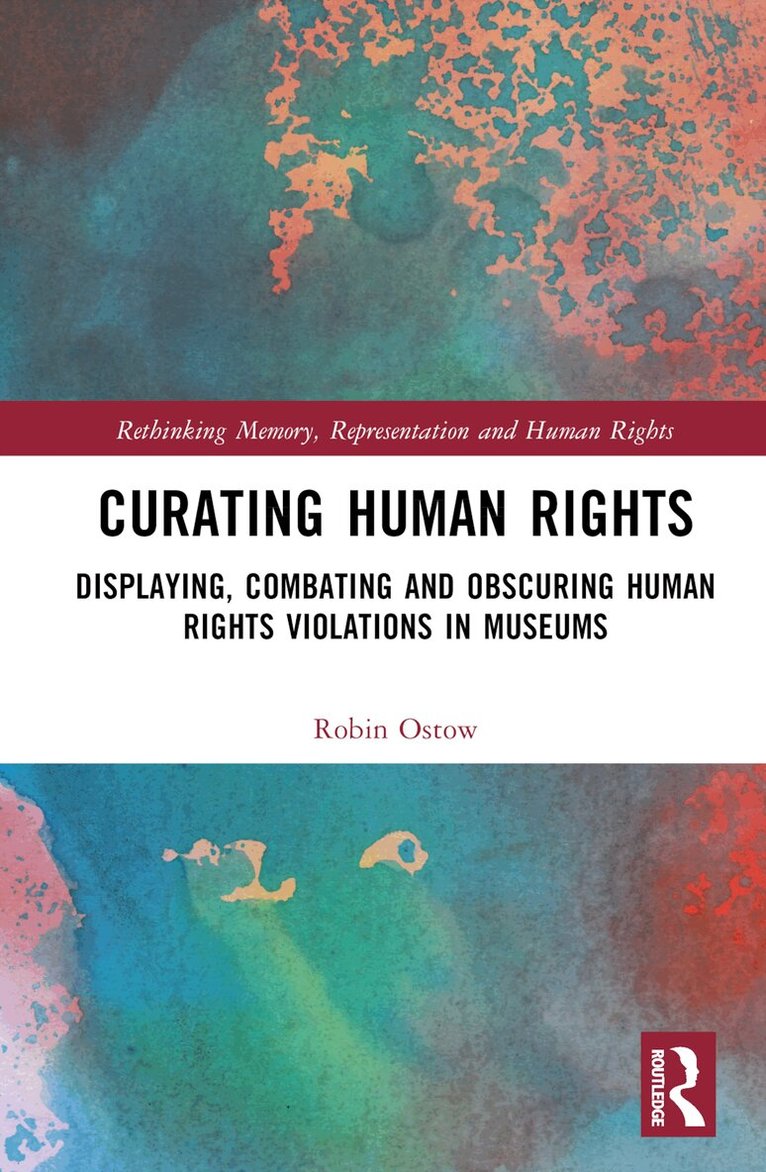
    Curating Human Rights

    Displaying, Combating and Obscuring Human Rights Violations in Museums

    AvRobin Ostow

    Inbunden, Engelska, 2024

    Del i serien Rethinking Memory, Representation and Human Rights

    2 423 kr

    Beställningsvara. Skickas inom 10-15 vardagar. Fri frakt över 249 kr.

    Fler format och utgåvor

    Häftad

    681 kr

    E-bok

    774 kr

    E-bok

    805 kr

    Beskrivning

    Curating Human Rights conceptualizes the human rights museum as a dynamic cultural-political genre that interacts with multiple social activist, state and corporate stakeholders.Drawing upon ethnographic and archival research on seven human rights museums in six countries, Ostow examines specifically what these museums do when they set out, or purport, to promote human rights. This includes the stories they visualize, display strategies, educational and other activities, internal structures, the way they position their visitors, the parameters of the human rights they address and the politics of pleasing their multiple stakeholders. The book also explores the contradictions and political and corporate pressure that contributes to foregrounding some human rights violations and ignoring or obscuring others. Ostow also examines the reactions to each museum in the local and national press, and by local visitors, politicians, donors and other stakeholders. The book ends with a discussion of the success and limitations of museums for promoting human rights, and policy recommendations to enhance their effectiveness. Curating Human Rights considers whether these museums are appropriate for, and effective at, promoting human rights - and if they address the pitfalls that have been identified.Curating Human Rights provides new perspectives on the field of human rights education and activism and will be of interest to academics and students engaged in the study of museums, human rights, culture and communication.

    Produktinformation

    • Utgivningsdatum:2024-11-25
    • Mått:156 x 234 x 15 mm
    • Vikt:453 g
    • Format:Inbunden
    • Språk:Engelska
    • Serie:Rethinking Memory, Representation and Human Rights
    • Antal sidor:177
    • Förlag:Taylor & Francis Ltd
    • ISBN:9781032642833

    Utforska kategorier

    • Samhälle och kultur inom Samhälle och politik
    • Referensverk och tvärvetenskap inom Samhälle och politik
    • Filosofiska discipliner inom Filosofi och religion

    Mer om författaren

    Robin Ostow is affiliated with the Sociology Department at Wilfrid Laurier University, in Ontario, Canada. She has published extensively on national museums, Jewish museums, immigration museums and human rights museums in Europe, the Americas and Australia. Most recently, her work has focused on these museums’ displays and their relations with the communities around them.

    Recensioner i media

    "The literature on genocide and human rights museums is in its infancy. In its historical reconstruction of six museums located in all corners of the globe, Curating Human Rights lays a massive foundation for anyone interested in the display of atrocity and trauma in the service of universal values.They will not be able to go past Robin Ostow's argument that the path from the former to the latter is crooked and uneven. A major accomplishment."A. Dirk Moses, Anne and Bernard Spitzer Professor of International Relations, City College of New York, USA"Robin Ostow’s enterprising and original survey of human rights museums registers the emergence of a worldwide trend and opens it to critical and sophisticated analysis. Why is the wave happening? What political work is being done through it? The book engages these questions and more and is an indispensable success in doing so."Samuel Moyn, Chancellor Kent Professor of Law and History, Yale University, USA“Curating Human Rights by Robin Ostow is a significant contribution to interdisciplinary scholarship at the intersection of human rights studies, museology, and cultural communication. Rather than treating museums as neutral spaces for historical display, Ostow conceptualizes human rights museums as dynamic cultural-political institutions where multiple actors [including] human rights activists, state authorities, corporations, donors, and visitors interact, negotiate, and often contest one another’s interests. The central argument of the book is that human rights museums are never neutral: they actively construct narratives of human rights violations, selectively foreground certain abuses, and, at the same time, obscure or marginalize others. Drawing on extensive ethnographic and archival research conducted in seven human rights museums across six countries, Ostow consistently asks a fundamental question: to what extent are museums effective instruments for promoting human rights, and where do political, economic, and structural constraints undermine this mission?”Rama Kusuma Irjananta, Firman Akbar Anshari & Raja Kusuma Ibnu Negara, Review in Nordic Journal of Human Rights (March 2026)“Framing museums as spaces for human rights while meeting stakeholder demands represents a persistent challenge for many working in the field…This is the main focus and argument of Robin Ostow’s book, which examines the development of human rights museums across local and global movements. With a clear focus on museum politics and discourses, Ostow critically investigates the narratives, display approaches, and institutional responses developed by museums that position themselves as sites and agents for civil and social justice. The author explores six diverse international human rights museums established in reaction to national conflicts or communal injustices. In each case, Ostow underscores how disputes between minority groups, central states and other stakeholders hinder or otherwise impact on the museum’s efforts to bring about meaningful forms of justice.”Melanie Stavrou, Review in Museums & Social Issues: A Journal of Reflective Discourse (Vol. 19, 2025)

    Innehållsförteckning

    • 1. Introduction: human rights and the museums that display them; 2. Displaying the transatlantic slave trade: from cultural nationalism to universal human rights on the West Coast of Africa. The Maison des Esclaves, Gorée Island, Senegal 1966-2023; 3. Reimagining citizenship and human rights in a museum of land restitution: District Six Museum, Cape Town, South Africa; 4. The Museum as a laboratory for a human rights-based future: The International Slavery Museum, Liverpool, UK; 5. From containing memories of past violence to supporting a human rights-based revolution: The Museo de la Memoria y los Derechos Humanos, Santiago, Chile: 2006 – 2023; 6. Corporate citizenship and musealizing human rights: Coca-Cola and the Center for Civil and Human Rights, Atlanta, Georgia, US; 7. Decolonization and Musealizing Human Rights on the Canadian Prairie: The Canadian Museum for Human Rights and The Museum for Canadian Human Rights Violations 2003 – 2023; 8. Human Rights Museums: Their contributions and achievements in promoting human rights. Their limitations and their challenges in the coming years