• Fri frakt över 249 kr
  • •
  • Snabba leveranser
  • •
  • Billiga böcker
Kundservice

Du är på sajten för privatpersoner.

Företag, bibliotek eller offentlig verksamhet?

Du handlar på classic.bokus.com, där alla dina funktioner finns intakta.
Till classic.bokus.com
Bokus logotyp. Gå till startsidan.
  • Erbjudanden
  • Nyheter
  • Student
  • Topplistor
  • Barn & ungdom
  • Bokus Play
  • E-böcker
  • Pocketböcker
  • Spel & pussel

10% rabatt på allt med kod: NYSTART10 →

Sidfot

Mina sidor

    Hjälp

    • Kundservice
    • Vanliga frågor och svar
    • Frakt och leverans
    • Retur vid ångerrätt
    • Reklamera vara
    • Betalning
    • Köpvillkor
    • Allmänna villkor
    • Information om webbplatsens tillgänglighet

    Om Bokus

    • Om oss
    • Pressrum
    • För studenter
    • För företag
    • För bibliotek och offentlig verksamhet
    • För leverantörer
    • Hållbarhet

    Populärt

    • Aktuella erbjudanden
    • Presentkort
    • Studentlitteratur
    • Nya böcker
    • Topplistor
    • Signerade böcker
    • Engelska böcker

    Inspiration

    • Boktips
    • BookTok
    • Populära bokserier
    • Barnbokskaraktärer
    • Populära författare
    Logotyp för Bokus
    Följ oss på Facebook (extern länk)Följ oss på Instagram (extern länk)Följ oss på YouTube (extern länk)Följ oss på TikTok (extern länk)
    bokus @ CookiesAnpassa cookiesIntegritetspolicyKöpvillkor
    Till Citymail hemsida (extern länk)Till Budbee hemsida (extern länk)Till Postnord hemsida (extern länk)Till Schenker hemsida (extern länk)Till Early Bird hemsida (extern länk)Till Walleys hemsida (extern länk)
    1. Juridik
    2. Internationell rätt
    3. Internationell rätt: transport och handel

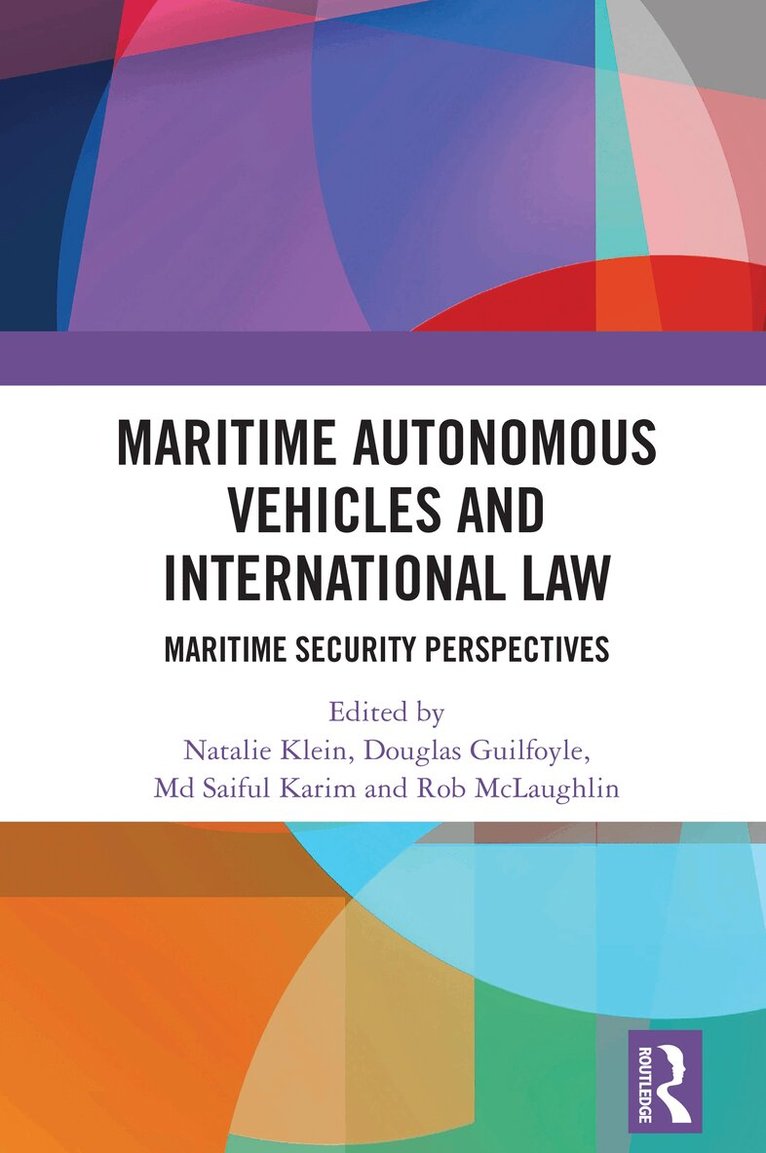
    Maritime Autonomous Vehicles and International Law

    Maritime Security Perspectives

    AvNatalie Klein,Douglas Guilfoyle

    Inbunden, Engelska, 2024

    2 227 kr

    Beställningsvara. Skickas inom 10-15 vardagar. Fri frakt över 249 kr.

    Beskrivning

    Maritime autonomous vehicles (MAVs) have the potential to radically alter all uses of maritime space, with technology progressing faster than the law. This book explores the current international legal framework and the options available to regulate maritime security in the face of emerging technologies.MAVs are starting to play a role not only in policing and military security but also for the perpetration of maritime crimes. Through discussing the existing international legal framework for combating maritime security threats, the book will consider the use of MAVs by states for various security purposes and the potential dangers of MAVs in the hands of non-state actors. As the intersection of maritime technology with international maritime security law is crucial to a safe future for all, this timely book makes essential suggestions to adapt existing legal frameworks to match emerging technologies. Addressing critical questions such as who exercises jurisdiction when ships are remotely controlled, how jamming technology may be lawfully deployed and what force may be permissible during maritime law enforcement, this book identifies a diversity of current legal gaps and problems and makes suggestions as to how to rectify them.This book will be of interest to students and scholars in the field of the law of the sea, maritime security and emerging technologies.

    Produktinformation

    • Utgivningsdatum:2024-12-31
    • Mått:156 x 234 x 25 mm
    • Vikt:760 g
    • Format:Inbunden
    • Språk:Engelska
    • Antal sidor:316
    • Förlag:Taylor & Francis Ltd
    • ISBN:9781032675596

    Utforska kategorier

    • Internationell rätt: transport och handel inom Juridik
    • Rättssystem inom Juridik
    • IT-rätt och kommunikationsrätt inom Juridik

    Mer om författaren

    Natalie Klein is Professor and Associate Dean (Academic) at UNSW Sydney’s Faculty of Law & Justice, Australia. She is currently President of the Australian Branch of the International Law Association and one of Australia’s nominees under Annex V and Annex VII of the UN Convention on the Law of the Sea. Her masters and doctorate in law were earned at Yale Law School, and she is Fellow of the Australian Academy of Law and of the Academy of the Social Sciences in Australia.Douglas Guilfoyle is Professor of International Law and Security at UNSW Canberra. His principal areas of research are the international law of the sea and international and transnational criminal law. Particular areas of specialism include maritime law enforcement, the law of naval warfare, international courts and tribunals and the history of international law. He is a 2022-2025 Australian Research Council Future Fellow. He was previously Professor of Law at Monash University and Reader in Law at the University College London. He was a Gates Cambridge Trust scholar and Chevening scholar during his graduate study at the University of Cambridge.Md Saiful Karim is Professor in the School of Law and Justice at the University of Southern Queensland (UniSQ). Professor Karim was McDougall Visiting Professor in International Law at West Virginia University. He was a consultant at the University of the South Pacific and a visiting research fellow at the National University of Singapore. He teaches and researches in various areas of ocean, human rights and environmental law. He has published extensively in the fields of ocean and environmental law and has presented research papers at several conferences and workshops in Asia, Europe, North America and Oceania.Rob McLaughlin is Professor of Law at the Australian National Centre for Ocean Resources and Security at the University of Wollongong, Honorary Professor at the Australian National University College of Law and Fellow of the Stockton Centre for International Law at the US Naval War College. Rob came to academia after a career in the Royal Australian Navy as a seaman officer and a legal officer.

    Innehållsförteckning

    • Part I: Overarching Issues1. Maritime Autonomous Vehicles: Challenges and Opportunities under International Law2. Integrating Maritime Autonomous Vehicles into National Maritime Security Architecture3. MASS, UNCLOS and the Flag StatePart II: Military Concerns, Military Activities and Navigational Rights4. Sovereign Immunity of Unmanned Maritime Vehicles5. Maritime Drones at War: Legal Issues Affecting Characterization and Use6. The Future of Ocean Technology and Navigational Rights in the International Law of the Sea7. Some Rules Applicable to Use of Long Range Underwater Maritime Autonomous Vehicles for Intelligence, Surveillance and Reconnaissance Purposes8. The Legality of Electromagnetic Interference with Maritime Autonomous Vehicles Part III: Responding to Illegal Activities at Sea9. Maritime Law Enforcement in the Era of Autonomous Ships: Use of Force and Safeguards10. Piracy and Maritime Terrorism Involving Autonomous Ships11. Legal Implications for Maritime Autonomous Vehicles in Relation to Stowaways12. The Use of Maritime Autonomous Vehicles in Fisheries Law EnforcementPart IV: MAVs and New Frontiers in International Maritime Security Law13. Environmental and Maritime Security, Civil Liability Regimes, and Maritime Autonomous Vehicles14. Maritime Autonomous Vehicles in Polar Waters: Opportunities, Risks and Governance Implications