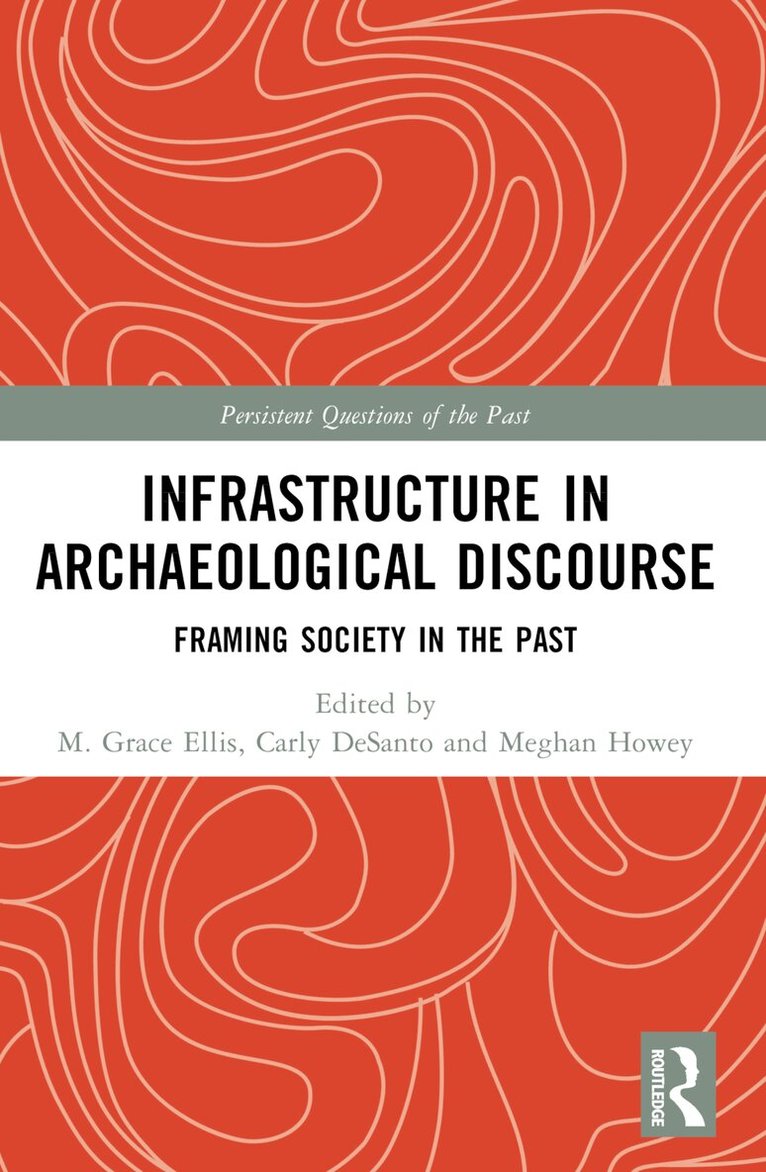
Häftad, Engelska, 2025
Infrastructure in Archaeological Discourse
Framing Society in the Past
Av M. Grace Ellis, Carly M. DeSanto, Meghan C. L. Howey
Del i serien Persistent Questions of the Past
724 kr
Beställningsvara. Skickas inom 10-15 vardagar. Fri frakt över 249 kr.
Beskrivning
Produktinformation
- Utgivningsdatum: 2025-12-26
- Mått: 156 x 234 x 20 mm
- Vikt: 480 g
- Format: Häftad
- Språk: Engelska
- Serie: Persistent Questions of the Past
- Antal sidor: 262
- Förlag: Taylor & Francis Ltd
- ISBN: 9781032678474
Utforska kategorier
Mer om författaren
M. Grace Ellis is a doctoral candidate in the Anthropology and Geography Department at Colorado State University and student researcher at the Interdisciplinary Center for Archaeological Research and Evolution of Human Behavior at the University of Algarve. She specializes in landscape archaeology and remote sensing approaches to explore human-environment interactions in the past. Her research examines land use intensification and social interaction in ancient Amazonia, cosmopolitan networks and seafaring across the Caribbean Sea prior to European contact, and neanderthal extinction and human colonization of Iberia.Carly M. DeSanto is a Project Manager at Chronicle Heritage. She obtained her MA in Anthropology from Colorado State University in 2021, which focused on earthen enclosures and monumental construction during the Woodland Period in the Middle Ohio Valley. She specializes in geoarchaeology, archaeogeophysics, infrastructure, earthen monuments, and monumentality. Her current work in cultural resource management focuses on managing archaeological projects in the southwestern United States.Meghan C. L. Howey is currently the Director of the Center for the Humanities at the University of New Hampshire where she is a Professor of Anthropology and in the Earth Systems Research Center. She is an anthropological archaeologist who specializes in colonialism, public archaeology, ethnohistory, landscape, and geospatial analyses. Her current project focuses on the 17th century in the Great Bay Estuary in New England, working collaboratively with regional Indigenous knowledge keepers, community volunteers, and ecologists to explore the lasting socioecological legacies of early colonialism.
Betyg & recensioner
0 recensioner
Inga recensioner tillgängliga.