• Fri frakt över 249 kr
  • •
  • Snabba leveranser
  • •
  • Billiga böcker
Kundservice

Du är på sajten för privatpersoner.

Företag, bibliotek eller offentlig verksamhet?

Du handlar på classic.bokus.com, där alla dina funktioner finns intakta.
Till classic.bokus.com
Bokus logotyp. Gå till startsidan.
  • Erbjudanden
  • Nyheter
  • Student
  • Topplistor
  • Barn & ungdom
  • Bokus Play
  • E-böcker
  • Pocketböcker
  • Spel & pussel

10% rabatt på allt med kod: NYSTART10 →

Sidfot

Mina sidor

    Hjälp

    • Kundservice
    • Vanliga frågor och svar
    • Frakt och leverans
    • Retur vid ångerrätt
    • Reklamera vara
    • Betalning
    • Köpvillkor
    • Allmänna villkor
    • Information om webbplatsens tillgänglighet

    Om Bokus

    • Om oss
    • Pressrum
    • För studenter
    • För företag
    • För bibliotek och offentlig verksamhet
    • För leverantörer
    • Hållbarhet

    Populärt

    • Aktuella erbjudanden
    • Presentkort
    • Studentlitteratur
    • Nya böcker
    • Topplistor
    • Signerade böcker
    • Engelska böcker

    Inspiration

    • Boktips
    • BookTok
    • Populära bokserier
    • Barnbokskaraktärer
    • Populära författare
    Logotyp för Bokus
    Följ oss på Facebook (extern länk)Följ oss på Instagram (extern länk)Följ oss på YouTube (extern länk)Följ oss på TikTok (extern länk)
    bokus @ CookiesAnpassa cookiesIntegritetspolicyKöpvillkor
    Till Citymail hemsida (extern länk)Till Budbee hemsida (extern länk)Till Postnord hemsida (extern länk)Till Schenker hemsida (extern länk)Till Early Bird hemsida (extern länk)Till Walleys hemsida (extern länk)
    1. Samhälle och politik
    2. Politik och statsskick
    3. Ursprungsbefolkningar

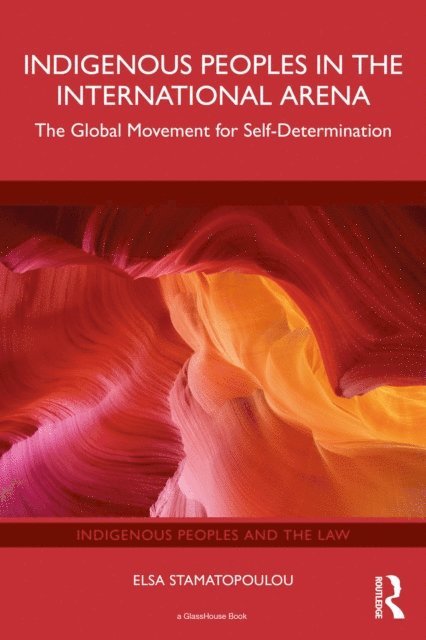
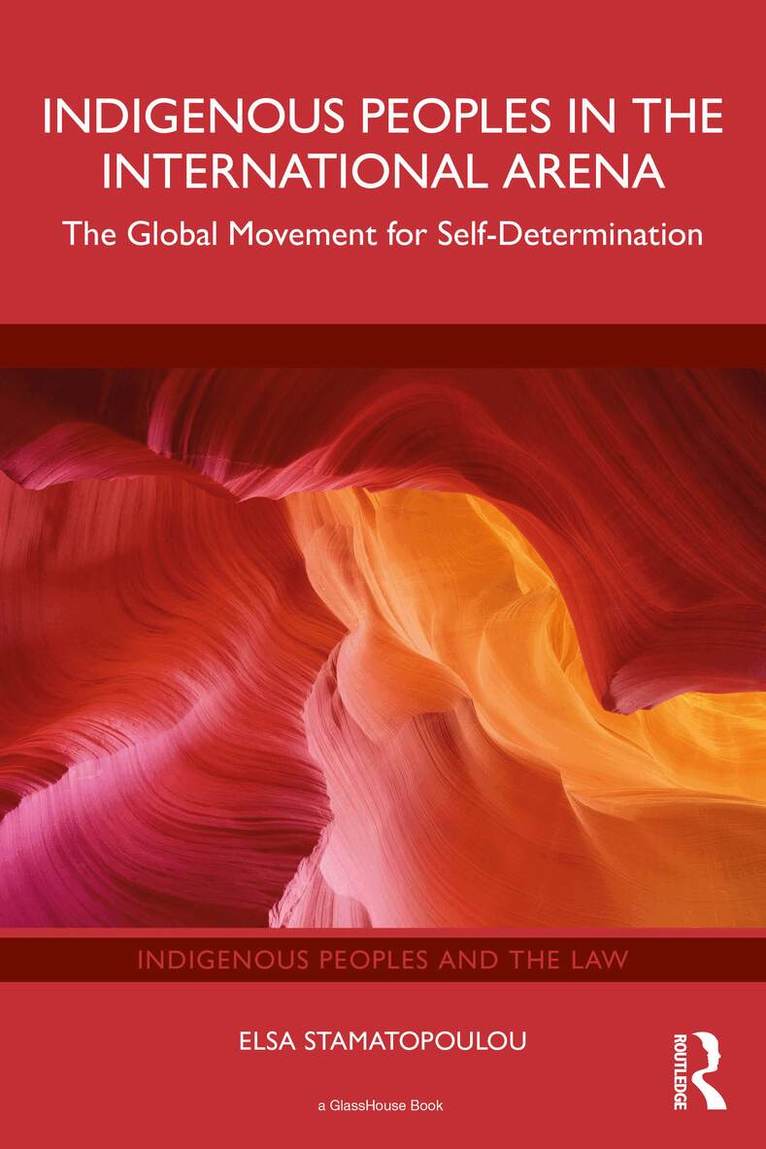
    Indigenous Peoples in the International Arena

    The Global Movement for Self-Determination

    AvElsa Stamatopoulou

    Inbunden, Engelska, 2024

    Del i serien Indigenous Peoples and the Law

    1 891 kr

    Beställningsvara. Skickas inom 10-15 vardagar. Fri frakt över 249 kr.

    Fler format och utgåvor

    Häftad

    523 kr

    E-bok

    617 kr

    E-bok

    617 kr

    Beskrivning

    This book provides a definitive account of the creation and rise of the international Indigenous Peoples’ movement.In the late 1970s, motivated by their dire situation and local struggles, and inspired by worldwide movements for social justice and decolonization, including the American civil rights movement, Indigenous Peoples around the world got together and began to organize at the international level. Although each defined itself by its relation to a unique land, culture, and often language, Indigenous Peoples from around the world made an extraordinary leap, using a common conceptual vocabulary and addressing international bodies that until then had barely recognized their existence. At the intersection of politics, law, and culture, this book documents the visionary emergence of the international Indigenous movement, detailing its challenges and achievements, including the historic recognition of Indigenous rights through the adoption of the UN Declaration on the Rights of Indigenous Peoples in 2007. The winning by Indigenous Peoples of an unprecedented kind and degree of international participation – especially at the United Nations, an institution centered on states – meant overcoming enormous institutional and political resistance. The book shows how this participation became an increasingly assertive self-expression and even an exercise of self-determination by which Indigenous Peoples could both benefit from and contribute to the international community overall – now, crucially, by sharing their knowledge about climate change, their approaches to development and well-being, and their struggles against the impact of extractive industries on their lands and resources.Written by the former Chief of the Secretariat of the United Nations Permanent Forum on Indigenous Issues, this book will be of interest to researchers, teachers, students, advocates, practitioners, and others with interests in Indigenous legal and political issues.

    Produktinformation

    • Utgivningsdatum:2024-07-12
    • Mått:156 x 234 x 22 mm
    • Vikt:453 g
    • Format:Inbunden
    • Språk:Engelska
    • Serie:Indigenous Peoples and the Law
    • Antal sidor:312
    • Förlag:Taylor & Francis Ltd
    • ISBN:9781032734170

    Utforska kategorier

    • Ursprungsbefolkningar inom Samhälle och politik
    • Folkrätt inom Juridik
    • Etnicitet inom Samhälle och politik

    Mer om författaren

    Elsa Stamatopoulou is Director of the Indigenous Peoples’ Rights Program and Adjunct Professor in the Institute for the Study of Human Rights, the Department of Anthropology, and the Center for the Study of Ethnicity and Race at Columbia University, USA. Elsa is also Former (the first) Chief of the Secretariat of the UN Permanent Forum on Indigenous Issues (among other functions at the UN).

    Innehållsförteckning

    • Acknowledgements xiiList of Abbreviations xivIntroduction 1A. Historical Context 4B. Issues and Challenges 6C. The Appeal to Human Rights 8D. Changes Over Time 14E. Indigenous Participation in Indigenous Rights-Related UN Bodies 18F. Self-Determination, Corrective Exceptionalism, and Other Theoretical Underpinnings 19G. The Purpose of This Book 23H. Methodologies 25I. The Chapters 271 The Formative Years 33A. Indigenous Voices 33B. Participation as Methodology: The Pivotal UN Study 47C. Stepping Stones: Human Rights and Antiracism (1977 and 1981) 50D. The First Indigenous-Related Body at the UN (1982) 55E. Consolidating Direct Participation (1983) 64F. Indigenous Peoples Are Not Minorities 682 The Victory of Nondefinition 75A. Why There Is No Definition of “Indigenous Peoples” 75B. What Is at Stake in a Definition? Palestinian Participation in the UN’s Indigenous-Related Bodies 913 The Rise of Corrective Exceptionalism 103A. Indigenous Peoples Are Not Nongovernmental Organizations (NGOs) 105B. UN Commission on Human Rights Working Group on the Draft Declaration 110C. Moments of Making History 113D. Building Documentation 1191. Reporting Human Rights Abuses 1192. Saving Papers from the Fire 121E. The UN Voluntary Fund for Indigenous Populations: Winning Financial Support 124F. Confirming Direct Participation: The UN Permanent Forum on Indigenous Issues 1304 Self-Representations and Demands of Indigenous Peoples 137A. Special Features of the International Indigenous Peoples’ Movement 139B. Who Are the Indigenous Representatives at International Fora? 141C. The Drafting of the United Nations Declaration on the Rights of Indigenous Peoples 1451. Role of the UN Working Group on Indigenous Populations 1452. Role of the UN Commission on Human Rights and Its Working Group on the Draft Declaration (1996–2005) 1483. Role of the UN Permanent Forum on Indigenous Issues 1504. Role of the General Assembly 151D. Conceptual Contributions of Indigenous Peoples to Human Rights Norms 1541.The Controversy Over Collective Rights 155E. Significance and Content of the UNDRIP 1601. What Is the Declaration About? 1632. Unsettling and Resetting Relations with States 170F. Indigenous Philosophies, Protocols, Ceremonies, and Prophecies 1711. Toward Legal Pluralism Through Indigenous Participation 1712. Conversing Symbolisms 1733. Writing Letters 1744. The Hopi Prophecy and the “House of Mica” 1755. Opening of UN Meetings by “The People of the Land” 1806. Saying a Prayer, Smoking a Peace Pipe, Exhibiting Indigenous Arts, and Protecting Sacred Staffs 1837. Evolving Protocols and Expectations 186G. Participation of Indigenous Women 1881. How Does UNDRIP Cover Indigenous Women? 1932. Indigenous Women and Equality: Is the Principle of Nondiscrimination Enough? 1943. Parameters of Indigenous Women’s Rights 1954. Exercising Cultural Human Rights 197H. Participation of Indigenous Youth 201I. The First Indigenous Leader to Meet with a UN Secretary-General: The Yanomami Case 203J. The Role of Researchers and Academics 210K. Impacts, Potential, and Limits of Indigenous Peoples’ Participation 2151. Impacts 2152. Achievements 2163. Challenges 2184. Expectations 2195. Limits in the Midst of Achievements 219L. The Vision of Enhanced Participation 2255 The Right to Self-Determined Development 243A. Introduction 2431. Methodological and Conceptual Questions 246B. Navigating the Maze of the Interstate System 2471. Specificity in Addition to Universality 2502. Indigenous Peoples’ Indirect Participation 252C. Strengthening Indigenous Peoples’ Participation 2521. Strategies for Inclusion and Participation 2542. International Agencies’ and States’ Interactions 2563. Significance of Articles 41 and 42 of UNDRIP 2584. Adoption of Specific Policies on Indigenous Peoples’ Issues 2615. Achievements within International Organizations 2636. Avoiding “Over-Institutionalization” 264D. Obstacles and Opportunities for Participation 2661. Challenges within the Interstate System 2662. A “Personalized” Encounter with Globalization: The WTO 2673. Is Being “for All Children” Enough for Indigenous Children? UN Children’s Fund 2694. UN Development Program and the Chittagong Hill Tracts of Bangladesh 2715. Is UN Expertise Adequate to Decide UN Projects in Indigenous Communities? UN DESA 2756. Leadership in Climate Change Solutions 2767. Opportunities for the Future 2788. The Human Rights-Based Approach 279E. Sustainable Development Goals and Indigenous Participation 2811. Lessons Learned from the Millennium Development Goals 2822. Priorities of Indigenous Peoples in the SDGs 2843. Indicators for Measuring Progress for Indigenous Peoples 2874. Data Collection with, on, and for Indigenous Peoples 288F. How to Define Good Examples of Indigenous Peoples’ Participation? 2911. Learning from Examples of International Agencies 2912. The Good Example of the International Fund for Agricultural Development 2943. Conclusion 296Epilogue 302Annex 1: List of Persons Interviewed 304Index 307