• Fri frakt över 249 kr
  • •
  • Snabba leveranser
  • •
  • Billiga böcker
Kundservice

Du är på sajten för privatpersoner.

Företag, bibliotek eller offentlig verksamhet?

Du handlar på classic.bokus.com, där alla dina funktioner finns intakta.
Till classic.bokus.com
Bokus logotyp. Gå till startsidan.
  • Erbjudanden
  • Nyheter
  • Student
  • Topplistor
  • Barn & ungdom
  • Bokus Play
  • E-böcker
  • Pocketböcker
  • Spel & pussel

10% rabatt på allt med kod NYSTART10 →

Sidfot

Mina sidor

    Hjälp

    • Kundservice
    • Vanliga frågor och svar
    • Frakt och leverans
    • Retur vid ångerrätt
    • Reklamera vara
    • Betalning
    • Köpvillkor
    • Allmänna villkor
    • Information om webbplatsens tillgänglighet

    Om Bokus

    • Om oss
    • Pressrum
    • För studenter
    • För företag
    • För bibliotek och offentlig verksamhet
    • För leverantörer
    • Hållbarhet

    Populärt

    • Aktuella erbjudanden
    • Presentkort
    • Studentlitteratur
    • Nya böcker
    • Topplistor
    • Signerade böcker
    • Engelska böcker

    Inspiration

    • Boktips
    • BookTok
    • Populära bokserier
    • Barnbokskaraktärer
    • Populära författare
    Logotyp för Bokus
    Följ oss på Facebook (extern länk)Följ oss på Instagram (extern länk)Följ oss på YouTube (extern länk)Följ oss på TikTok (extern länk)
    bokus @ CookiesAnpassa cookiesIntegritetspolicyKöpvillkor
    Till Citymail hemsida (extern länk)Till Budbee hemsida (extern länk)Till Postnord hemsida (extern länk)Till Schenker hemsida (extern länk)Till Early Bird hemsida (extern länk)Till Walleys hemsida (extern länk)
    1. Juridik
    2. Rättsvetenskap
    3. Lag och samhälle

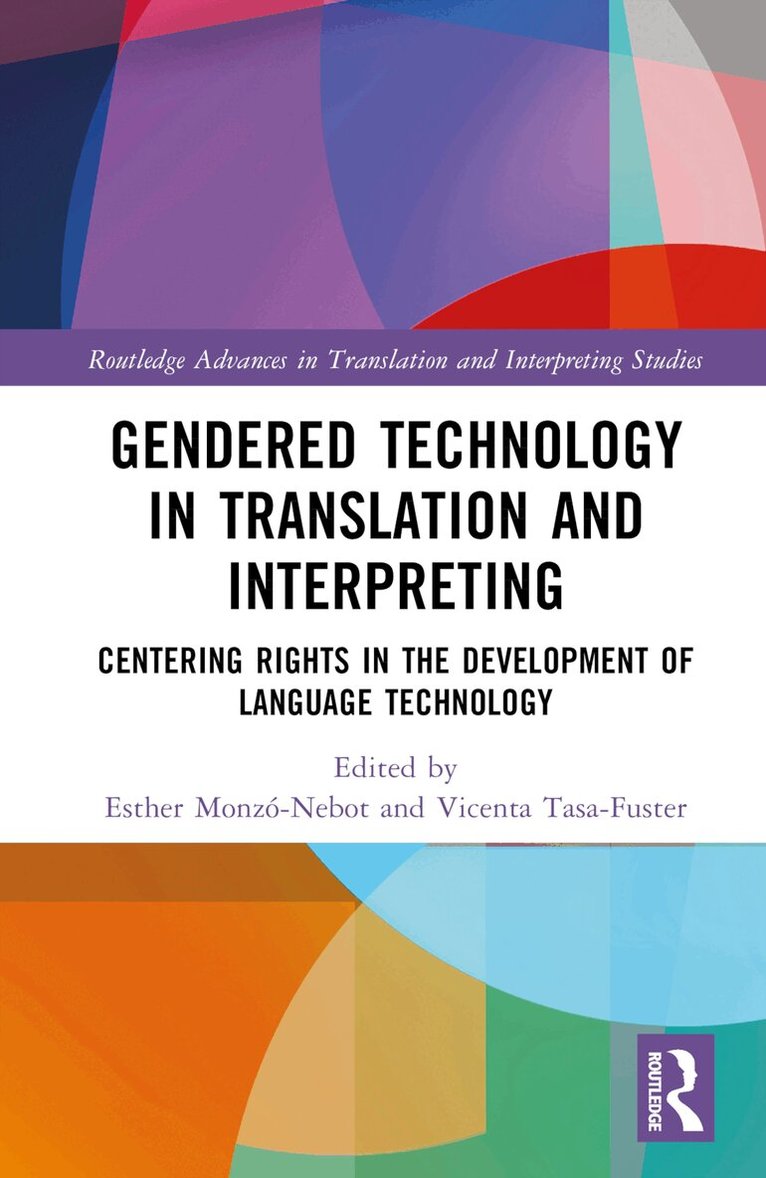
    Gendered Technology in Translation and Interpreting

    Centering Rights in the Development of Language Technology

    AvEsther Monzó-Nebot,Vicenta Tasa-Fuster

    Inbunden, Engelska, 2024

    Del i serien Routledge Advances in Translation and Interpreting Studies

    2 229 kr

    Beställningsvara. Skickas inom 10-15 vardagar. Fri frakt över 249 kr.

    Beskrivning

    This collection takes an interdisciplinary approach to the study of gendered technology, an emerging area of inquiry that draws on a range of fields to explore how technology is designed and used in a way that reinforces or challenges gender norms and inequalities.The volume explores different perspectives on the impact of technology on gender relations through specific cases of translation and interpreting technologies. In particular, the book considers the slow response of legal frameworks in dealing with the rise of language-based technologies, especially machine translation and large language models, and their impacts on individual and collective rights. Part I introduces the study of gendered technologies at this intersection of legal and translation and interpreting research, before moving into case studies of specific technologies. The cases explored in Parts II and III discuss the impact of interpreting and translation technologies on language professionals, language communities, and gender inequalities, while stressing the future needs of gendered technology, particularly machine translation. Taken together, the collection demonstrates the value of a cross-disciplinary approach in better understanding how language technologies can be harnessed to address discrimination and contribute to growing discussions on gender equality and social justice at the intersection of technology and translation.This book will be of interest to scholars in translation and interpreting studies, gender studies, language technologies, and language and the law.The Open Access version of this book, available at Home | Taylor & Francis eBooks, Reference Works and Collections , has been made available under a Creative Commons Attribution-Non Commercial-No Derivatives (CC BY-NC-ND) 4.0 license.

    Produktinformation

    • Utgivningsdatum:2024-07-18
    • Mått:152 x 229 x 22 mm
    • Vikt:453 g
    • Format:Inbunden
    • Språk:Engelska
    • Serie:Routledge Advances in Translation and Interpreting Studies
    • Antal sidor:314
    • Förlag:Taylor & Francis Ltd
    • ISBN:9781032736969

    Utforska kategorier

    • Lag och samhälle inom Juridik
    • Socialrätt och hälso- och sjukvårdsrätt inom Juridik
    • Genusvetenskap inom Samhälle och politik

    Mer om författaren

    Esther Monzó-Nebot is Associate Professor in Translation and Interpreting Studies in the Department of Translation and Communication Studies at Universitat Jaume I, Spain.Vicenta Tasa-Fuster is Assistant Professor of Constitutional Law in the Department of Constitutional Law and Political Science and Administration at Universitat de Valencia, Spain.

    Recensioner i media

    "Gendered Technology in Translation and Interpreting dismantles the myth of neutrality shrouding language technologies, unveiling embedded gender and language hierarchies, and advocates for more equitable technology design and use....Against the surging tides of technology, this volume stands as a levee – forged with empirical rigour, feminist fury, and an unshakeable belief in intersectional justice."- Minlin Yu, Lecturer in Translation Studies with Chinese Mandarin (School of Modern Languages & Cultures), University of Glasgow"The compilation effectively highlights how TI technologies risk perpetuating gender inequalities in both their design and use."- Argelia Peña-Aguilar, Universidad Autónoma del Estado de Quintana Roo | University of Ottawa

    Innehållsförteckning

    • Part I: Introduction1. The Omnirelevance of Gendered Technology: Translation, Interpreting, and the Law Esther Monzó-Nebot and Vicenta Tasa-Fuster2. The Legal Rationales of the Leading Technological Models: The Challenges of Regulating Linguistic and Gender Biases Vicenta Tasa-FusterPart II: Interpreting and Gendered and Gendering Technology3. Deconstructing the En-Gendering Binary Mechanisms of Interpreting Technologies: A Posthumanist Feminist Inquiry Deborah Giustini4. Remote Interpreting and the Politics of Diversity: The Lived Experiences of LGBTIQ+ Interpreters in International Organizations Esther Monzó-Nebot5. Gendered Approaches to Remote Interpreting: A Booth of One’s Own Ozum Arzik-Erzurumlu6. Is Self-care a Gendered Behavior for Interpreters? Self-reported Practices of Australian and New Zealand Community Interpreters Going Remote During the Pandemic Ineke H. Crezee and Miranda LaiPart III: Present and Future of Gendered and Gendering Automated Translation7. The Role of Human Translators in the Human-Machine Era: Assessing Gender Neutrality in Galician Machine and Human Translation Marta García González8. Gender Bias and Women’s Rights in the Workplace: The Potential Impact of English–German Translation Tools Jasmina P. Đorđević 9. Gender Bias in Machine Translation and The Era of Large Language Models Eva Vanmassenhove10. Exploring Gender Bias in Machine Translation of Legal Texts Celia Rico Pérez and Antonio Jesús Martínez Pleguezuelos11. Misgendering and Assuming Gender in Machine Translation when Working with Low-Resource Languages Sourojit Ghosh and Srishti ChatterjeePart IV: Conclusion12. The Tech Landscape in Translation and Interpreting: Gender Inequalities, Language Hierarchies, and the Call for a Level Playing Field Esther Monzó-Nebot and Vicenta Tasa-Fuster