• Fri frakt över 249 kr
  • •
  • Snabba leveranser
  • •
  • Billiga böcker
Kundservice

Du är på sajten för privatpersoner.

Företag, bibliotek eller offentlig verksamhet?

Du handlar på classic.bokus.com, där alla dina funktioner finns intakta.
Till classic.bokus.com
Bokus logotyp. Gå till startsidan.
  • Erbjudanden
  • Nyheter
  • Student
  • Topplistor
  • Barn & ungdom
  • Bokus Play
  • E-böcker
  • Pocketböcker
  • Spel & pussel

10% rabatt på allt med kod: NYSTART10 →

Sidfot

Mina sidor

    Hjälp

    • Kundservice
    • Vanliga frågor och svar
    • Frakt och leverans
    • Retur vid ångerrätt
    • Reklamera vara
    • Betalning
    • Köpvillkor
    • Allmänna villkor
    • Information om webbplatsens tillgänglighet

    Om Bokus

    • Om oss
    • Pressrum
    • För studenter
    • För företag
    • För bibliotek och offentlig verksamhet
    • För leverantörer
    • Hållbarhet

    Populärt

    • Aktuella erbjudanden
    • Presentkort
    • Studentlitteratur
    • Nya böcker
    • Topplistor
    • Signerade böcker
    • Engelska böcker

    Inspiration

    • Boktips
    • BookTok
    • Populära bokserier
    • Barnbokskaraktärer
    • Populära författare
    Logotyp för Bokus
    Följ oss på Facebook (extern länk)Följ oss på Instagram (extern länk)Följ oss på YouTube (extern länk)Följ oss på TikTok (extern länk)
    bokus @ CookiesAnpassa cookiesIntegritetspolicyKöpvillkor
    Till Citymail hemsida (extern länk)Till Budbee hemsida (extern länk)Till Postnord hemsida (extern länk)Till Schenker hemsida (extern länk)Till Early Bird hemsida (extern länk)Till Walleys hemsida (extern länk)
    1. Samhälle och politik
    2. Samhälle och kultur
    3. Kultur och medier
    4. Referensverk och tvärvetenskap

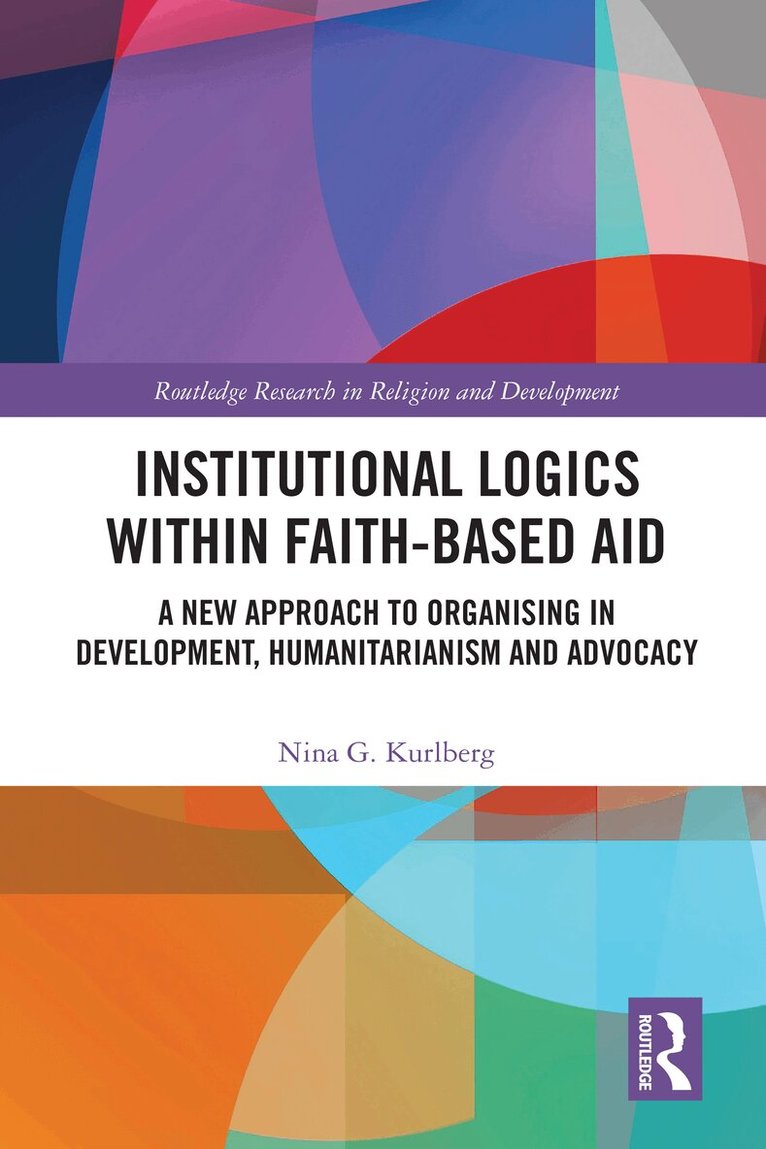
    Institutional Logics within Faith-Based Aid

    A New Approach to Organising in Development, Humanitarianism and Advocacy

    AvNina G. Kurlberg

    Häftad, Engelska, 2025

    Del i serien Routledge Research in Religion and Development

    701 kr

    Beställningsvara. Skickas inom 10-15 vardagar. Fri frakt över 249 kr.

    Fler format och utgåvor

    Inbunden

    2 493 kr

    E-bok

    829 kr

    E-bok

    829 kr

    Beskrivning

    This book investigates what faith means in the actual day-to-day practice of faith-based NGOs working in the development, humanitarian, and advocacy sectors.Faith-based organisations play an extremely prominent role in international aid and development, operating within the same sphere as organisations without an explicit religious affiliation. This book uses the case study of a UK-based Christian faith-based organisation to develop an analytic tool using institutional logics. Through exploration of how various institutional logics are manifested and negotiated across organisational practice, the book describes how the ‘telos,’ or objective, of the corporate logic (to sustain the organisation) interacts with the telos of the religious logic (namely, to worship God). The book demonstrates that since organisational practices must ultimately work to sustain the organisation, at the organisational level faith is restricted to certain spaces and forms, while at the individual level faith is dominant and active.Bringing a fresh perspective to discussions of religion and development by highlighting how faith influences development at the organisational level, this book will be an important read for researchers working on global development.

    Produktinformation

    • Utgivningsdatum:2025-11-28
    • Mått:156 x 234 x 10 mm
    • Vikt:280 g
    • Format:Häftad
    • Språk:Engelska
    • Serie:Routledge Research in Religion and Development
    • Antal sidor:170
    • Förlag:Taylor & Francis Ltd
    • ISBN:9781032770109

    Utforska kategorier

    • Referensverk och tvärvetenskap inom Samhälle och politik
    • Organisationsteori inom Ekonomi och Ledarskap
    • Organisation och ägarskap inom Ekonomi och Ledarskap

    Mer om författaren

    Nina G. Kurlberg is Postdoctoral Research Associate at Durham University. In her PhD (University of Edinburgh, 2023), she used the lens of institutional logics to explore what the faith orientation of faith-based organisations means in actual practice. Nina has worked within the international development sector for nearly a decade, both in the UK and Sri Lanka. Most recently, she worked for Tearfund – a Christian relief, development, and advocacy organisation – developing theology in the area of diversity and inclusion (D&I). Nina is co-editor of Theologies and Practices of Inclusion and Disability Inclusion in Africa.

    Recensioner i media

    “In this impressive book Nina Kurlberg offers us a new lens for examining the operations of large faith-based organisations that takes seriously what their faith orientation means in actual practice. This suggests a new approach in the study of religion and development, of interest to scholars, development actors and faith-based organisations themselves.” Emma Tomalin, Professor of Religion and Public Life, University of Leeds “A valuable analysis of faith-based organisations that takes seriously the complex space between individual and collective identities. Nina Kurlberg carefully explores how religion is embedded in the institutional logics that frame aid and development work across the world today.”Mathew Guest, Professor in the Sociology of Religion, Durham University “Nina Kurlberg's book is a must-read for those interested in faith-based organisations (FBOs), offering a compelling and nuanced examination of their practice. By introducing a new perspective and developing an analytical tool based on it, Kurlberg provides a valuable framework for future studies in this field.”Gry Espedal, Theologian and Associate Professor at VID specialized University, Oslo, Norway

    Innehållsförteckning

    • IntroductionFaith-Based Organisations (FBOs)FBOs within religions and developmentUnderstanding and researching FBOsRoadmap to the institutional logics perspective A critique of the existing frameworks The institutional logics perspective Overview of the book Structure Defining key terms 1 The institutional logics perspective in research Theoretical framework The institutional logics perspective Theoretical contribution of the book The significance of the field The field and the institutional logics perspective The field and FBOs Empirical research Developing a field-level typology of logics Methods of data collection Conclusion 2 Institutional logics within the practice of aid The historical roots of the practice of aid The emergence of development The emergence of humanitarianism The emergence of ‘long-distance advocacy’ The practice of aid post-WWII The post-WWII period The establishment of the sector The increasing professionalisation of aid The influence of the logics of corporation and market on organisational practice Key aspects of logics evidenced within the practice of aid post-WWII Conclusion 3 Institutional logics within the field Constructing a field-level typology of logics Identifying a suitable subcomponent of the field The process The typology of logics The logics The categories Conclusion 4 Institutional logics within a UK-Based FBO Data collection and processing Data collection Method for processing the data Data analysis Logics at the organisational level according to the typology Conclusion 5 Christian organising through the lens of institutional logics What institutional logics are in force and how are they manifested within the organisation? The logic of long-term sustainability The logic of impact The logic of participation and consensus-building The logic of pastoral care and support How do individual actors negotiate these logics on a daily basis? What role does the logic of religion play, and how does it interact with other institutional logics? What does the faith orientation of FBOs mean in practice? What questions is the FBO asking in this regard? How does faith actually influence organisational practice? Conclusion ConclusionSummary of argument Contribution of book Contribution to the study of FBOs in religions and development Contribution to the institutional logics perspective What next?