• Fri frakt över 249 kr
  • •
  • Snabba leveranser
  • •
  • Billiga böcker
Kundservice

Du är på sajten för privatpersoner.

Företag, bibliotek eller offentlig verksamhet?

Du handlar på classic.bokus.com, där alla dina funktioner finns intakta.
Till classic.bokus.com
Bokus logotyp. Gå till startsidan.
  • Erbjudanden
  • Nyheter
  • Student
  • Topplistor
  • Barn & ungdom
  • Bokus Play
  • E-böcker
  • Pocketböcker
  • Spel & pussel

10% rabatt på allt med kod NYSTART10 →

Sidfot

Mina sidor

    Hjälp

    • Kundservice
    • Vanliga frågor och svar
    • Frakt och leverans
    • Retur vid ångerrätt
    • Reklamera vara
    • Betalning
    • Köpvillkor
    • Allmänna villkor
    • Information om webbplatsens tillgänglighet

    Om Bokus

    • Om oss
    • Pressrum
    • För studenter
    • För företag
    • För bibliotek och offentlig verksamhet
    • För leverantörer
    • Hållbarhet

    Populärt

    • Aktuella erbjudanden
    • Presentkort
    • Studentlitteratur
    • Nya böcker
    • Topplistor
    • Signerade böcker
    • Engelska böcker

    Inspiration

    • Boktips
    • BookTok
    • Populära bokserier
    • Barnbokskaraktärer
    • Populära författare
    Logotyp för Bokus
    Följ oss på Facebook (extern länk)Följ oss på Instagram (extern länk)Följ oss på YouTube (extern länk)Följ oss på TikTok (extern länk)
    bokus @ CookiesAnpassa cookiesIntegritetspolicyKöpvillkor
    Till Citymail hemsida (extern länk)Till Budbee hemsida (extern länk)Till Postnord hemsida (extern länk)Till Schenker hemsida (extern länk)Till Early Bird hemsida (extern länk)Till Walleys hemsida (extern länk)
    1. Samhälle och politik
    2. Samhälle och kultur
    3. Sociala och etiska frågor
    4. Migration

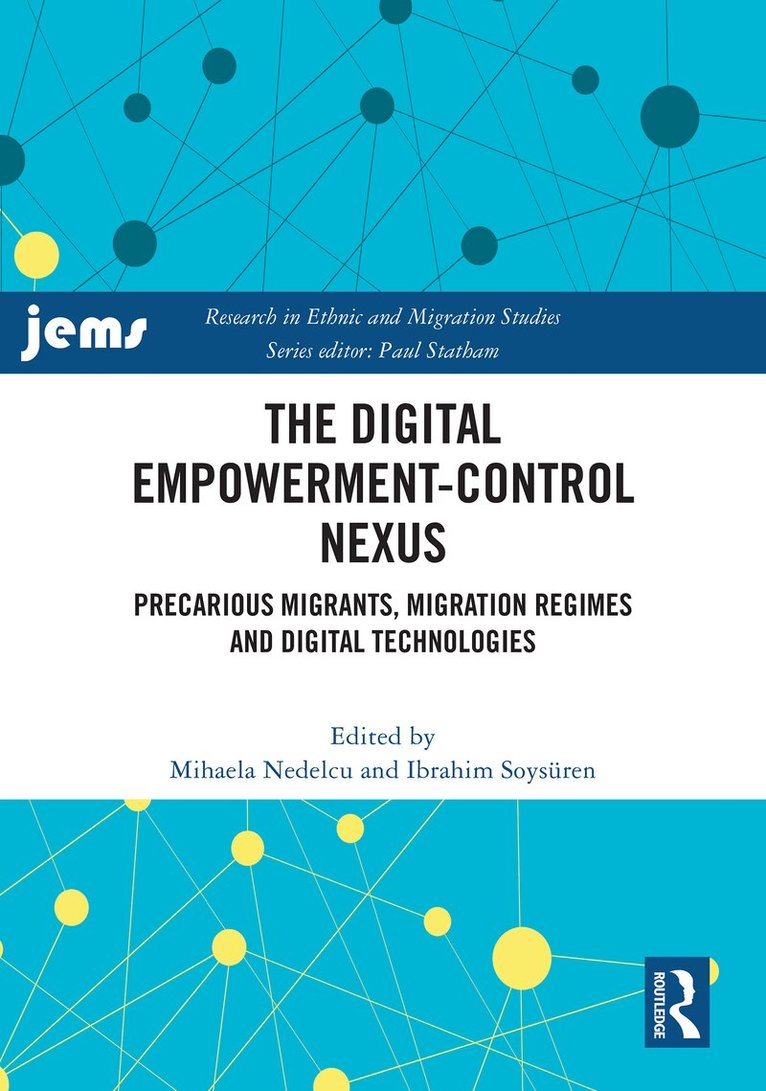
    Digital Empowerment-Control Nexus

    Precarious Migrants, Migration Regimes and Digital Technologies

    AvMihaela Nedelcu,Ibrahim Soysüren

    Inbunden, Engelska, 2024

    Del i serien Research in Ethnic and Migration Studies

    2 229 kr

    Beställningsvara. Skickas inom 10-15 vardagar. Fri frakt över 249 kr.

    Beskrivning

    This book analyses the diverse and complex interactions between the emancipatory practices of precarious (i.e. forced, vulnerable, undocumented or deported) migrants enabled by information and communication technologies, and the constraints imposed by technological tools used for surveillance and migration control. It explores the digital empowerment-control nexus by articulating the use of digital technologies - whether by migrants themselves, civil society actors or institutions - with their mediating role in the processes of empowerment, surveillance and migration control.Based on original empirical studies, the chapters bring contrasting and complementary insights into the use of digital technologies as agentic and/or surveillance tools in different national and supranational contexts (Turkey, Mexico, the United States, Switzerland, France, Romania, Greece and the European Union) and from different disciplinary perspectives (anthropology, sociology, geography, media studies, law and deportation studies). Using different theoretical lenses, they demonstrate the varying degrees of (dis)entanglement between individual and institutional practices, at micro and macro levels.Helping readers to understand the ambivalent role of digital technologies in (forced) migration processes, The Digital Empowerment-Control Nexus can be used as a resource by students, researchers, practitioners and policymakers interested in digitally mediated migration practices and migration regimes. It was originally published as a special issue of the Journal of Ethnic and Migration Studies.

    Produktinformation

    • Utgivningsdatum:2024-11-04
    • Mått:174 x 246 x 17 mm
    • Vikt:440 g
    • Format:Inbunden
    • Språk:Engelska
    • Serie:Research in Ethnic and Migration Studies
    • Antal sidor:144
    • Förlag:Taylor & Francis Ltd
    • ISBN:9781032875620

    Utforska kategorier

    • Migration inom Samhälle och politik
    • Medievetenskap inom Samhälle och politik
    • Migrations- och asylrätt inom Juridik

    Mer om författaren

    Mihaela Nedelcu is Titular Professor of Sociology at the University of Neuchâtel, Switzerland. Since her pioneering book Le migrant online (2009), she has developed her expertise in digital migration studies, focusing on transnational families, e-diasporas and e-borders.Ibrahim Soysüren is a senior researcher at the University of Neuchâtel, Switzerland. He has conducted comparative research on the deportation of foreigners and the use of biometric databases and has published extensively on these topics as well as on migration processes.

    Recensioner i media

    This collection, edited by Mihaela Nedelcu and Ibrahim Soysüren, promotes a critical and nuanced understanding of the contradictory mediating roles digital technologies play in the lives of migrants. The focus is on mobile subjects who are made precarious as a result of migration regimes, such as forced, vulnerable, undocumented and deported migrants. The articles demonstrate how the “digital empowerment-control nexus” is variously experienced on the ground, contributing to the interdisciplinary research area of digital migration studies by offering conceptual, methodological and empirical means to overcome binary either-or approaches. - Dr Koen Leurs, Associate Professor in Gender, Media and Migration Studies at the Graduate Gender Program, Department of Media and Culture, Utrecht University, the Netherlands.

    Innehållsförteckning

    • Introduction – Precarious migrants, migration regimes and digital technologies: the empowerment-control nexus 1. Empowering experiences of digitally mediated flows of information for connected migrants on the move 2. Navigating the Aegean Sea: smartphones, transnational activism and viapolitical in(ter)ventions in contested maritime borderzones 3. Bare life in an immigration jail: technologies of surveillance in U.S. pre-deportation detention 4. Deportation, smart borders and mobile citizens: using digital methods and traditional police activities to deport EU citizens 5. Bordering processes through the use of technology: the Turkish case 6. European instruments for the deportation of foreigners and their uses by France and Switzerland: the application of the Dublin III Regulation and Eurodac 7. The Schengen-wide entry ban: how are non-citizens’ personal data protected?