Inbunden, Engelska, 2025
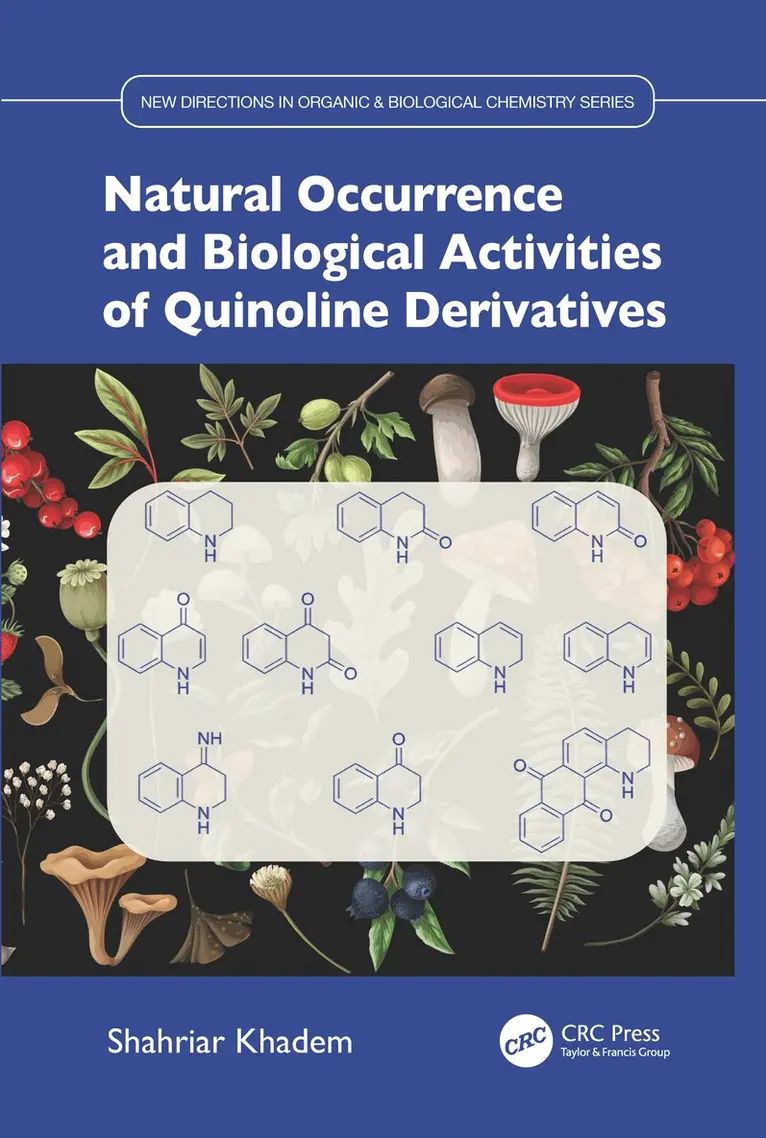
Natural Occurrence and Biological Activities of Quinoline Derivatives
Del i serien New Directions in Organic & Biological Chemistry
3173 kr
Beställningsvara. Skickas inom 10-15 vardagar. Fri frakt över 249 kr.
Beskrivning
Produktinformation
- Utgivningsdatum: 2025-12-28
- Mått: 156 x 234 x 29 mm
- Vikt: 1 010 g
- Format: Inbunden
- Språk: Engelska
- Serie: New Directions in Organic & Biological Chemistry
- Antal sidor: 450
- Förlag: Taylor & Francis Ltd
- ISBN: 9781032876566
Utforska kategorier
Mer om författaren
Dr. Shahriar Khadem Ph.D. is a chemist, holding B.Sc. and M.Sc. degrees from Ferdowsi University of Mashhad (Iran), and a Ph.D. from the University of Ottawa (Canada). With expertise gained from both academia and industry, he has gathered experience in diverse domains. Presently, he serves as a scientific evaluator and chemist at Health Canada, contributing to the field. His research focus spans organic synthesis, medicinal chemistry, and the exploration of natural products.
Recensioner i media
Quinoline derivatives are widespread in nature, being found naturally in plants, animals, fungi, and bacteria. While it is tempting to assume that their distribution across multiple kingdoms of life implies that the genes for these alkaloidal secondary metabolites are highly conserved, in fact, different lineages of organisms have evolved various biosynthetic pathways to create quinoline derivatives. Thus, their frequent occurrence in diverse organisms is more likely a case of convergent evolution. The biological activities of quinoline derivatives against viral, bacterial, protistan, and fungal pathogens, competing species, herbivores, and oxidative stress support a plausible hypothesis that these compounds confer survival advantages on their hosts.Biologically active quinolines are also being investigated as leads for the synthesis of candidate drugs. Successful examples include Cilostazol (a phosphodiesterase-3 inhibitor); Aripiprazole (an antipsychotic); Carteolol (a non-selective beta-blocker); Vesnarinone (a cardiotonic agent investigational for HIV infections and Kaposi sarcoma treatment); Palonosetron (blocks the action of serotonin at 5-hydroxytryptamine type 3 receptors competitively, preventing nausea and vomiting associated with surgery and chemotherapy); Gliquidone (shows antioxidant and anti-inflammatory effects, lessening diabetic nephropathy); Cilostamide (a potent inhibitor of phosphodiesterase 3 enzyme for acute heart failure and cardiogenic shock therapy); Linomide (both an immunostimulant and an angiogenesis inhibitor); Rebamipide (used for mucosal protection, gastroduodenal ulcer healing, and gastritis treatment); and Brexpiprazole (for treatment of mental disorders such as depression and schizophrenia). These diverse therapeutic indications illustrate the great potential for further discovery of new drugs based on the quinoline structural motif.Despite some notable successes in drug discovery and development, quinolines and their derivatives remain understudied. Recent reports about these compounds, scattered through the chemical, pharmacological, toxicological, and biological literature, have not been adequately compiled and evaluated. In the chapters that follow, the chemistry (including biosynthesis and synthetic approaches), natural occurrence, and biological activities of various chemical classes of quinoline derivatives are reviewed, with reflections on the implications of the current state of the science for drug discovery. Bringing together the latest advances in our knowledge and understanding of quinolines and their derivatives, with thoughtful analysis, this book provides a solid foundation for further research on this fascinating family of natural products.Robin J. Marles, Ph.D., is Scientist Emeritus, Health Products and Food Branch, Health Canada, Ottawa, Ontario. He was a former Associate Professor of Botany, Brandon University, Brandon, Manitoba, Canada.
Betyg & recensioner
0 recensioner
Inga recensioner tillgängliga.