• Fri frakt över 249 kr
  • •
  • Snabba leveranser
  • •
  • Billiga böcker
Kundservice

Du är på sajten för privatpersoner.

Företag, bibliotek eller offentlig verksamhet?

Du handlar på classic.bokus.com, där alla dina funktioner finns intakta.
Till classic.bokus.com
Bokus logotyp. Gå till startsidan.
  • Erbjudanden
  • Nyheter
  • Student
  • Topplistor
  • Barn & ungdom
  • Bokus Play
  • E-böcker
  • Pocketböcker
  • Spel & pussel

10% rabatt på allt med kod NYSTART10 →

Sidfot

Mina sidor

    Hjälp

    • Kundservice
    • Vanliga frågor och svar
    • Frakt och leverans
    • Retur vid ångerrätt
    • Reklamera vara
    • Betalning
    • Köpvillkor
    • Allmänna villkor
    • Information om webbplatsens tillgänglighet

    Om Bokus

    • Om oss
    • Pressrum
    • För studenter
    • För företag
    • För bibliotek och offentlig verksamhet
    • För leverantörer
    • Hållbarhet

    Populärt

    • Aktuella erbjudanden
    • Presentkort
    • Studentlitteratur
    • Nya böcker
    • Topplistor
    • Signerade böcker
    • Engelska böcker

    Inspiration

    • Boktips
    • BookTok
    • Populära bokserier
    • Barnbokskaraktärer
    • Populära författare
    Logotyp för Bokus
    Följ oss på Facebook (extern länk)Följ oss på Instagram (extern länk)Följ oss på YouTube (extern länk)Följ oss på TikTok (extern länk)
    bokus @ CookiesAnpassa cookiesIntegritetspolicyKöpvillkor
    Till Citymail hemsida (extern länk)Till Budbee hemsida (extern länk)Till Postnord hemsida (extern länk)Till Schenker hemsida (extern länk)Till Early Bird hemsida (extern länk)Till Walleys hemsida (extern länk)
    1. Psykologi och pedagogik
    2. Psykologi
    3. Psykologiska teorier och skolor
    4. Freudiansk psykologi

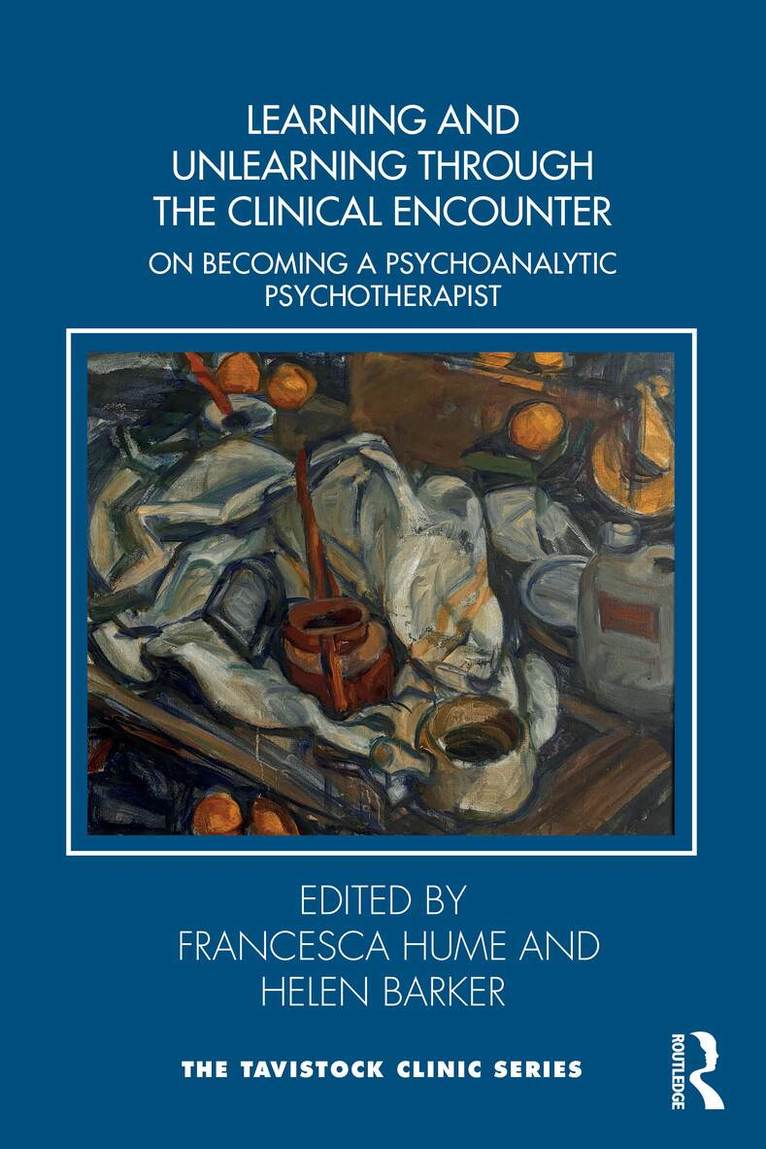
    Learning and Unlearning through the Clinical Encounter

    Becoming a Psychoanalytic Psychotherapist

    AvFrancesca Hume,Helen Barker

    Häftad, Engelska, 2025

    Del i serien Tavistock Clinic Series

    542 kr

    Beställningsvara. Skickas inom 10-15 vardagar. Fri frakt över 249 kr.

    Beskrivning

    This book examines the learning process involved in becoming a psychoanalytic practitioner and presents training experiences at the Tavistock and Portman NHS Foundation Trust through the lens of both teachers and trainees.The book describes the relevant history at the Tavistock and how psychoanalytic knowledge is acquired through a process of learning from experience and the fostering of a culture of enquiry. The contributors also present their interpretations of what is meant by analytic learning and how this is acquired for a psychoanalytic attitude to become possible. The book includes a mix of chapters by more experienced clinicians setting out what can be useful in training, balanced by other chapters from more recent trainees who reflect on their development and experience of that training. Other important sections focus on the experience and importance of supervision and on how to respond to clinical challenges in training and practice, specifically public-sector-based trainings.With rich clinical vignettes and personal reflections on training experiences, this book is key reading for all psychoanalysts and psychotherapists involved or interested in training.

    Produktinformation

    • Utgivningsdatum:2025-05-13
    • Mått:156 x 234 x 22 mm
    • Vikt:500 g
    • Format:Häftad
    • Språk:Engelska
    • Serie:Tavistock Clinic Series
    • Antal sidor:300
    • Förlag:Taylor & Francis Ltd
    • ISBN:9781032901916

    Utforska kategorier

    • Freudiansk psykologi inom Psykologi och pedagogik
    • Psykoterapi som behandlingsmetod inom Medicin
    • Studievägledning och yrkesorientering inom Psykologi och pedagogik

    Mer om författaren

    Francesca Hume worked for over 25 years at the Tavistock, where, for 14 years, she ran the Adult Psychoanalytic Psychotherapy Training (M1). She first trained as a clinical psychologist and is now a Training Analyst of the British Psychoanalytical Society. She supervises and teaches in the United Kingdom and abroad.Helen Barker is a psychoanalyst, now in full time private practice, with a background in psychiatry. She worked in the Adult Department of the Tavistock Clinic as a clinician and supervisor for 18 years.

    Recensioner i media

    'This remarkable book occupies a unique position in its capacity to show the how of learning what might be best called a psychoanalytic attitude. This particular orientation towards a patient and towards mental suffering has a very wide reference, as this book amply demonstrates. Foundational to this, is that such an attitude cannot be learnt as if it were a technique to be applied, but instead requires an engagement with an evolving process, a process that any trainee necessarily goes though, and something that continues throughout one's professional life. It shows how the trainee learns from experience, makes mistakes but then finds that understanding the mistake, really thinking it through rather than dismissing it, provides a new insight into the nature of the work and of one’s own relation to it. This dialectical way of thinking, where a “mistake” is not just something to be avoided or corrected but becomes the basis for an evolution of thought, has been part of psychoanalysis since Freud's very early papers where what seemed at first like mistakes, became the source of a new orientation to the work.Having established this central theme of the work, the book goes on to show its very wide reference. We are given a kind of window on the development of the trainees as psychanalytic psychotherapists and this encompasses some very varied themes and situations including those that affect the setting such as the therapist’s pregnancy, issues of cultural and sexual diversity, etc. The whole book is held together by the editors' overarching vision in the provision of an introduction to each section. In this way they give us not only a model way of presenting this work but one gets a profound sense of their extraordinary skill and commitment in leading this world renowned training which has been the absolute core of adult psychoanalysis at the Tavistock. It is a unique book - an overused word I know but there really is nothing to compare to it in terms of proving a model for training in psychoanalytic thinking. As such it will occupy a very important position in the psychoanalytic literature of considerable relevance not only to psychoanalytic psychotherapy and to psychoanalysis but broadly but to all those varied settings in which psychoanalyse can make a contribution. Any mental health practitioner will also find a great deal to stimulate thought about their work.'David Bell'This important book describing the training of psychoanalytic psychotherapists will interest all those involved in education or indeed anyone wishing to foster curiosity and learning. It gives priority to learning from experience rather than from books and teachers and specifically focuses on what has become known as the psychoanalytic attitude. The central aim in training is to understand the patient and the interaction with the therapist, setting to one side the question of how to help the patient directly. The authors show that for many trainees this means the unlearning of the more usual approach of directly trying to offer relief and reassurance. This commonly means that pain and sorrow have to be endured at least until they are better understood.The authors admirably illustrate the personal struggle that must be worked through in chapters provided by both trainees and trainers. It is a fascinating account that is all the more remarkable from an NHS service that continues to be underfunded and undervalued.'John Steiner'This is a brave and uncompromising book. Learning how to become a psychoanalytic psychotherapist is its main theme. This book should be an inspiration to those who value in-depth approaches to mental health and well-being.'Michael Rustin

    Innehållsförteckning

    • Part I: Teaching and learning1. Education at the Tavistock and the development of an adult psychanalytic psychtherapy training Francesca Hume2. On the acquisitio of psychoanalytic knowledge and attitude: fostering development and learning from experienceFrancesca HumePart II: Learning and unlearning3. Trainee selection and the challenge of experiential learningFrancesca Hume4.On not knowingEra Trieman5. Up or down; life or death Anne McKay6. The elephant tied up with string Simon Shaw7. There are two in the room Malika Verma8. One groove’s difference: on unlearning psychiatryAlan Baban9. Becoming a psychoanalytic psychotherapist: learning and unlearning, identity and citizenshipRachel Hodgins10. Learning through supervision Francesca Hume Part III: Learning about the transference and countertransference11. Transference and countertransferenceFrancesca Hume12. Not just any old bowl Michelle Washington13. Should I stay or should I go? Thomas Hillen14. The shape of things to come Viv Walkerdine15. From incorporation to introjection and mourning: parallel processes in both patient and trainee Diane Turner16. On being guided by the countertransference Carolyn WalkerPart IV: Learning through clinical challenges17. A death during the pandemicLouise Barnard18. When the worst thing happenedSusan Baldock19. The impact of the therapist’s pregnancy in a training case Avgoustina Almyroudi20. “I would prefer not to”: a man in terror of his own mind Devayani Shevade21. The Ghost Ship: a reflection on working in the Tavistock during the Covid-19 pandemic Alan Baban22. Lost in the dark: my first training patient and working on the telephoneDenise Hurst HastingsPart V: Diversity23. Insiders and outsiders: some thoughts on diversity and psychanalysisFrancesca Hume24. Thinking about sexual diversity in psychoanalytic training Poul Rohleder25. Hiding in plain sight: a personal experience of being black on the M1 course Diane Turner26. On my diversity and the M1 training. Reziya HarrisonPart VI: Some final reflections23. A changing NHS and threats to the integrity of the M1 training: can we keep a culture of enquiry? Francesca Hume24. Final reflections. Francesca Hume