• Fri frakt över 249 kr
  • •
  • Snabba leveranser
  • •
  • Billiga böcker
Kundservice

Du är på sajten för privatpersoner.

Företag, bibliotek eller offentlig verksamhet?

Du handlar på classic.bokus.com, där alla dina funktioner finns intakta.
Till classic.bokus.com
Bokus logotyp. Gå till startsidan.
  • Erbjudanden
  • Nyheter
  • Student
  • Topplistor
  • Barn & ungdom
  • Bokus Play
  • E-böcker
  • Pocketböcker
  • Spel & pussel

Må bättre, för mindre! Upp till 50% rabatt på hälsoböcker

Sidfot

Mina sidor

    Hjälp

    • Kundservice
    • Vanliga frågor och svar
    • Frakt och leverans
    • Retur vid ångerrätt
    • Reklamera vara
    • Betalning
    • Köpvillkor
    • Allmänna villkor
    • Information om webbplatsens tillgänglighet

    Om Bokus

    • Om oss
    • Pressrum
    • För studenter
    • För företag
    • För bibliotek och offentlig verksamhet
    • För leverantörer
    • Hållbarhet

    Populärt

    • Aktuella erbjudanden
    • Presentkort
    • Studentlitteratur
    • Nya böcker
    • Topplistor
    • Signerade böcker
    • Engelska böcker

    Inspiration

    • Boktips
    • BookTok
    • Populära bokserier
    • Barnbokskaraktärer
    • Populära författare
    Logotyp för Bokus
    Följ oss på Facebook (extern länk)Följ oss på Instagram (extern länk)Följ oss på YouTube (extern länk)Följ oss på TikTok (extern länk)
    bokus @ CookiesAnpassa cookiesIntegritetspolicyKöpvillkor
    Till Citymail hemsida (extern länk)Till Budbee hemsida (extern länk)Till Postnord hemsida (extern länk)Till Schenker hemsida (extern länk)Till Early Bird hemsida (extern länk)Till Walleys hemsida (extern länk)
    1. Psykologi och pedagogik
    2. Pedagogik
    3. Pedagogik: historia

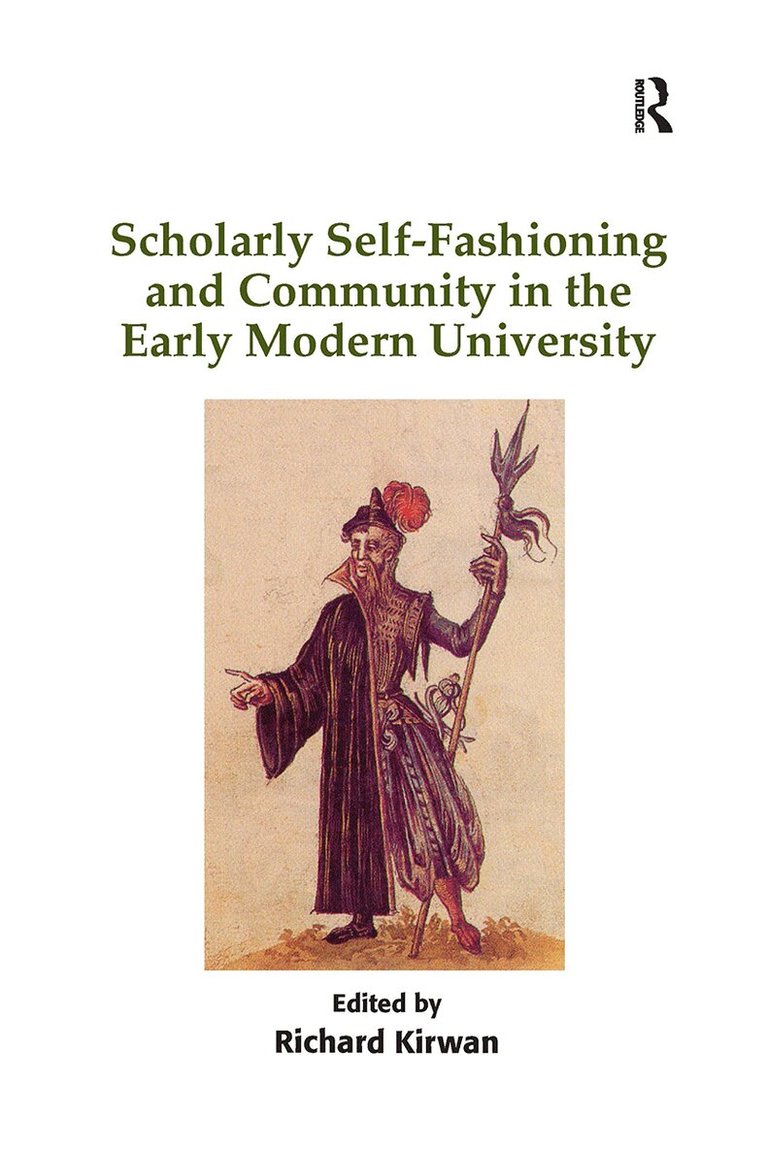
    Scholarly Self-Fashioning and Community in the Early Modern University

    AvRichard Kirwan

    Häftad, Engelska, 2024

    629 kr

    Beställningsvara. Skickas inom 10-15 vardagar. Fri frakt över 249 kr.

    Beskrivning

    A greater fluidity in social relations and hierarchies was experienced across Europe in the early modern period, a consequence of the major political and religious upheavals of the sixteenth and seventeenth centuries. At the same time, the universities of Europe became increasingly orientated towards serving the territorial state, guided by a humanistic approach to learning which stressed its social and political utility. It was in these contexts that the notion of the scholar as a distinct social category gained a foothold and the status of the scholarly group as a social elite was firmly established. University scholars demonstrated a great energy when characterizing themselves socially as learned men. This book investigates the significance and implications of academic self-fashioning throughout Europe in the early modern period. It describes a general and growing deliberation in the fashioning of individual, communal and categorical academic identity in this period. It explores the reasons for this growing self-consciousness among scholars, and the effects of its expression - social and political, desired and real.

    Produktinformation

    • Utgivningsdatum:2024-10-14
    • Mått:156 x 234 x 12 mm
    • Vikt:453 g
    • Format:Häftad
    • Språk:Engelska
    • Antal sidor:230
    • Förlag:Taylor & Francis Ltd
    • ISBN:9781032926278

    Utforska kategorier

    • Pedagogik: historia inom Psykologi och pedagogik
    • Högskola och universitet inom Psykologi och pedagogik
    • Europas historia inom Historia och arkeologi

    Mer om författaren

    Richard Kirwan is a Lecturer in History at the University of Limerick. His main research interests lie in the social and cultural history of early modern universities, early modern elites, and print culture. His first monograph, Empowerment and Representation at the University in Early Modern Germany: Helmstedt and Würzburg, 1576-1634, was published by Harrassowitz in Kommission in 2009.

    Recensioner i media

    'All these chapters in this very fine book of essays focused on cogent examples of early modern European academic self-fashioning. All authors utilized good to excellent sources on academics and professors in German, French, and English universities. This volume is an essential read for all students of early modern European social history.' Sixteenth Century Journal 'This extremely interesting collection of essays draws on a wide range of theories about the idea of self-fashioning to explore how it functioned in both an individual and a collective sense in the early modern university. It is the careful use of theory, illuminating without being pretentious, and the wide range of sources sensitively used ... that make the volume methodologically convincing and useful for future research. ... This book is of enormous relevance to all who are interested in the history of universities, and also has far-reaching implications for such study in other periods.' Renaissance Quarterly ’...a worthwhile contribution to the history of universities and represents one more way in which Greenblatt’s concept of self-fashioning can be applied to early modern history.’ Journal of Early Modern History

    Innehållsförteckning

    • Introduction Scholarly Self-Fashioning and the Cultural History of Universities, Richard Kirwan; Chapter 1 The Ideal Student: Manuals of Student Behaviour in Early Modern Italy, Jonathan Davies; Chapter 2 Academic Exchanges: Letters, the Reformation and Scholarly Self-Fashioning, Kenneth Austin; Chapter 3 Johannes Eck (1486–1543): Academic Career and Self-Fashioning around 1500, Ingo Trüter; Chapter 4 From Individual to Archetype: Occasional Texts and the Performance of Scholarly Identity in Early Modern Germany, Richard Kirwan; Chapter 5 A Struggle for Nobility: ‘Nobilitas literaria’ as Academic Self-Fashioning in Early Modern Germany, Marian Füssel; Chapter 6 The Social Metaphysics of Professors: Divine Providence, Academic Charisma and Witchcraft, Andreas Corcoran; Chapter 7 The Idolater John Owen? Linguistic Hegemony in Cromwell’s Oxford, Gráinne McLaughlin; Chapter 8 Irish Student Identity at the University of Paris: A Case Study, Jason Harris;