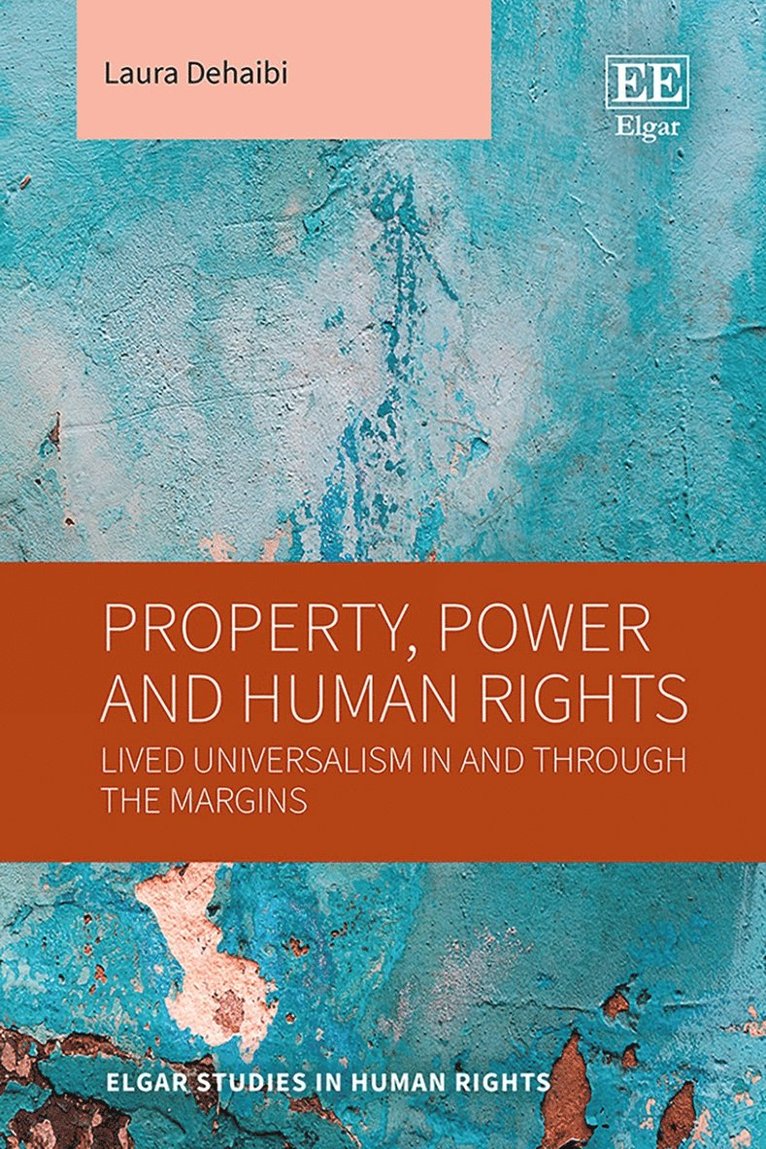
Inbunden, Engelska, 2024
Property, Power and Human Rights
Lived Universalism In and Through the Margins
Del i serien Elgar Studies in Human Rights
1723 kr
Beställningsvara. Skickas inom 7-10 vardagar. Fri frakt över 249 kr.
Beskrivning
Produktinformation
- Utgivningsdatum: 2024-02-23
- Mått: 156 x 234 x undefined mm
- Format: Inbunden
- Språk: Engelska
- Serie: Elgar Studies in Human Rights
- Förlag: Edward Elgar Publishing Ltd
- ISBN: 9781035313907
Utforska kategorier
Mer om författaren
Laura Dehaibi, Professor of Labour & Employment Law, Department of Industrial Relations, Laval University, Canada
Recensioner i media
‘In Property, Power and Human Rights, Laura Dehaibi disentangles the all-too-dominant Western liberal conception of property from a human right to property. In conceiving of property as a human right, Dehaibi provides a critical methodology formulated through insights from Third World Approaches to International Law (TWAIL), critical legal theory, law & society, and a range of legal cases involving claimants in the Global South or marginalized populations in Europe. She offers a powerful argument for the necessity of a nuanced, contextualized approach to property, inclusive of social relations, political and power dimensions, and lived experiences with land, particularly for those on the edges of ownership. In other words, she gives her readers not just an alternative substantive understanding of property relations but rather an alternative method to conceive of property, one which dethrones the individualistic, capitalist and market-oriented one often found in jurisprudence and commentary in favor of a critical, grounded, and dialogical approach.’
Betyg & recensioner
0 recensioner
Inga recensioner tillgängliga.