• Fri frakt över 249 kr
  • •
  • Snabba leveranser
  • •
  • Billiga böcker
Kundservice

Du är på sajten för privatpersoner.

Företag, bibliotek eller offentlig verksamhet?

Du handlar på classic.bokus.com, där alla dina funktioner finns intakta.
Till classic.bokus.com
Bokus logotyp. Gå till startsidan.
  • Erbjudanden
  • Nyheter
  • Student
  • Topplistor
  • Barn & ungdom
  • Bokus Play
  • E-böcker
  • Pocketböcker
  • Spel & pussel

10% rabatt på allt med kod: NYSTART10 →

Sidfot

Mina sidor

    Hjälp

    • Kundservice
    • Vanliga frågor och svar
    • Frakt och leverans
    • Retur vid ångerrätt
    • Reklamera vara
    • Betalning
    • Köpvillkor
    • Allmänna villkor
    • Information om webbplatsens tillgänglighet

    Om Bokus

    • Om oss
    • Pressrum
    • För studenter
    • För företag
    • För bibliotek och offentlig verksamhet
    • För leverantörer
    • Hållbarhet

    Populärt

    • Aktuella erbjudanden
    • Presentkort
    • Studentlitteratur
    • Nya böcker
    • Topplistor
    • Signerade böcker
    • Engelska böcker

    Inspiration

    • Boktips
    • BookTok
    • Populära bokserier
    • Barnbokskaraktärer
    • Populära författare
    Logotyp för Bokus
    Följ oss på Facebook (extern länk)Följ oss på Instagram (extern länk)Följ oss på YouTube (extern länk)Följ oss på TikTok (extern länk)
    bokus @ CookiesAnpassa cookiesIntegritetspolicyKöpvillkor
    Till Citymail hemsida (extern länk)Till Budbee hemsida (extern länk)Till Postnord hemsida (extern länk)Till Schenker hemsida (extern länk)Till Early Bird hemsida (extern länk)Till Walleys hemsida (extern länk)
    1. Psykologi och pedagogik
    2. Pedagogik
    3. Skolan och förskolan

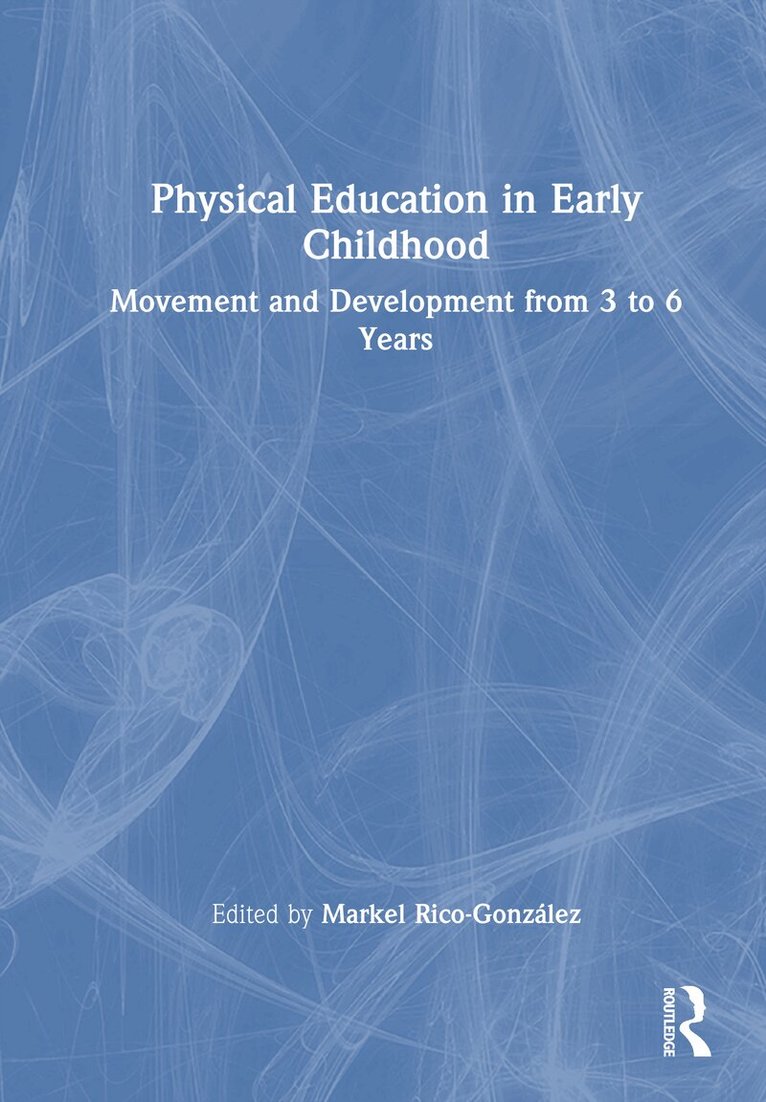
    Physical Education in Early Childhood

    Movement and Development from 3 to 6 Years

    AvMarkel Rico-González

    Inbunden, Engelska, 2025

    2 352 kr

    Beställningsvara. Skickas inom 10-15 vardagar. Fri frakt över 249 kr.

    Beskrivning

    This book provides a scientific foundation for the design of physical education and movement education in early childhood, focusing on the key development stage between 3 and 6 years of age.Drawing on cutting-edge contemporary research, the book examines physical education as a process for promoting holistic development and well-being of children from 3 to 6 years old and introduces developmental milestones across motor, cognitive, social, and emotional competencies. It examines the evidence base in core areas including teaching strategies for each of the main competencies, health, and inclusion, and explores advanced topics in early years education as applied to movement, including the use of technology and artificial intelligence in early childhood.This book is important for teacher educators, trainee teachers, and in-service practitioners with an interest in early years education, in general, and in physical education in early childhood, in particular.

    Produktinformation

    • Utgivningsdatum:2025-10-29
    • Mått:174 x 246 x 39 mm
    • Vikt:1 180 g
    • Format:Inbunden
    • Språk:Engelska
    • Antal sidor:562
    • Förlag:Taylor & Francis Ltd
    • ISBN:9781041016182

    Utforska kategorier

    • Skolan och förskolan inom Psykologi och pedagogik
    • Undervisning i specifika ämnen inom Psykologi och pedagogik

    Mer om författaren

    Markel Rico-González is Assistant Professor in the Department of Didactics of Musical, Plastic and Corporal Expression, University of the Basque Country (UPV-EHU), Spain. He is the author of more than 90 scientific articles in journals and more than 20 book chapters, and is also co-editor of the book The Use of Applied Technology in Team Sport (Routledge, 2021, with José Pino-Ortega).

    Innehållsförteckning

    • Part I: Introduction 1. Introduction 2. Defining Physical Education or Psychomotricity in the Context of Early Childhood Education: Three Theoretical Approximations Part II: Teaching by Competence 3. What Is Motor Competence? Definition, Distribution, and Abilities in Each Age Range 4. Interventions to Develop Preschool-Aged Children’s Motor Competence and Instrument for Its Evaluation 5. Physical Literacy 6. What Is Cognitive Competence? Definition, Distribution, and Milestones in Each Range 7. Interventions to Develop Preschool-Aged Children’s Cognitive Competence and Instrument for Its Evaluation 8. What Is Social Competence? Definition, Distribution, and Milestones in Each Age Range 9. Interventions to Develop Preschool-aged Children’s Social Competence and Instrument for its Evaluation 10. What is Emotional Competence? Definition, Distribution, and Milestones in Each Age Range 11. Interventions to Develop Preschool-Aged Children’s Emotional Competence and Instrument for Its Evaluation 12. Interventions to Develop Preschool-Aged Children’s Four Main Competencies 13. The Importance of Nature in Children’s Development 14. Nature-Based Interventions in Early Childcare and Education Settings to Develop Preschool-Aged Children’s Main Competencies Part III: Health 15. The Importance of Caring Health in Preschool 16. The Effects of Physical Education-Based Interventions on Preschool Children’s Health-Related Factors 17. Are Children Performing the Same Level of Activity on Weekdays or on Weekends? 18. What are the Physical Education Guidelines for Preschoolers? 19. Are Preschoolers Meeting Physical Activity Guidelines? 20. Correlations With Meeting Physical Activity Guidelines in Preschool: An Analysis Based on Objective Measures Part IV: Children with Special Educational Needs 21. Special Education Needs in Preschools: Types, Characteristics, and Needed Adaptations 22. Are Physical Education-Based Interventions Effective for Improving Motor, Cognitive, Emotional, and Social Competences of Preschool Children With Special Educational Needs? 23. Designing Inclusive Playgrounds Part V: Methodologies 24. Free-Play or Unstructured Play: Definition and Interventions 25. Guided-Play or Structured Play: Definition and Interventions 26. Comparing Free-Play vs. Guided-Play: An Overview 27. The Montessori Education Model: What Does Science Say? 28. The Effects of Applying Different Constraints on Children’s Four Main Competencies Part VI: The Relationship Between Physical Education in Preschool and the Sustainable Developmental Goals: Fostering Agenda 2030 29. What Is the Importance of Considering Sustainable Development Goals in Early Childhood: Agenda 2030, Goals, and Importance 30. Interventions to Develop the Sustainable Developmental Goals in Pre-schoolers’ Physical Education Part VII: Technology and Artificial Intelligence in Early Childhood Education and Care 31. Positioning Technology and Microelectromechanical Systems in Early Childhood Education and Care 32. The AI in Early Childhood Education: Using Machine Learning for Decision Making and Resources for Learning AI