• Fri frakt över 249 kr
  • •
  • Snabba leveranser
  • •
  • Billiga böcker
Kundservice

Du är på sajten för privatpersoner.

Företag, bibliotek eller offentlig verksamhet?

Du handlar på classic.bokus.com, där alla dina funktioner finns intakta.
Till classic.bokus.com
Bokus logotyp. Gå till startsidan.
  • Erbjudanden
  • Student
  • Topplistor
  • Barn & ungdom
  • Bokus Play
  • E-böcker
  • Ljudböcker
  • Pocketböcker
  • Spel och pussel

Pocketfynda! Hundratals böcker för 49 kr/st →

Sidfot

Mina sidor

    Hjälp

    • Kundservice
    • Vanliga frågor och svar
    • Frakt och leverans
    • Retur vid ångerrätt
    • Reklamera vara
    • Betalning
    • Köpvillkor
    • Allmänna villkor
    • Information om webbplatsens tillgänglighet

    Om Bokus

    • Om oss
    • Pressrum
    • För studenter
    • För företag
    • För bibliotek och offentlig verksamhet
    • För leverantörer
    • Hållbarhet

    Populärt

    • Aktuella erbjudanden
    • Presentkort
    • Studentlitteratur
    • Nya böcker
    • Topplistor
    • Signerade böcker
    • Engelska böcker

    Inspiration

    • Boktips
    • BookTok
    • Barnbokskaraktärer
    • Populära författare
    Logotyp för Bokus
    Följ oss på Facebook (extern länk)Följ oss på Instagram (extern länk)Följ oss på YouTube (extern länk)Följ oss på TikTok (extern länk)
    bokus @ CookiesAnpassa cookiesIntegritetspolicyKöpvillkor
    Till Citymail hemsida (extern länk)Till Budbee hemsida (extern länk)Till Postnord hemsida (extern länk)Till Schenker hemsida (extern länk)Till Early Bird hemsida (extern länk)Till Walleys hemsida (extern länk)
    1. Psykologi och pedagogik
    2. Pedagogik
    3. Pedagogisk teori och filosofi
    • Nyhet

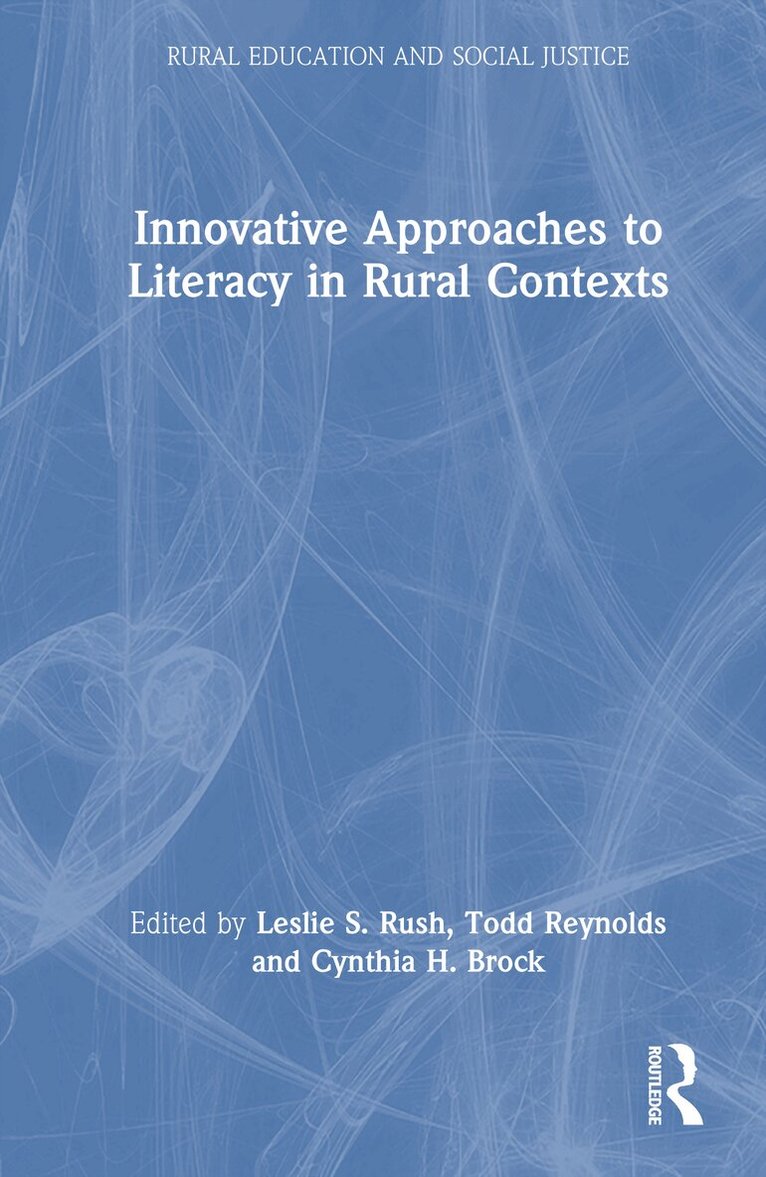
    Innovative Approaches to Literacy in Rural Contexts

    AvLeslie S. Rush,Todd Reynolds

    Inbunden, Engelska, 2026

    Del i serien Rural Education and Social Justice

    2 343 kr

    Beställningsvara. Skickas inom 10-15 vardagar. Fri frakt över 249 kr.

    Beskrivning

    Innovative Approaches to Literacy in Rural Contexts highlights and explicates innovative approaches to literacy that are currently underway in rural Wyoming public schools and provides applications of those approaches to other rural schools and districts. Each chapter addresses the unique rural contexts in which literacy work is being accomplished and describes how the rurality of that context impacts the nature of the project. With insights from teachers, literacy coaches, school principals, curriculum coordinators, and professors, this text explores context-specific case studies of modern literacy innovations in rural settings, their outcomes, the challenges posed by rurality, and the lessons gained from these experiences. The volume then demonstrates how these innovations can be applied to other rural settings and contexts. It combines research-based, theoretical perspectives with practical guidance, all aimed at fostering continuous improvement in literacy within rural public schools.Addressing multiple levels, from individual classrooms to statewide organizations, Innovative Approaches to Literacy in Rural Contexts will be essential reading for literacy and rural education graduate courses.

    Produktinformation

    • Utgivningsdatum:2026-08-17
    • Mått:152 x 229 x 18 mm
    • Vikt:680 g
    • Format:Inbunden
    • Språk:Engelska
    • Serie:Rural Education and Social Justice
    • Antal sidor:260
    • Förlag:Taylor & Francis Ltd
    • ISBN:9781041040187

    Utforska kategorier

    • Pedagogisk teori och filosofi inom Psykologi och pedagogik
    • Pedagogisk metodik inom Psykologi och pedagogik
    • Skolan och förskolan inom Psykologi och pedagogik

    Mer om författaren

    Leslie S. Rush is Professor of Teacher Education and Wyoming Excellence Chair in Literacy Education at the University of Wyoming, USA.Todd Reynolds is Assistant Associate Professor of Secondary Education at the University of Wyoming, USA.Cynthia Brock is Professor and Wyoming Excellence Endowed Chair in Literacy Education at the University of Wyoming, USA.

    Recensioner i media

    This essential collection provides compelling snapshots of literacy education across Wyoming, illustrating how educators and university partners collaborate to design instruction for authentic audiences and purposes within diverse rural contexts. From remote classrooms to district-wide partnerships, this work powerfully demonstrates how the state's rural educators leverage place-based assets to lead the way in transformative literacy instruction.-Brian Farmer, Executive Director, Wyoming School Boards AssociationBy illuminating literacy practices within Wyoming’s unique geography, Reynolds, Rush, and Brock with purpose and courage skillfully disrupt monolithic views of rurality through vivid, place-based snapshots. They remind us that by honoring the sociocultural contexts and intellectual vibrancy of every learner, we can 'disrupt reified understandings of rurality' and embrace our shared responsibility to rural and Indigenous communities.-Dr. Aldora White Eagle, University of Colorado-DenverThis text illustrates how K-12 teachers, school administrators, educational experts, and policy makers in one state draw on wide-ranging resources to develop students’ literacies and serve families, communities, and futures. The rural focus of this important text also offers valuable lessons to communities that do not share Wyoming’s unique contexts — lessons that all communities possess useful resources for this work, that externally-produced standardized solutions can be humanized with community knowledge, and that the most effective approaches to literacy instruction are inclusive and asset-driven. -Kathleen Hinchman, Professor Emeritus, Syracuse UniversityInnovative Approaches to Literacy in Rural Contexts provides a micro-examination of how teachers across Wyoming engage with literacy and one another in place. The book resonates across ruralities by showcasing the affordances and constraints of reciprocal partnerships and amplifying the array of possibilities teachers create when positioned as capable professionals.-Allison Wynhoff Olsen, Associate Professor, Montana State University This volume offers an engaging account of innovative literacy practices in rural settings, highlighting the ways that practitioners leverage rural assets to enhance learning and belongingness. It’s structured focus on classroom-level, school-level, district-level, and state-level innovations underscores transformative insights like the centrality of place and professional learning tailored to rural contexts, providing invaluable perspectives on not only practices but also the systems and structures that enable them.-Jerry Johnson, Phoebe Moore Dail Distinguished Professor in Rural Education, East Carolina University The authors of Literacy in Rural Contexts provide detailed accounts of the “vast distances and small populations” that characterize rural education. With this foregrounding, the individual chapters in this book then describe the challenges faced by rural school district personnel, including physical and intellectual isolation and lack of sustained support for professional development. Following, each chapter provides a compelling narrative of building infrastructure to support teachers and students. This infrastructure consists of expertise and compassion that is effective in addressing the diversity of rural school challenges and helping students further their literacy.-Peter Afflerbach, Professor Emeritus, University of Maryland College ParkThis book offers the educators within and beyond Wyoming a rich, layered exploration of the diverse contours of contemporary rural literacy education. Moreover, by centering the voices and perspectives of rural educators, this book showcases exemplary models for participatory approaches to educational reform efforts that locate and value expertise in local communities and among the educators who work there. An inspiring read! -Robert Petrone, Associate Professor, University of MissouriInnovative Approaches to Literacy in Rural Contexts offers a compelling re-visioning of literacy education, showing how place, identity, and community can be mobilized as powerful opportunities for learning rather than constraints to be overcome. The chapter authors resist deficit framings, instead positioning rural teachers, students, and communities as knowledgeable agents capable of shaping meaningful educational innovation. Richly documented case studies and expert commentaries connect theory, practice, and professional learning in ways that are both intellectually rigorous and practically generative. -Beryl Exley, Professor, Griffith University, AustraliaThis book presents powerful, distinct portraits of literacy in Wyoming, United States. Instead of sharing individual, disconnected stories, the book beautifully weaves them together to illustrate the strength of community in this unique landscape. The book illuminates the lived realities of rural life and how these create resourcefulness and deep relational ties. I highly recommend this book for anyone interested in learning how to design meaningful and equitable literacy practices.-Georgina Barton, Professor and Research Cluster Lead, University of Southern QueenslandThis important book provides evidence that rural schools and districts can meet state literacy mandates while honoring the people, places, and practices that define rural communities. The concrete, engaging cases presented illustrate the power of place-focused and collaborative professional learning, providing a model for rural literacy education nationwide. -Devon Brenner, Director of the Rural Education Research and Initiatives Lab at Mississippi State University and past-president of the National Rural Education Association.This book is a powerful reminder that rural literacy instruction is still an important frontier for educational justice. Grounded in the rich, rural experiences of educators and their communities, the chapters provide insightful, practical applications of rigorous literacy education, skilfully adapted for different rural contexts, not in spite of these contexts, but because of them. This book will be very useful for teachers, teacher educators and policy makers alike.-Jennifer Alford, Assoc. Professor and Deputy Head of School, Griffith University, Brisbane South (Nathan) CampusThis is an important and readable text that adds to a growing body of educational writings related to rurality in U.S. contexts. Using Wyoming as a landscape with diverse, complex, and sometimes unique rural spaces, this text enables readers to think beyond narrow definitions of rurality and literacy. Kudos to the editors and authors for honoring and giving voice to rural teachers, providing insights to teaching, learning and curriculum, and for recognizing the richness in rural communities and schools.-Mary McVeeWith more than 10 millions students attending rural schools in the United States, this comprehensive edited volume has the potential to become a hallmark text for teachers, researchers, and legislators concerned with context-responsive and equitable education for elementary, middle and secondary students learning to read and write across the academic disciplines. Rurality or rural literacies that honors students’ identities and learning experiences finding its rightful place in U.S. literacy discourse is the promise of this text in full measure.-Dr. Alfred W. Tatum, Executive Director of the Metro State University Denver Literacy Research Center and Clinic (LRCC). Innovative Approaches to Literacy in Rural Contexts is a long-overdue and deeply necessary contribution to the field. This carefully curated volume disrupts deficit narratives about rural education by centering the ingenuity, commitment, and contextual wisdom of teachers, coaches, and leaders working in diverse rural landscapes. From individual classrooms to statewide initiatives, the editors and contributors demonstrate that place is not a limitation, it is a pedagogical resource. The book's grain-size structure, moving from classroom to state, makes it exceptionally useful for graduate students, practitioners, and researchers seeking frameworks that move beyond urban and suburban contexts. The inclusion of Indigenous voices and equity-centered commentaries throughout elevates this volume well beyond a regional case study. It is essential reading for anyone committed to literacy justice for all learners, wherever they are.-Misty Sailors, PhD, Professor Emeritus, University of Texas at San Antonio; Research Director, Literacy Team, WestEdInnovative Approaches to Literacy in Rural Contexts is a unique and highly insightful exploration of rurality and its relationship to literacy education. From localized to systemic contexts, the authors take readers on a rich and diverse journey of literacy education in the many and diverse rural settings of Wyoming, U.S.A. The authors’ narratives make for an informative read that encourage and provoke readers to make connections to their own circumstances and think anew about the contexts of their literacy work. -Professor (Dr.) Pauline Harris serves as Research Professor of Early Childhood Education and Chair of Early Childhood Research in the College of Education and Behavioural and Social Sciences at Adelaide University, Australia.

    Innehållsförteckning

    • Section I: Introduction 1. Rurality and its Impact on Education: An Introduction Section II: Rural Classrooms 2. Harnessing the Power of Reading and Writing Connections to Develop Student Competency with Informational Text Structures 3. Motivation and Engagement Innovation: Science and Literacy in a Rural 6th Grade Classroom 4. Rethinking Literacy Instruction: Equity, Identity, and Place in a Rural High School Section II Expert Commentary: Rural Literacies and the Question of Belonging Section III: Rural Elementary Schools 5. From Vision to Impact: Leadership’s Role in Advancing a Schoolwide Literacy Learning Initiative 6. Prioritizing Hinono’eitiit: Using Graphic Organizers and Mentor Texts to Write for Authentic Audiences and Purposes 7. Designing Support for Writing Conferences in a Rural Elementary School 8. From Thin Soil to Strong Roots: Building Instructional Capacity in Rural Classrooms Section III Expert Commentary: Professional Learning that Supports Rural Elementary Teachers’ Practice Section IV: Rural Secondary Schools 9. Literacy Education in Rural Contexts: Supported Teachers Supporting Reading to Support Authentic Learning 10. Disciplinary Literacy Professional Learning in a Rural High School 11. Big Piney High School: United Around Common Literacy Instructional Goals and Practices Section IV Expert Commentary: Professional Learning as Leadership Opportunity Section V: Rural Districts 12. A Valley of Contrasts: Supporting Multilingual Learner Achievement through Improvement Science 13. Meaningful Partnerships to Drive Literacy Outcomes in Rural High Schools Section V Expert Commentary: Toward a Participatory PD for Rural Schools Section VI: A Rural State 14. Providing Accessible, Innovative, and Sustainable Professional Learning: The Case of the Preschool Literacy Modules in Wyoming 15. Kindergarten through Grade Three Modules for Wyoming Teachers: ‘American Indian Education for All’ Section VI Expert Commentary: A Rural State: Moving Forward in a Good Way: Protocol, Sovereignty, and the Future of Indigenous Literacies in Rural Schools Section VII: Conclusion Chapter 16. Coming Full Circle: Literacy Innovations that Meet the Unique Contextual Demands of Rurality