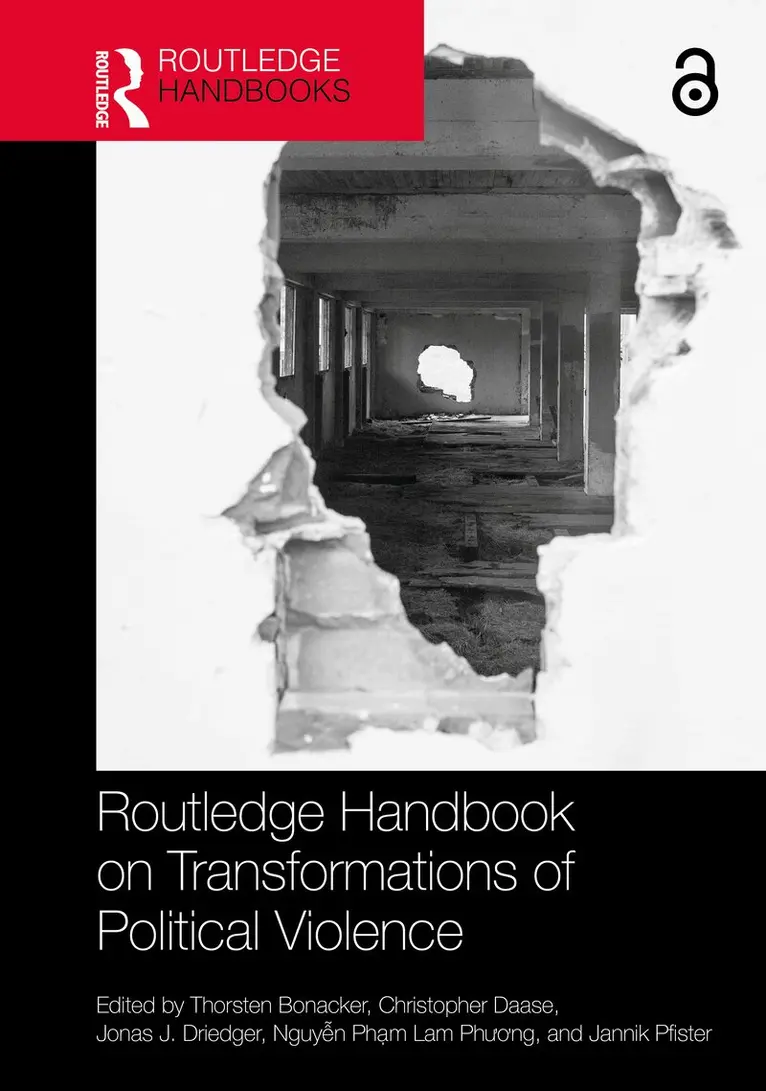
Inbunden, Engelska, 2026
Routledge Handbook on Transformations of Political Violence
Av Thorsten Bonacker, Christopher Daase, Jonas J. Driedger, Nguyễn Phạm Lam Phương, Jannik Pfister
3785 kr
Beställningsvara. Skickas inom 10-15 vardagar. Fri frakt över 249 kr.
Beskrivning
This new handbook explores, organizes, and analyzes current research on political violence in a changing global context.Drawing from diverse disciplines—political science, sociology, anthropology, and history, as well as cultural and legal studies—this volume comprehensively surveys current research, providing an interdisciplinary overview that transcends traditional boundaries. At the heart of this volume lies the concept of “transformations.” This handbook delves into three pivotal questions: (1) how have forms of political violence evolved over time? (2) What role do institutions play in shaping these changes? (3) How do different stakeholders interpret and ascribe meaning to varying manifestations of political violence? Offering a systematic approach, this volume provides statistical insights and pivotal case studies, bridging epistemological and methodological boundaries. Mapping the contemporary terrain of political violence, this book provides readers with a versatile toolbox, enabling them to engage with both the dynamics of violence and the underlying political context. This work’s process‑oriented paradigm facilitates dialogues between disciplines, shedding light on recent trends and providing a nuanced understanding of political violence in our complex world.This book will be of much interest to students of political violence, terrorism studies, sociology, politics, and International Relations in general.
Produktinformation
- Utgivningsdatum: 2026-08-24
- Mått: 174 x 246 x 27 mm
- Vikt: 1 050 g
- Format: Inbunden
- Språk: Engelska
- Antal sidor: 456
- Förlag: Taylor & Francis Ltd
- ISBN: 9781041063551
Utforska kategorier
Betyg & recensioner
0 recensioner
Inga recensioner tillgängliga.