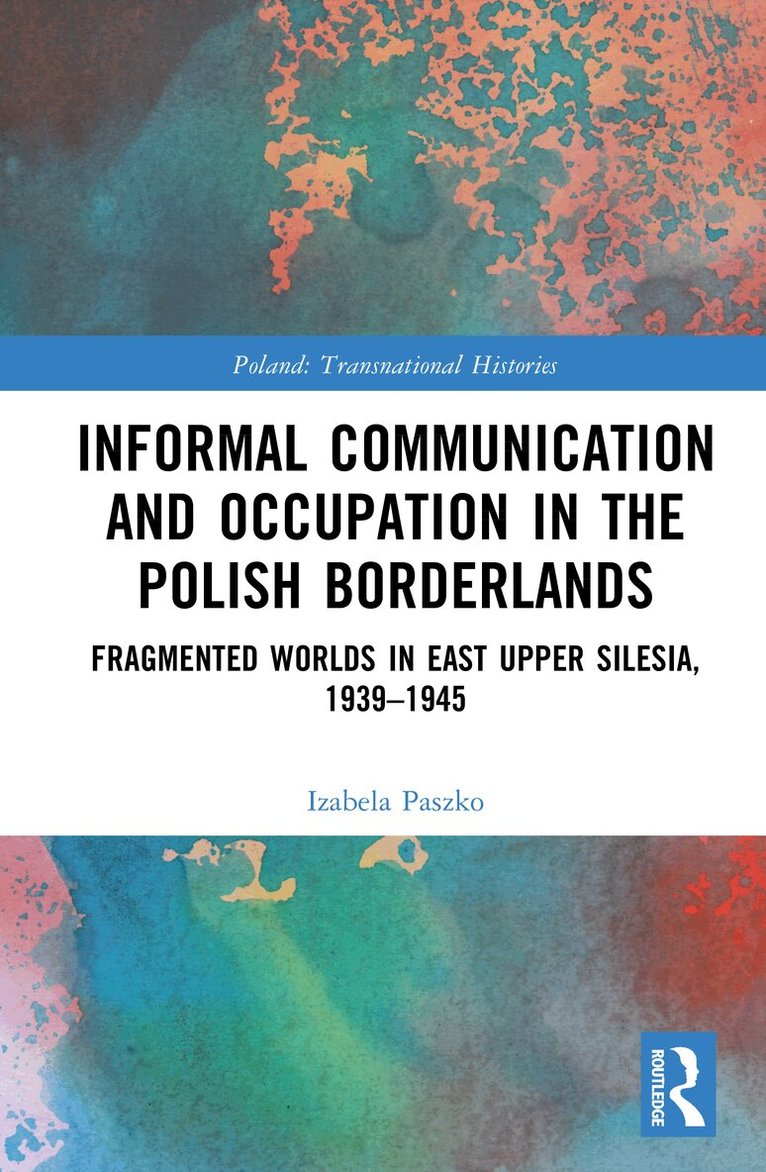
Inbunden, Engelska, 2025
Informal Communication and Occupation in the Polish Borderlands
Fragmented Worlds in East Upper Silesia, 1939–1945
Del i serien Poland: Transnational Histories
2564 kr
Beställningsvara. Skickas inom 10-15 vardagar. Fri frakt över 249 kr.
Beskrivning
Produktinformation
- Utgivningsdatum: 2025-11-17
- Mått: 156 x 234 x 23 mm
- Vikt: 810 g
- Format: Inbunden
- Språk: Engelska
- Serie: Poland: Transnational Histories
- Antal sidor: 332
- Förlag: Taylor & Francis Ltd
- ISBN: 9781041073000
Utforska kategorier
Mer om författaren
Izabela Paszko is a social anthropologist with a PhD in history and works at the German Historical Institute Warsaw. Her scientific interests evolve around social history, commemorating practices and anthropology of everyday life.
Recensioner i media
"Combining an interdisciplinary approach with the historian's keen eye for the sources, Paszko's innovative and richly documented study tests the borders between private and public, shedding new light on community, intimacy, adaptation, resistance, and survival under the German occupation."Jonathan Huener, Miller Distinguished Professor of Holocaust Studies, University of Vermont, USA
Betyg & recensioner
0 recensioner
Inga recensioner tillgängliga.