• Fri frakt över 249 kr
  • •
  • Snabba leveranser
  • •
  • Billiga böcker
Kundservice

Du är på sajten för privatpersoner.

Företag, bibliotek eller offentlig verksamhet?

Du handlar på classic.bokus.com, där alla dina funktioner finns intakta.
Till classic.bokus.com
Bokus logotyp. Gå till startsidan.
  • Erbjudanden
  • Nyheter
  • Student
  • Topplistor
  • Barn & ungdom
  • Bokus Play
  • E-böcker
  • Pocketböcker
  • Spel & pussel

10% studentrabatt med kod TERM26

Sidfot

Mina sidor

    Hjälp

    • Kundservice
    • Vanliga frågor och svar
    • Frakt och leverans
    • Retur vid ångerrätt
    • Reklamera vara
    • Betalning
    • Köpvillkor
    • Allmänna villkor
    • Information om webbplatsens tillgänglighet

    Om Bokus

    • Om oss
    • Pressrum
    • För studenter
    • För företag
    • För bibliotek och offentlig verksamhet
    • För leverantörer
    • Hållbarhet

    Populärt

    • Aktuella erbjudanden
    • Presentkort
    • Studentlitteratur
    • Nya böcker
    • Topplistor
    • Signerade böcker
    • Engelska böcker

    Inspiration

    • Boktips
    • BookTok
    • Populära bokserier
    • Barnbokskaraktärer
    • Populära författare
    Logotyp för Bokus
    Följ oss på Facebook (extern länk)Följ oss på Instagram (extern länk)Följ oss på YouTube (extern länk)Följ oss på TikTok (extern länk)
    bokus @ CookiesAnpassa cookiesIntegritetspolicyKöpvillkor
    Till Citymail hemsida (extern länk)Till Budbee hemsida (extern länk)Till Postnord hemsida (extern länk)Till Schenker hemsida (extern länk)Till Early Bird hemsida (extern länk)Till Walleys hemsida (extern länk)
    1. Naturvetenskap och teknik
    2. Matematik och naturvetenskap
    3. Fysik
    4. Tillämpad fysik

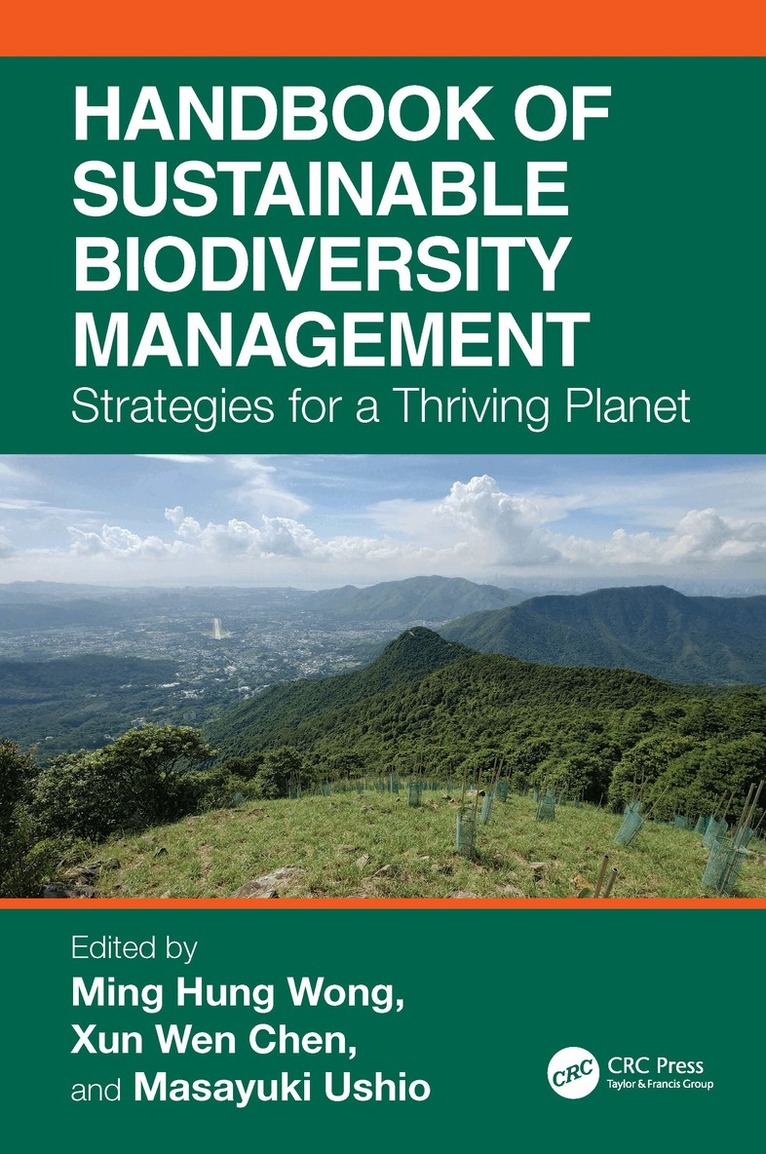
    Handbook of Sustainable Management of Biodiversity

    Strategies for a Thriving Planet

    AvMing Hung Wong,Xun Wen Chen

    Inbunden, Engelska, 2026

    2 647 kr

    Slutsåld

    Beskrivning

    Mounting perils posed by climate change, habitat degradation, pollution, and overexploitation jeopardize numerous species, including microbes.This book strives to shed light on the pressing necessity for sustainable biodiversity practices that safeguard our planet's natural legacy. By delving into diverse strategies, scientific paradigms, and case studies, the authors reveal how holistic approaches to biodiversity can cultivate flourishing ecosystems wherein wildlife and human societies coexist harmoniously. This approach sets the book apart from others and presents the tools and knowledge needed to ensure the resilience and thriving of ecosystems for future generations.Key FeaturesProvides a holistic view of how biodiversity impacts ecosystem functions and human well-being."Diverse expertise of editors ensures a well-rounded perspective on sustainable biodiversity management. They present a variety of sustainable management principles, conservation strategies, and policy frameworks."Emphasizes the often-overlooked microbial communities, known as microbial dark matter, and their linkage to larger organisms.It delves into the ecological significance of microbes, their interactions, and their crucial roles in nutrient cycling and soil vitality, highlighting their importance for ecosystem sustainability.Includes real-world case studies and examples of successful biodiversity practices, providing readers with practical tools and actionable insights for effective biodiversity management.Emphasizes the importance of understanding basic principles, fostering global collaboration, embracing technological innovations, and encouraging community involvement to ensure the resilience and sustainability of ecosystems for future generations.

    Produktinformation

    • Utgivningsdatum:2026-09-23
    • Mått:178 x 254 x undefined mm
    • Format:Inbunden
    • Språk:Engelska
    • Antal sidor:420
    • Förlag:Taylor & Francis Ltd
    • ISBN:9781041075141

    Utforska kategorier

    • Tillämpad fysik inom Naturvetenskap och teknik
    • Biokemi inom Naturvetenskap och teknik
    • Miljövetenskap och miljöpolitik inom Naturvetenskap och teknik

    Mer om författaren

    Professor Ming Hung Wong is a Foreign Member of the Russian Academy of Sciences, a Member of the European Academy of Sciences and Arts, and Changjiang Chair Professor of the Ministry of Education, China. He served as the Editor-in-Chief of ‘Environmental Geochemistry and Health’ (Springer Nature) for 20 years (2002-2023). Professor Wong was the Coordinator of Central and North-East Asia of ‘Regionally Based Assessment of Persistent Toxic Substances’ and a Panel Member (of 3 experts) of ‘Chemicals Management Issues of Developing Countries and Countries with Economies in Transition’, sponsored by UNEP/GEF, during 2001-2003 and 2010-2012, respectively. His research areas included ‘Environmental toxicology’; ‘Ecological restoration’; and ‘Resource reuse’. In addition to his PhD (Durham), he was awarded two higher Doctoral Degrees based on published papers in 1992 and 2004: DSc (Durham) and DSc (Strathclyde). Recently, he was awarded an Honorary Doctor of Science (DSc) from the Southern Federal University, Russia (2024), in recognition of his involvement as the Lead Scientist in the Mega Project on Bioremediation of Polluted Ecosystems, sponsored by the Russian Government. Professor Wong is ranked 6th for 3 years, 7th for 1 year, and 8th for 2 years (career-long ranking) under Environmental Science, according to the World’s Top 2% Scientists (Stanford University, 2020-2025). Dr. Xun Wen Chen is an Associate Professor in the Department of Ecology, College of Life Science and Technology at Jinan University, China. He obtained his PhD at the Hong Kong University of Science and Technology (HKUST). His interdisciplinary research focuses on the complex interactions between plants and microbes under stress, including exposure to chemical and physical stressors. The goal of his research is to gain a deeper understanding of the complex plant-microbe interactions and to extract general principles that can be applied to advance ecological restoration and sustainable development.Dr. Masayuki Ushio is an Assistant Professor in the Department of Ocean Science at the Hong Kong University of Science and Technology (HKUST). He began his academic career as a forest ecologist in 2005, earned PhD in 2010 from Kyoto University, and has been actively involved in research in ecology, covering a wide range of topics, including tropical forest ecology, nutrient cycling, community assembly, environmental DNA analysis, and statistical ecology. He moved from Kyoto University to Hong Kong in 2022 and began ecological research in local coastal regions. In Hong Kong, his research team is currently developing environmental DNA-based methods to monitor cetacean and fish communities in coastal ecosystems.

    Innehållsförteckning

    • Part I. Global Strategies and Governance. 1. Global Biodiversity Politics and Governance. 2. Bridging Conservation and Development: Towards a Renewed Framework for Evaluating Human–Earth Relationship. 3. Empowering Indigenous Knowledge Systems in Global Biodiversity Governance: The IPBES Approach. Part II. Regional Policy and Management. 4. Effective Conservation: Strategies for Ecosystems and Protected Areas. 5. Learning and Internalization: Norm-Building in China–ASEAN Biodiversity Governance from a “Global South” Perspective. 6. Integrating Biodiversity into Renewable Energy Development: A Review of Policies and Laws Across Countries. 7. Reframing Economic and Ecological Strategies to Sustain Biodiversity and Human Well-Being. Part III. Microbial and Aquatic Ecosystems. 8. The Hidden World: Aquatic Microbial Diversity, Ecological Functions and Responses to a Changing Planet. 9. Microbial Interactions and Ecosystem Dynamics: From Symbiosis to Pathogenesis. 10. Preserving Marine Biodiversity: Strategies for a Thriving Ocean Ecosystem. 11. Photoreception by Microbial Rhodopsins: An Alternative Solar Energy Pathway Flowing into Marine Ecosystems without Carbon Intermediates. 12. Microplastics in Freshwater Environment: Assessing Sources, Pathways, and Effects on Biodiversity. Part IV. Terrestrial Biodiversity Conservation. 13. Community Ecology for Disentangling the Causes and Consequences of Biodiversity. 14. Incorporating Biodiversity Conservation in the Restoration of a Fully Functioning Subtropical Evergreen Forest at Kadoorie Farm and Botanic Garden in Hong Kong: An Overview of Principles and Practices. 15. Invasive Alien Species Management in Vulnerable Forest Ecosystems. 16. Changes in the Structure and Functions of Soil Bacterial Communities and Driving Factors in a Restored Forest Soil Chronosequence. 17. Biodiversity Conservation of Arbuscular Mycorrhizal Fungi under Global Change. Part V. Biodiversity in Urban Environments. 18. Conserving Wildlife Biodiversity in Urban Ecosystems. 19. Evaluation of the Ecological Functions of Urban Rivers and Strategies for Their Restoration - A Case Study of the Dasha River in Shenzhen. 20. The Trade of Six Songbird Species in Hong Kong: Evidence from Direct Count Records in a Local Market.