• Fri frakt över 249 kr
  • •
  • Snabba leveranser
  • •
  • Billiga böcker
Kundservice

Du är på sajten för privatpersoner.

Företag, bibliotek eller offentlig verksamhet?

Du handlar på classic.bokus.com, där alla dina funktioner finns intakta.
Till classic.bokus.com
Bokus logotyp. Gå till startsidan.
  • Erbjudanden
  • Nyheter
  • Student
  • Topplistor
  • Barn & ungdom
  • Bokus Play
  • E-böcker
  • Pocketböcker
  • Spel & pussel

10% rabatt på allt med kod: NYSTART10 →

Sidfot

Mina sidor

    Hjälp

    • Kundservice
    • Vanliga frågor och svar
    • Frakt och leverans
    • Retur vid ångerrätt
    • Reklamera vara
    • Betalning
    • Köpvillkor
    • Allmänna villkor
    • Information om webbplatsens tillgänglighet

    Om Bokus

    • Om oss
    • Pressrum
    • För studenter
    • För företag
    • För bibliotek och offentlig verksamhet
    • För leverantörer
    • Hållbarhet

    Populärt

    • Aktuella erbjudanden
    • Presentkort
    • Studentlitteratur
    • Nya böcker
    • Topplistor
    • Signerade böcker
    • Engelska böcker

    Inspiration

    • Boktips
    • BookTok
    • Populära bokserier
    • Barnbokskaraktärer
    • Populära författare
    Logotyp för Bokus
    Följ oss på Facebook (extern länk)Följ oss på Instagram (extern länk)Följ oss på YouTube (extern länk)Följ oss på TikTok (extern länk)
    bokus @ CookiesAnpassa cookiesIntegritetspolicyKöpvillkor
    Till Citymail hemsida (extern länk)Till Budbee hemsida (extern länk)Till Postnord hemsida (extern länk)Till Schenker hemsida (extern länk)Till Early Bird hemsida (extern länk)Till Walleys hemsida (extern länk)
    1. Språk och ordböcker
    2. Språkvetenskap och lingvistik

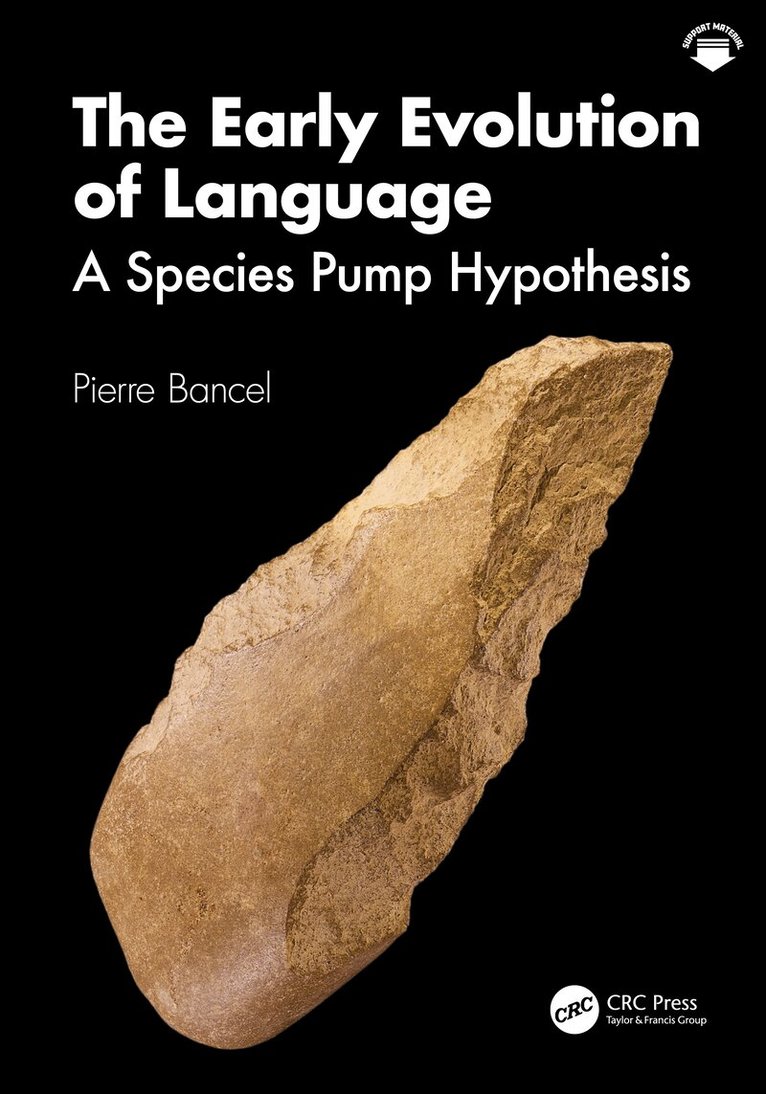
    Early Evolution of Language

    A Species Pump Hypothesis

    AvPierre Bancel

    Inbunden, Engelska, 2026

    2 421 kr

    Beställningsvara. Skickas inom 10-15 vardagar. Fri frakt över 249 kr.

    Fler format och utgåvor

    E-bok

    2 800 kr

    E-bok

    2 800 kr

    Beskrivning

    This book proposes a step‑by‑step process through which the early evolution of human language originated. Starting from an ape‑like communication system, prehuman ancestors were "pumped" out of the rainforest by cyclic climate changes between 10 to 6 million years ago and subjected to harsh predatory conditions and the absence of safe havens. A phonetic "modal voice" evolved in response. Inarticulate sounds gradually became articulated syllables. The diversification of these syllables eventually led to symbolic references and, finally, to words. Bancel details each of these steps in which the origin of language and the origin of humans are shown to be concordant.Pierre Bancel was drawn early on to languages and focused on learning a dozen of them, including German, Russian, Hindi, and Kabyle, as well as Classical Latin and Greek. He has earned an MA in Language Sciences from the Université Auguste et Louis Lumiere, Lyon, with an emphasis on comparative linguistics, instrumental phonetics, and fieldwork on Bantu languages. He has worked as a copyeditor for the French dictionary Le Robert, a journalist for various periodical publications, and as a translator by the United Nations in New York, Geneva and Vienna. Bancel translated into French two books by Stanford linguists Joseph Greenberg and Merritt Ruhlen, and has published several dozen research articles in linguistics journals, many of them in the then Harvard‑based Mother Tongue, of which he has been coeditor since 2021. This is his first book, summarizing years of research into language and into how articulated words may have emerged in an originally speechless ape species, turning it into humans in the process.

    Produktinformation

    • Utgivningsdatum:2026-05-06
    • Mått:178 x 254 x 19 mm
    • Vikt:590 g
    • Format:Inbunden
    • Språk:Engelska
    • Antal sidor:214
    • Förlag:Taylor & Francis Ltd
    • ISBN:9781041091806

    Utforska kategorier

    • Språkvetenskap och lingvistik inom Språk och ordböcker
    • Barnpsykologi och utvecklingspsykologi inom Psykologi och pedagogik
    • Människans biologi inom Naturvetenskap och teknik

    Mer om författaren

    Pierre Bancel was drawn early on to languages and focused on learning a dozen of them, including German, Russian, Hindi, and Kabyle, as well as Classical Latin and Greek. He has earned an MA in Language Sciences from the Université Auguste et Louis Lumiere, Lyon, with an emphasis on comparative linguistics, instrumental phonetics, and fieldwork on Bantu languages. He has worked as a copyeditor for the French dictionary Le Robert, a journalist for various periodical publications, and as a translator by the United Nations in New York, Geneva and Vienna. Bancel translated into French two books by Stanford linguists Joseph Greenberg and Merritt Ruhlen, and has published several dozen research articles in linguistics journals, many of them in the then Harvard‑based Mother Tongue, of which he has been coeditor since 2021. This is his first book, summarizing years of research into language and into how articulated words may have emerged in an originally speechless ape species, turning it into humans in the process.

    Innehållsförteckning

    • List of Maps List of Tables List of Boxes List of Diagram List of Annexes Preface Chapter 1 Introduction PART ONE The Origin of the Human Voice and the Discovery of Consonants Chapter 2 The Climatic Species Pump Chapter 3 Hums Chapter 4 The Proto-Sapiens Negative/Prohibitive Particle *ma and the Invention of the CV Syllable PART TWO The Evolution of Narration Chapter 5 From Proto-Sapiens Back to Proto-Human: An Evolutionary History Chapter 6 Stages in the Evolution of Phonetic Articulation Chapter 7 Celeste and the Cuckoo PART THREE Proto-Sapiens Kinship Terms Chapter 8 Universal Papa/Mama Words Chapter 9 Merritt Ruhlen’s Discovery Chapter 10 Innovations Galore Chapter 11 Transmission and Preservation of papa/mama Words Chapter 12 The Age of Mama and Papa PART FOUR The Evolution of Personal Pronouns Chapter 13 From Mama to Me Chapter 14 Borrowing Personal Pronouns? Chapter 15 Personal Pronouns and Person Markers in Indo-Hittite Chapter 16 Eurasiatic Pronouns’ Long March Chapter 17 1st Person *n and 2nd Person *m in Amerind Chapter 18 Of Pronouns and Geography Chapter 19 Global Variability of Personal Pronouns vs. Their Age-Old Persistence PART FIVE Sorting Out Chapter 20 Move Along, Nothing to See Here Epilogue Acknowledgments References Index of Languages Index of Authors Index of Notions