• Fri frakt över 249 kr
  • •
  • Snabba leveranser
  • •
  • Billiga böcker
Kundservice

Du är på sajten för privatpersoner.

Företag, bibliotek eller offentlig verksamhet?

Du handlar på classic.bokus.com, där alla dina funktioner finns intakta.
Till classic.bokus.com
Bokus logotyp. Gå till startsidan.
  • Erbjudanden
  • Nyheter
  • Student
  • Topplistor
  • Barn & ungdom
  • Bokus Play
  • E-böcker
  • Pocketböcker
  • Spel & pussel

10% rabatt på allt med kod NYSTART10 →

Sidfot

Mina sidor

    Hjälp

    • Kundservice
    • Vanliga frågor och svar
    • Frakt och leverans
    • Retur vid ångerrätt
    • Reklamera vara
    • Betalning
    • Köpvillkor
    • Allmänna villkor
    • Information om webbplatsens tillgänglighet

    Om Bokus

    • Om oss
    • Pressrum
    • För studenter
    • För företag
    • För bibliotek och offentlig verksamhet
    • För leverantörer
    • Hållbarhet

    Populärt

    • Aktuella erbjudanden
    • Presentkort
    • Studentlitteratur
    • Nya böcker
    • Topplistor
    • Signerade böcker
    • Engelska böcker

    Inspiration

    • Boktips
    • BookTok
    • Populära bokserier
    • Barnbokskaraktärer
    • Populära författare
    Logotyp för Bokus
    Följ oss på Facebook (extern länk)Följ oss på Instagram (extern länk)Följ oss på YouTube (extern länk)Följ oss på TikTok (extern länk)
    bokus @ CookiesAnpassa cookiesIntegritetspolicyKöpvillkor
    Till Citymail hemsida (extern länk)Till Budbee hemsida (extern länk)Till Postnord hemsida (extern länk)Till Schenker hemsida (extern länk)Till Early Bird hemsida (extern länk)Till Walleys hemsida (extern länk)
    1. Psykologi och pedagogik
    2. Pedagogik
    3. Skolan och förskolan

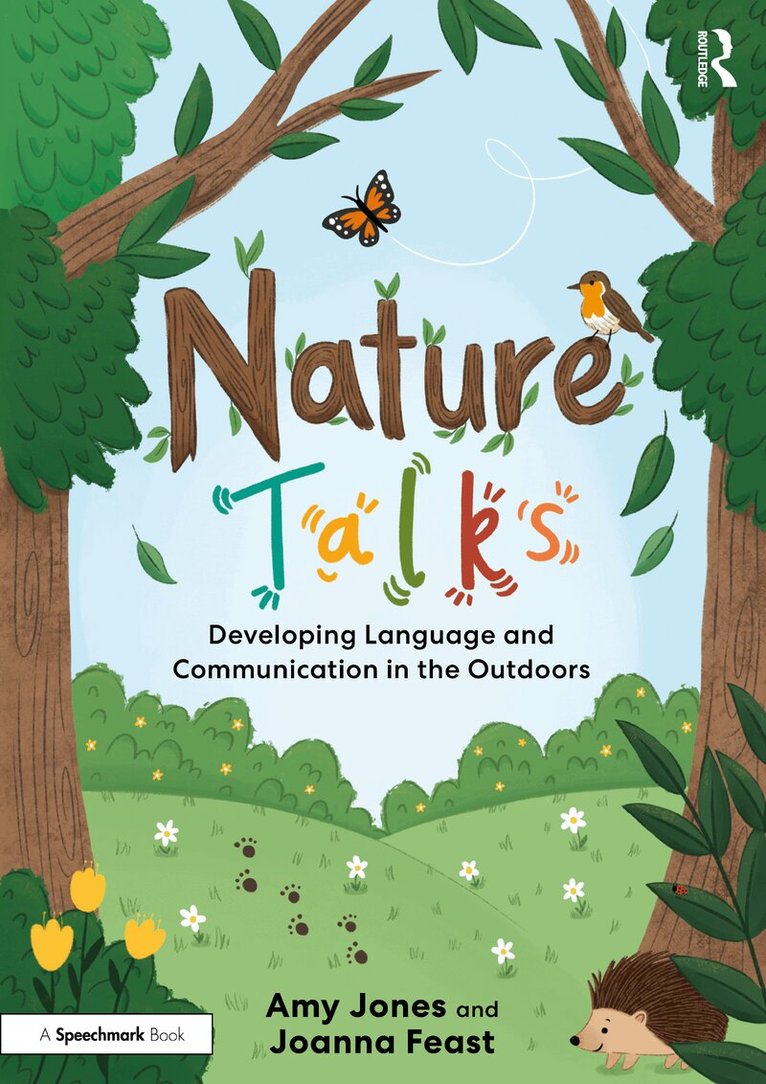
    Nature Talks

    Developing Language and Communication in the Outdoors

    AvAmy Jones,Joanna Feast

    Inbunden, Engelska, 2026

    2 354 kr

    Slutsåld

    Beskrivning

    Have you ever wondered how a stick, fallen leaves or a puddle might encourage a child to look closer and explore? When combined with rich modelled language, high-quality interactions and provocations that inspire play, these simple, nature-based experiences become meaningful opportunities for language and communication development.Within Nature Talks, you will discover the benefits of being outdoors to stimulate curiosity, support whole-child development and provide sensory experiences that can enrich and nurture communication and language. This inspiring book shows how the natural environment can be used flexibly and inclusively throughout the year to help children to expand their vocabulary, practise social communication and develop their language skills. At the heart of the book are 60 seasonal ‘invitations to play’, intentionally designed to support communication and language development through outdoor play. Each experience encourages children to explore and experiment in a way that is truly child-led and neuro-affirmative.With a wealth of ideas from mixing, stirring and creating concoctions to building, collecting and imaginative play, these thoughtful invitations draw upon the principles of schematic play to support engagement and develop communication and language. Utilising natural materials, alongside songs, rhymes and stories, this is an essential resource for early years and primary educators supporting children aged 0–5.

    Produktinformation

    • Utgivningsdatum:2026-12-11
    • Mått:210 x 297 x undefined mm
    • Format:Inbunden
    • Språk:Engelska
    • Antal sidor:200
    • Förlag:Taylor & Francis Ltd
    • ISBN:9781041112594

    Utforska kategorier

    • Skolan och förskolan inom Psykologi och pedagogik
    • Specialundervisning inom Psykologi och pedagogik

    Mer om författaren

    Amy Jones is a qualified teacher and Early Years and Outdoor Learning Specialist with over a decade of experience in education. Her background includes several years teaching in Reception, where she developed a strong passion for outdoor learning, child-led exploration and creating environments that inspire curiosity and communication. She has also led professional development for practitioners, with a particular focus on early years practice, mental health and wellbeing, and outdoor learning. Amy is also the founder of Play Outdoors.Joanna Feast is an education consultant specialising in PSHE and wellbeing culture, and is the founder and director of Epiphany ETC Ltd. Joanna’s focus is on promoting and training adults on PSHE, wellbeing and health education in schools, aligned organisations, charities and businesses. She is also a director of Gabriels Wellbeing and Education, an outdoor learning charitable organisation, and of Clean Well-Being, through which she teaches therapeutic movement and exercise.

    Innehållsförteckning

    • AcknowledgementsPart 1: The foundationsChapter 1: Setting the tone for communication and language development‘What is this? Why is it spiky? It feels a bit prickly’Why communication and language matterSetting the scene for language and communication development in the outdoorsLanguage learning outdoors: an under-researched topic?Exploring inequalities in language and communication development‘Closing the word gap’: suggestionsSuggestions for practitionersThe case for supporting communication and language development in the early yearsUsing this book in your practiceWho is this book for?What is covered in this book?A note from the authors‘Nature Talks’: guiding principlesChapter summaryChapter 2: A nature play-based approach to language and communication skill developmentA play-based approachTaking an evidence-based perspective to playThe brain and playThe role of the adultHow play supports communication and languageHow does outdoor play support language and communication?Creating a communication-friendly spaceWhole-child benefitsThe changing nature of languageBringing a play-based approach to lifeHealth and safety, risk and explorationProfessional confidence and competenceSex differencesLess-served communitiesChapter summaryChapter 3: Supporting communication and language through high-quality interactionsWhat is meant by communication and language?CommunicationLanguageWhy are communication and language important to children’s development?How vocabulary supports effective communication and languageTiered vocabularyInteractions: why they matterQuality interactionsThe building blocks of quality interactionPhysical space and movementShared attentionRepetitionInterplayActive listeningPutting it into practice: the ShREC approachA toolkit for high-quality interactionChapter summaryChapter 4: Awe, wonder and play schemasCuriosity outdoorsAdults look, but do they truly see?Whatever the weather: meaningful contexts for talkHow do we talk about the weather with children?Rethinking the weatherOutdoors as a resourcePlay schemasPlay schemas for communication and languagePlay schemas and child developmentNine common play schemasHow might play schemas support language?Example language from schematic playHow to support children with their language and communication: what practitioners can doChapter summaryChapter 5: The childWhat affects ‘the child’ and how can this be applied to language and communication development?Brain development and plasticityPsychological safety and learningPromoting safetyBeing safe outdoorsUnderstanding children’s behaviour in terms of traumaSupport for practitionersTrauma-sensitive languageHow children use play to process emotions and their experiencesPsychological projection and young childrenChapter summaryChapter 6: Child developmentHow best to support children’s developmentUnderstanding the wider determinants of health: contextualising children’s experiencesPrenatal language exposureRecognising the evolution of communication and language development modelsThe Communication WheelHow the Communication Wheel works in practiceRealising and supporting developmental milestones: reference points within ‘typical’ language and communication developmentAppreciating the complexities of ‘typical’ developmentIdentifying difficulties in communication and languageAssessment as support: responsive monitoring and early identificationSignposted resourcesEarly interventionChapter summaryChapter 7: The role of the adultWhy adults can make a differenceThe diverse role of an adultAn enabling environmentAdjusting the approachPrinciples of effective practiceReflective practitionerInteracting… or interjecting and interrupting?Chapter summaryChapter 8: Outdoor spaceWhole-child development and the outdoor environmentHow movement can support children’s communication and language developmentIdeas to bring this to life in your setting/practiceDesigning a communication-friendly environment outdoorsA communication-supportive environment: the physical environmentThe Communication Wheel in the physical environmentPreparing the environmentAuditing and developing the spaceWhy develop the outdoor space?Auditing the outdoor spaceCreating spaces and finding solutionsProviding varied experiencesCaring for the environmentChapter summaryChapter 9: Equipment and resourcesUsing your environment as the starting pointResources for playLess is moreChoosing with intentionContinuous and enhanced provisionBringing the inside outResources to support play provocations outdoorsBooks, songs and rhymes as essential resources for communication and languageBooksSongs and rhymeWhy songs and rhymes promote developmentCreating a basic kitCore materialsEnhanced MaterialsPractical considerationsChapter summaryChapter 10: Seasons and weatherWhy outdoors all year round?Clothing and practicalitiesEssentials for practitionersAn all-weather kit: suggested layeringThe core kit (to be adjusted based on weather conditions)Warmer monthsColder monthsReframing languageCreating an almanac: a seasonal guide for practitionersAutumn (September, October, November)Winter (December, January, February)Spring (March, April, May)Summer (June, July, August)WeatherInteractions and the weatherChapter summaryChapter 11: Senses in the outdoorsThe outdoors: A multi-sensory environmentWhat are the sensory systems?Sensory perception and processingThe sensory aspects of outdoors: are they linked to reducing physiological stress?Sense of sound: noise levels and communication and languageNoise outdoorsAttention and focus: our senses and communication skillsExecutive function and communication outdoorsMovementNeurodiversity and sensory differences/sensitivitiesSensory play: why is it important and what impact can it have?Sensory stimuli from nature and outdoor environmentsChapter summaryPart 2: ProvocationsNature Talks: Creating nature-based play experiences to support communication and languageWhat are ‘provocations’?What is an ‘invitation to play’?How ‘provocations’ and ‘invitations to play’ are linkedNature Talks: the design of the provocationsPractical application in settingsRevisiting, reusing and making connectionsSafetySupervision and the practitioner’s roleChoking and small partsNatural materials and foragingChapter summaryThe provocationsAutumnWinterSpringSummerReferencesIndex