• Fri frakt över 249 kr
  • •
  • Snabba leveranser
  • •
  • Billiga böcker
Kundservice

Du är på sajten för privatpersoner.

Företag, bibliotek eller offentlig verksamhet?

Du handlar på classic.bokus.com, där alla dina funktioner finns intakta.
Till classic.bokus.com
Bokus logotyp. Gå till startsidan.
  • Erbjudanden
  • Nyheter
  • Student
  • Topplistor
  • Barn & ungdom
  • Bokus Play
  • E-böcker
  • Pocketböcker
  • Spel & pussel

10% rabatt på allt med kod: NYSTART10 →

Sidfot

Mina sidor

    Hjälp

    • Kundservice
    • Vanliga frågor och svar
    • Frakt och leverans
    • Retur vid ångerrätt
    • Reklamera vara
    • Betalning
    • Köpvillkor
    • Allmänna villkor
    • Information om webbplatsens tillgänglighet

    Om Bokus

    • Om oss
    • Pressrum
    • För studenter
    • För företag
    • För bibliotek och offentlig verksamhet
    • För leverantörer
    • Hållbarhet

    Populärt

    • Aktuella erbjudanden
    • Presentkort
    • Studentlitteratur
    • Nya böcker
    • Topplistor
    • Signerade böcker
    • Engelska böcker

    Inspiration

    • Boktips
    • BookTok
    • Populära bokserier
    • Barnbokskaraktärer
    • Populära författare
    Logotyp för Bokus
    Följ oss på Facebook (extern länk)Följ oss på Instagram (extern länk)Följ oss på YouTube (extern länk)Följ oss på TikTok (extern länk)
    bokus @ CookiesAnpassa cookiesIntegritetspolicyKöpvillkor
    Till Citymail hemsida (extern länk)Till Budbee hemsida (extern länk)Till Postnord hemsida (extern länk)Till Schenker hemsida (extern länk)Till Early Bird hemsida (extern länk)Till Walleys hemsida (extern länk)
    1. Kultur
    2. Konstböcker
    3. Konsthistoria

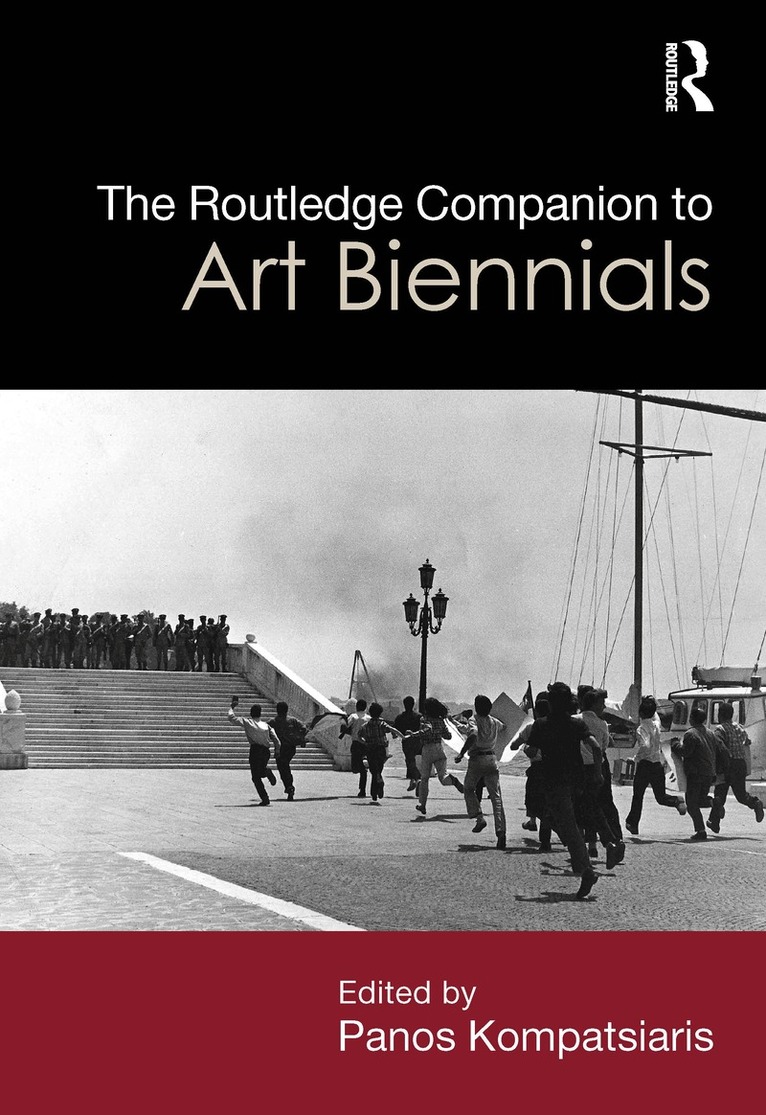
    Routledge Companion to Art Biennials

    AvPanos Kompatsiaris

    Inbunden, Engelska, 2026

    Del i serien Routledge Art History and Visual Studies Companions

    3 765 kr

    Beställningsvara. Skickas inom 10-15 vardagar. Fri frakt över 249 kr.

    Beskrivning

    The Routledge Companion to Art Biennials assembles forty-six chapters that explore art biennials as expanded sites of artistic display, cultural policy, economic value, soft power, urban development and political struggle. The volume traces biennials from their 19th-century origins to their explosive post-Cold War growth, critically engaging with debates on globalization, institutional critique, identity, inclusion and resistance.Structured in eight parts, it maps biennial histories from Venice to São Paulo and beyond, alongside their geopolitical and institutional entanglements. Bringing together contributors from diverse disciplinary backgrounds, the volume offers a comprehensive account of art biennials in their complexity and ambiguity, while outlining the main orientations and state of research in the field of biennial studies.The volume will appeal to scholars and students in art history, museum and curatorial studies, as well as cultural geography, cultural sociology, critical theory, public sphere studies, media and communication studies, postcolonial theory, anthropology and cultural and creative industries, making it essential for examining contemporary art and visual culture’s institutional ecosystems.

    Produktinformation

    • Utgivningsdatum:2026-03-24
    • Mått:174 x 246 x undefined mm
    • Vikt:1 180 g
    • Format:Inbunden
    • Språk:Engelska
    • Serie:Routledge Art History and Visual Studies Companions
    • Antal sidor:552
    • Förlag:Taylor & Francis Ltd
    • ISBN:9781041155317

    Utforska kategorier

    • Konsthistoria inom Kultur
    • Referensverk och tvärvetenskap inom Samhälle och politik
    • Servicesektorn inom Ekonomi och Ledarskap

    Mer om författaren

    Panos Kompatsiaris is an associate professor of media cultures at the National Research University Higher School of Economics (HSE University). He holds a PhD in art theory from the University of Edinburgh (2015). His most recent monograph is Curation in the Age of Platform Capitalism (2024). He is the founder of Lacuna: Journal of Theory, Culture and Events.

    Innehållsförteckning

    • List of FiguresList of ContributorsAcknowledgements1. Art Biennials: An IntroductionPanos Kompatsiaris PART I: HISTORIES AND SHIFTS2. Art is not an Innocent Field: Reflection on the borders of the Venice Biennal. Vittoria Martini3. Turning the Biennale into the BBC: The Reform of the Venice Biennale in the Post-War Period (1945–1973)Elisa Bassetto4. Defining Geographies Through International Art Exhibitions in Cold War Divided Europe (1955-1959)Matteo Bertelé5. An informal offensive: the battle of abstract art in the 5th São Paulo Biennial in 1959Ana Avelar and Marcella Imparato6. The 1st Quito Biennial: isolation and power struggles in the Ecuadorian modern art scene during the late sixtiesAnamaría Garzón Mantilla7. Redefining the biennial aims and model: Venice and São Paulo in a shared debate after the outbreak of the crisis (1968-1969)Anita OrzesPART II: NATION AND POLICY8. Exhibiting the nation: framing post-Empire British identity at the Venice Art BiennaleClaudia Di Tosto9. Art and politics during the cold war: Spain at the São Paulo biennialGenoveva Tusell10. The Biennial experience in Mexico: from a nationalist effort to contemporary globalismMarco Polo Juarez Cruz11. Between Cultural Diplomacy and Propaganda: Unveiling Saudi Arabia's National Participation at the Venice BiennalesAnastasia Shanaah12. “Maybe a Biennial Would Come to Town”: Non-Istanbulite Biennials in TurkeyErdem ÇolakPART III: THE BURGEONING FORMAT13. Early-Boom Biennials in a Pacified WorldPaloma Checa-Gismero14. Late Soviet Tallinn Print Triennial: International in Form, Regional in ContentKädi Talvoja15. Japanese Biennials and Triennials as Art Festivals Embracing Chiiki āto: A Case Study of Setouchi TriennaleMengfei Pan16. Biennials of the Arab World: Trans-Arabism as an Attempt at Emancipation from Nationalist HegemonyRiccardo Legena17. From Lagoon to Coast: A Critical Analysis of Venice and Dakar Biennials' Organizational Structures and Curatorial Exchanges.Amarildo Ajasse18. The Johannesburg Biennales: Chasing a fleeing ShadowTabea Maria BrinkmannPART IV: FORMATS AND INFRASTRUCTURES19. The Celebrated International Curator: A Key Figure for the Art BiennialGuillaume Sirois & Samuel Bonneville20. And every two years, we do it all again…Reflecting on the discursivity and archives of biennialsGabriela Saenger Silva21. Assembling assemblies or how public programs do matter in large-scale exhibitions: The case of the Parliament of Bodies during documenta 14Jasmin Kolkwitz22. Periodical Mania and Agricultural Models of Publishing in Art BiennialsCamilla Salvaneschi23. World-Making as a Matter of Scales: A Conversation on the 13th Taipei BiennialTing Tsou and Barbara LutzPART V: ACTIVISM AND COUNTER-BIENNIALS24. Istanbul Biennial and the Contested Cultural Sphere in TurkeyTijen Tunali25. Cohabitations between biennials and commoning The case of Athens Biennale 5-6, OMONOIA (2015-2017)Sevie Tsampalla26. Entangled biennials as tactical (trans)instituting: Connecting art ecosystems to make new worlds thriveChiara De Cesari, Yazan Khalili & Eszter Szakács (IMAGINART)27. #00Bienal de La Habana: From "Biennials of Resistance" to Biennial ResistivityAmy Bruce28. Biennials of Resistance – A View from Kosovo and Some Questions Left UnansweredGiulia Menegale29. The First Bienal do Mercosul: Re-Writing the History of Art from the MarginsCamilla QuerinPART VI: PUBLIC SPHERES30. Documenta, Democracy & the Crisis of LiberalismSarah E. James31. The “global” in biennial discourseKerstin Winking32. Trauma, Memory, and Art: Preserving the Spirit of Gwangju through the BiennaleRaymond Rohne33. Syrcas at Africus: On Maud Sulter, the Johannesburg Biennale and Cultural ExtravaganceNomusa Makhubu and Lucy Steeds34. An Elephant under the Microscope. The case of the Riga International Biennial of Contemporary Art (RIBOCA)Sebastian Mühl and Mara TraumanePART VII: IDENTITY AND POWER35. From Transition to Extraction: Manifesta’s Nomadic Exhibitions in the Post-socialist Balkans Dimitra Gkitsa36. First Class Experience? Art Biennials and ClassismAlessa K. Paluch37. Magiciens de la Terre: A Biennial That Never HappenedVesna Madžoski38. A national pavilion “everywhere”: The female italian pavilion at the 1999 Venice Art BiennaleGreta Boldorini39. The Politics of Local and Global in Biennials. The Case Study of Manifesta and its 12th EditionGiulia Pollicita40. Complicit Cartographies: The Global Biennial Cycle and the Syrian Refugee Crisis, 2015-2018Eileen P. McKiernan GonzálezPART VIII: EPISTEMOLOGY AND THEORY41. Documenta fifteen: continuities and ruptures in the epistemic impasse of an art biennialGiulia Bellinetti42. The Sociology of Art Biennials and Globalization: Biennials as Symptom, Driving Force, World EventAleksandra Barjaktarević and Paul Buckermann43. Biennials as administrative hubs of contemporaneityClarissa Ricci44. ‘Out of thin air’: Technology, Liberation, and Absent Labour in New Materialist Biennial Exhibitions of Contemporary ArtNatassa Philimonos45. The Art Biennial as a Hyper ObjectZoran Poposki46. The exhibition that no one will ever see: the rise (and fall?) of the mega-exhibition formatBill Balaskas