• Fri frakt över 249 kr
  • •
  • Snabba leveranser
  • •
  • Billiga böcker
Kundservice

Du är på sajten för privatpersoner.

Företag, bibliotek eller offentlig verksamhet?

Du handlar på classic.bokus.com, där alla dina funktioner finns intakta.
Till classic.bokus.com
Bokus logotyp. Gå till startsidan.
  • Erbjudanden
  • Nyheter
  • Student
  • Topplistor
  • Barn & ungdom
  • Bokus Play
  • E-böcker
  • Pocketböcker
  • Spel & pussel

10% rabatt på allt med kod: NYSTART10 →

Sidfot

Mina sidor

    Hjälp

    • Kundservice
    • Vanliga frågor och svar
    • Frakt och leverans
    • Retur vid ångerrätt
    • Reklamera vara
    • Betalning
    • Köpvillkor
    • Allmänna villkor
    • Information om webbplatsens tillgänglighet

    Om Bokus

    • Om oss
    • Pressrum
    • För studenter
    • För företag
    • För bibliotek och offentlig verksamhet
    • För leverantörer
    • Hållbarhet

    Populärt

    • Aktuella erbjudanden
    • Presentkort
    • Studentlitteratur
    • Nya böcker
    • Topplistor
    • Signerade böcker
    • Engelska böcker

    Inspiration

    • Boktips
    • BookTok
    • Populära bokserier
    • Barnbokskaraktärer
    • Populära författare
    Logotyp för Bokus
    Följ oss på Facebook (extern länk)Följ oss på Instagram (extern länk)Följ oss på YouTube (extern länk)Följ oss på TikTok (extern länk)
    bokus @ CookiesAnpassa cookiesIntegritetspolicyKöpvillkor
    Till Citymail hemsida (extern länk)Till Budbee hemsida (extern länk)Till Postnord hemsida (extern länk)Till Schenker hemsida (extern länk)Till Early Bird hemsida (extern länk)Till Walleys hemsida (extern länk)
    1. Historia och arkeologi
    2. Arkeologi
    3. Arkeologiska perioder och områden

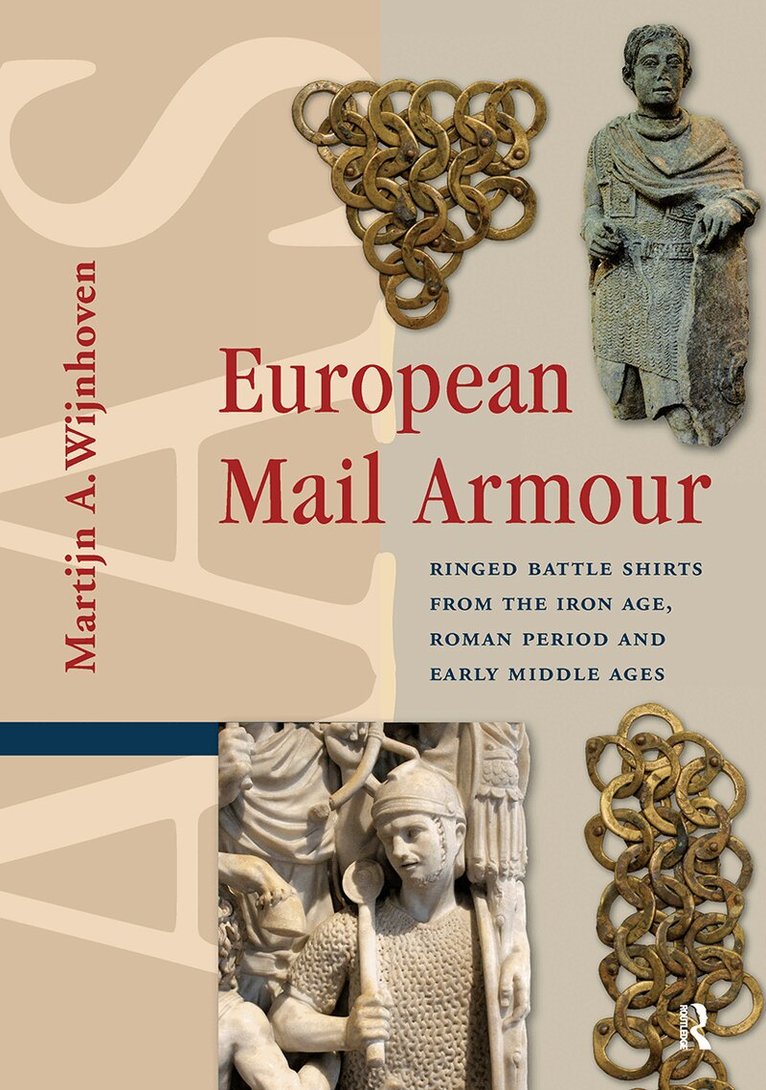
    European Mail Armour

    Ringed Battle Shirts from the Iron Age, Roman Period and Early Middle Ages

    AvMartijn A. Wijnhoven

    Häftad, Engelska, 2025

    Del i serien Amsterdam Archaeological Studies

    701 kr

    Beställningsvara. Skickas inom 10-15 vardagar. Fri frakt över 249 kr.

    Fler format och utgåvor

    E-bok

    805 kr

    E-bok

    829 kr

    Inbunden

    3 042 kr

    Beskrivning

    Mail armour (commonly mislabelled 'chainmail') was used for more than two millennia on the battlefield. After its invention in the Iron Age, mail rapidly spread all over Europe and beyond. The Roman army, keen on new military technology, soon adopted mail armour and used it successfully for centuries. Its history did not stop there and mail played a vital role in warfare during the Middle Ages up to the Early Modern Period., Given its long history, one would think mail is a well-documented material, but that is not the case. For the first time, this book lays a solid foundation for the understanding of mail armour and its context through time. It applies a long-term multi-dimensional approach to extract a wealth of as yet untapped information from archaeological, iconographic and written sources. This is complemented with technical insights on the mail maker's chaîne opératoire.

    Produktinformation

    • Utgivningsdatum:2025-12-01
    • Mått:250 x 20 x 210 mm
    • Vikt:1 950 g
    • Format:Häftad
    • Språk:Engelska
    • Serie:Amsterdam Archaeological Studies
    • Antal sidor:520
    • Förlag:Taylor & Francis Ltd
    • ISBN:9781041178989

    Utforska kategorier

    • Arkeologiska perioder och områden inom Historia och arkeologi
    • Romarna inom Historia och arkeologi

    Mer om författaren

    Martijn A. Wijnhoven holds a PhD in archaeology from Vrije Universiteit Amsterdam. He specializes in ancient military studies and has published extensively on the analysis and reconstruction of ancient armour spanning from the Iron Age to the Middle Ages. His research combines methods from history, anthropology, and archaeology, rendering a holistic approach to material studies.

    Innehållsförteckning

    • 1 Introduction, 1.1 Previous research, 1.2 Research question and aims, 1.3 Chaîne opératoire, 1.4 A multi-dimensional approach to material studies, 1.5 Scope, 1.6 Mail or chain-mail?, 2 The Origins of Mail Armour, 2.1 Suggested precursors, 2.2 Contested origins, 2.3 Earliest evidence, 2.4 Tracing the earliest contexts, 2.5 Further dispersal, 2.6 When, where and by whom, 3 Distribution and Archaeological Contexts, 3.1 Battlefields and accidental loss, 3.2 Iron Age mail, 3.3 The Roman Republic, 3.4 The Roman Principate, 3.5 Hybrid feathered armour, 3.6 Hybrid armour beyond the roman empire, 3.7 Late Antiquity, 3.8 The Barbaricum and beyond, 3.9 Mail for men, women and children, 3.10 Social access to mail outside the Roman Empire, 3.11 Centuries of archaeological evidence, 4 The Iconography of Early Mail Armour, 4.1 the iconographic evidence, 4.2 the 3rd century bc to the end of the roman republic, 4.3 early empire until the end of the 1st century ad, 4.4 the 2nd century ad, 4.5 the 3rd to 5th century ad, 4.6 development of mail armour design in iconography, 5 The Naming of Mail Armour, 5.1 Classical literature on armour, 5.2 Lorica hamata, 5.3 Other designations, 5.4 Simply lorica, 6 Decoration in Mail Garments, 6.1 Gold on silver, 6.2 Copper alloy elements, 6.3 Decorative origin, 6.4 Development and distribution, 6.5 Decorative trimmings, 6.6 Inserted patterns, 6.7 Contrasting rivets, 6.8 Decoration of hybrid armour, 6.9 Decoration of 'miniature mail', 6.10 Decorative hems, 6.11 Colourful Roman army, 7 Padded Garments, 7.1 the advantages and disadvantages of flexible armour, 7.2 himation, thoracomachus, subarmalis and cimmerian tunic, 7.3 textile and leather remains, 7.4 medieval analogy, gladiators and pteruges, 7.5 concealed by metal armour, 8 The Craft of Making Mail Rings, 8.1 The mail maker's process, 8.2 The manufacture of metal wire, 8.3 The manufacture of solid rings, 8.4 Unravelling the use of butted rings, 8.5 Loose rings, 8.6 The mail making workshop, 9 Weaving Patterns, 9.1 Four-in-one pattern, 9.2 Six-in-one pattern from tiefenau, 9.3 Pinched loop-in-loop pattern from Bertoldsheim, 9.4 Four-in-one pattern in hybrid armour, 9.5 Favourable characteristics, 10 The Construction of Mail Garments, 10.1 Current knowledge based on late mail from Europe, 10.2 Presence of constructional techniques in early mail, 10.3 Construction of early mail by working in the flat, 10.4 Construction of textile clothing and mail, 10.5 Construction of the coat with shoulder guards, 10.6 Mail with shoulder guards and textile clothing, 10.7 The development of mail armour through the ages, 10.8 Construction in cultural context, 11 Ring Characteristics, 11.1 The relevance of the seemingly irrelevant, 11.2 Ring size, 11.3 Direction of the overlap and ring types, 11.4 Cross-section of riveted rings, 11.5 Rivet characteristics, 11.6 Shape of the overlap in riveted rings, 11.7 Cross-section of solid rings, 11.8 Ring characteristics typology, 12 Final Considerations, 12.1 Insights, 12.2 Prospects, 12.3 Methodological potential, Bibliography, Database, Appendix 1. Catalogue of mail armour, Appendix 2. Catalogue of hybrid armour, Appendix 3. Catalogue of isolated finds of fasteners and fixtures, Appendix 4. Finds excluded from the database.