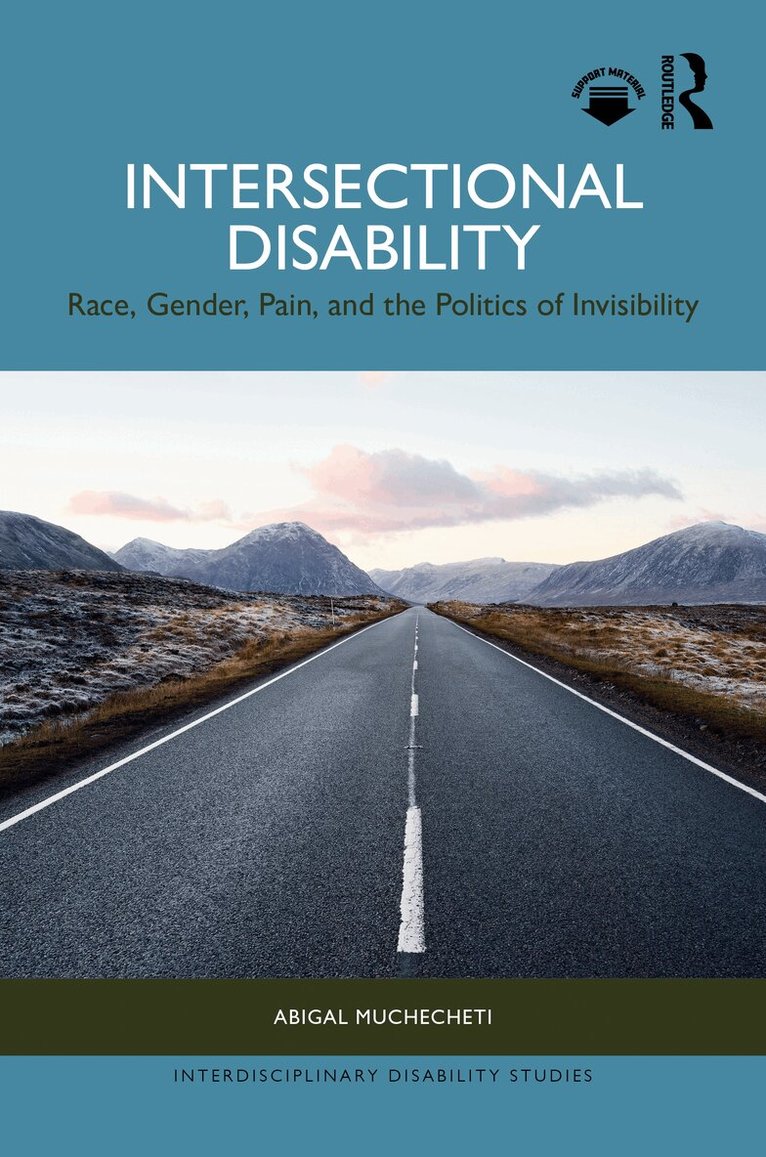
Häftad, Engelska, 2026
Intersectional Disability
Race, Gender, Pain, and the Politics of Invisibility
Del i serien Interdisciplinary Disability Studies
667 kr
Kommande
Fler format och utgåvor
Beskrivning
Produktinformation
- Utgivningsdatum: 2026-12-16
- Mått: 156 x 234 x undefined mm
- Format: Häftad
- Språk: Engelska
- Serie: Interdisciplinary Disability Studies
- Antal sidor: 176
- Förlag: Taylor & Francis Ltd
- ISBN: 9781041360483
Utforska kategorier
Mer om författaren
Abigal Muchecheti is an independent interdisciplinary scholar and author whose research examines disability, race, gender, institutional violence, and structural exclusion. Drawing on Black feminist theory, Critical Race Theory, disability studies, and decolonial thought, her work develops original conceptual frameworks, including her formulation of Intersectional Disability Theory and her concept of structural unbelievability, to understand inequality, embodiment, credibility, and power across higher education, public institutions, and social policy.
Recensioner i media
“At the heart of this book is the question of pain: who experiences it, who acknowledges it, who treats it, and who dismisses it. Intersectional Disability: Race, Gender, Pain, and the Politics of Invisibility investigates these questions, arguing that pain must always be intersectionally understood and framed. A failure to do so for centuries has meant the erasure of voices in pain from the medical record, and from our understanding of what a body is – this book seeks to redress this by articulating how the body in pain is one that needs to be approached with intersectional empathy, care, and understanding. Muchecheti explores how feminist disability studies has not yet fully accounted for how disability is constructed through structures of power. Structural unbelievability is at the heart of their argument: the unwillingness to even acknowledge the possibility that what one believes about another's body might not be the full story. This monograph is a significant addition to disability studies and to feminist studies.”Stacey Gillis, Professor of Modern and Contemporary Literature, Newcastle University“Intersectional Disability does what disability studies has long needed and rarely attempted: it refuses to treat disability as an afterthought to race and gender rather than a structure they co-produce. Muchecheti builds a rigorous, original framework out of the everyday violence of not being believed, showing how pain, fatigue, and fluctuation become racialised and gendered long before they become diagnoses. This book will change how scholars, clinicians, and policymakers think about credibility, care, and who institutions decide is telling the truth about their own body.”Dr Reham El-Morally, Assistant Professor in Public Policy and Administration, American University in Cairo
Betyg & recensioner
0 recensioner
Inga recensioner tillgängliga.